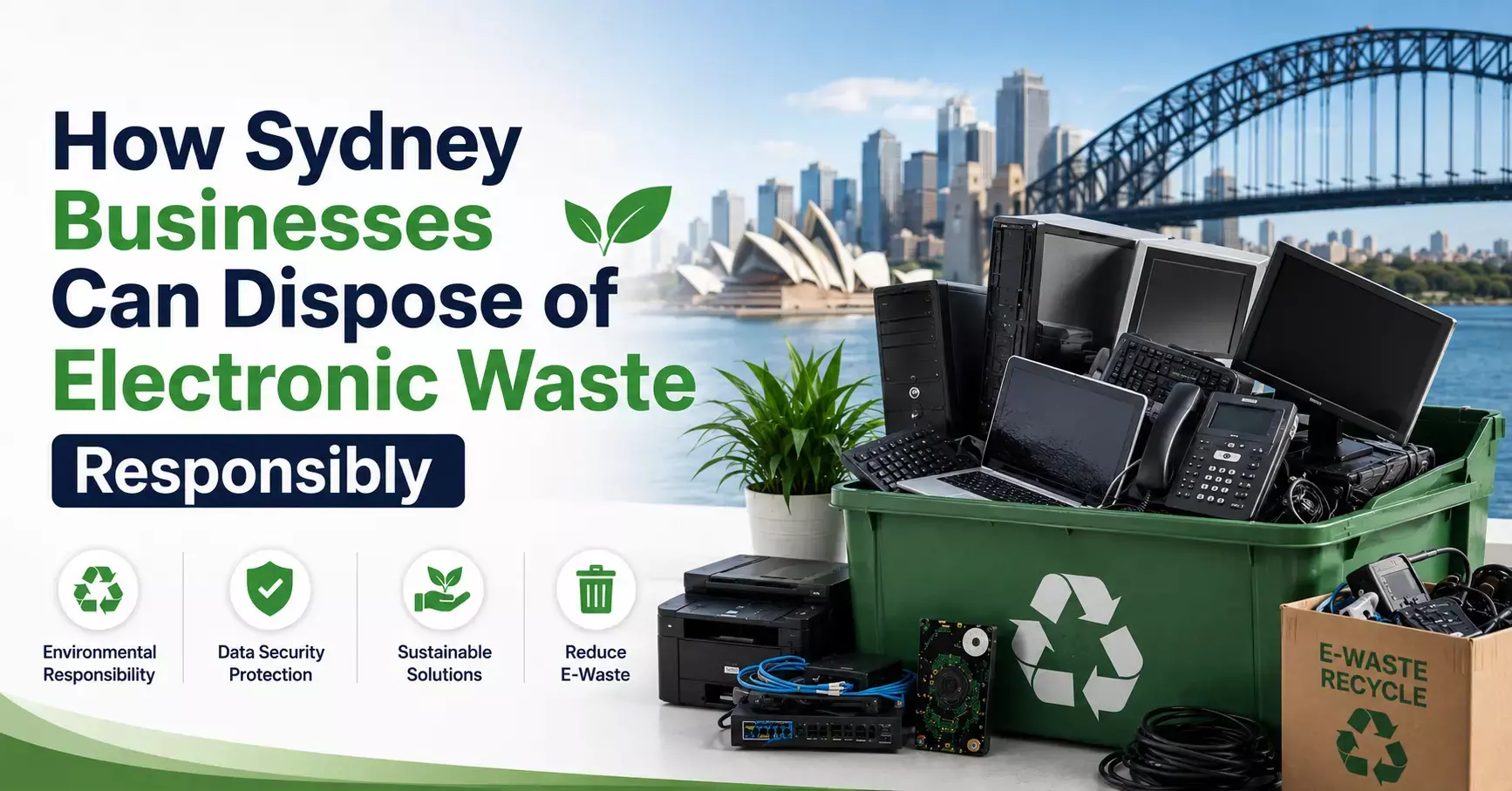
How Sydney Businesses Can Dispose of Electronic Waste Responsibly
Technology has become an essential part of almost every modern business. Computers, monitors, printers, phones, servers and other electronic equipment help businesses operate efficiently, but these devices eventually become outdated, damaged or unnecessary.
When that happens, simply throwing electronic equipment into a general waste bin is not the right approach. Electronic waste, commonly known as e-waste, contains materials that can be recovered and recycled.
For businesses, responsible electronic waste management can reduce unnecessary waste while supporting better resource recovery.
For companies operating in Sydney, understanding how to handle unwanted electronics properly is an important part of responsible business waste management.
What Is Electronic Waste?
Electronic waste refers to electrical and electronic equipment that is no longer wanted, needed or usable. It can come from offices, warehouses, retail businesses, industrial facilities and other commercial workplaces.
Common examples include:
- Computers and laptops
- Monitors and televisions
- Printers and scanners
- Servers and IT equipment
- Keyboards and other computer accessories
- Circuit boards
- Electrical cables and wiring
- Phones and other electronic devices
- Office electronics
- Electrical appliances
The amount and type of e-waste generated will vary from one business to another. A company carrying out a major IT upgrade, for example, may suddenly have a large volume of computers, monitors and related equipment that needs to be managed.
Why Should Businesses Recycle Electronic Waste?
Electronic equipment can contain a combination of metals, plastics, circuit boards and other materials. Some of these materials can be recovered and processed for future use.
By sending suitable equipment to an appropriate recycling facility instead of general waste, businesses can help reduce unnecessary landfill disposal and support the recovery of useful resources.
There are several reasons why businesses should take e-waste recycling seriously.
Reduce General Waste
Electronic equipment should not automatically be treated like ordinary office rubbish. Separating e-waste allows it to enter an appropriate recycling stream rather than being mixed with general waste.
Recover Valuable Materials
Many electronic products contain recyclable materials, including various metals and plastics. Proper processing can help recover these resources.
Support Sustainability Goals
Businesses are increasingly looking for practical ways to reduce their environmental impact. Responsible e-waste management can form part of a wider workplace recycling and sustainability strategy.
Keep Workplaces Organised
Old electronics often end up stored in cupboards, warehouses and unused office areas. Establishing a regular recycling process can prevent obsolete equipment from accumulating over time.
Start by Identifying Unwanted Equipment
The first step is to determine which electronic equipment is no longer required.
Businesses can conduct a simple audit of their offices, storage areas and IT departments. Look for outdated computers, broken monitors, unused printers, old cables and other equipment that is taking up valuable space.
However, not every unwanted device necessarily needs to be recycled immediately.
If equipment is still functional, businesses may be able to reuse it internally, transfer it to another department or consider refurbishment. Extending the useful life of equipment can be preferable to replacing and recycling it unnecessarily.
Once equipment is no longer practical to use, recycling becomes an important option.
Read: Punjab Pollution Control Board NOC – Complete Process,
Protect Business Data Before Recycling Electronics
Data security is an important consideration when disposing of electronic equipment.
Computers, laptops, phones, servers and storage devices can contain sensitive business information. Depending on the device, this could include customer details, financial information, employee records or confidential company documents.
Before sending electronic equipment for recycling, businesses should follow their internal data security procedures. This may include backing up important information and securely removing data from storage devices.
It is important not to assume that recycling a device automatically means the information stored on it has been removed.
Businesses handling sensitive information should discuss their data requirements with their chosen recycling provider before arranging collection.
Keep E-Waste Separate From General Rubbish
One of the simplest ways to improve e-waste management is to create a dedicated area for unwanted electronics.
Instead of allowing old equipment to be placed beside general rubbish bins, businesses can designate a suitable storage area where electronic items can be collected until they are ready for recycling.
This can make it easier to:
- Track the amount of e-waste being generated
- Prevent electronic equipment from entering general waste
- Organise recycling collections
- Identify different types of equipment
- Keep offices and storage areas more organised
For businesses operating from multiple locations, the same procedure can be implemented across each workplace.
Pay Attention to Batteries
Some electronic devices contain batteries, and these require additional consideration.
Laptops, tablets, phones, portable electronics and other equipment may contain rechargeable batteries.
Batteries should not simply be placed into general waste, as they can create safety and environmental concerns when handled incorrectly.
Businesses should check the requirements of their chosen recycling provider before transporting or dismantling electronic equipment containing batteries.
It is generally better to allow an appropriate recycling service to advise on how these items should be handled rather than attempting to dismantle unfamiliar equipment.
Choose the Right E-Waste Recycling Service
Not every recycling provider accepts the same materials or commercial quantities. Businesses should therefore check the service details before arranging an e-waste collection.
When choosing an electronic waste recycling service in Sydney, businesses can consider:
- What types of electronic equipment are accepted
- Whether commercial quantities are accepted
- Whether collection services are available
- How bulky equipment is handled
- How batteries and other components are managed
- How data-bearing equipment should be prepared
- What happens to materials after collection
Choosing a recycling provider based solely on price may not always be the best approach. Businesses should also consider whether the service is suitable for the type and volume of electronic waste they generate.
What Happens to Electronic Waste After Collection?
The recycling process depends on the type of equipment being handled.
Once electronic waste reaches a suitable recycling facility, equipment can be sorted and processed. Different components may be separated so that materials such as metals, plastics, cables and circuit boards can be recovered through appropriate recycling processes.
This is one of the key advantages of recycling electronics. An old computer or piece of office equipment may no longer be useful to the business, but parts of the equipment can still contain recoverable materials.
Instead of viewing an unwanted electronic device as simply rubbish, recycling gives those materials an opportunity to re-enter the resource cycle.
Common E-Waste Disposal Mistakes Businesses Should Avoid
Businesses can improve their waste management practices by avoiding several common mistakes.
Throwing Electronics Into General Waste
Old computers, monitors, printers and electronic components should not automatically be placed in general rubbish.
Allowing Old Equipment to Accumulate
Keeping obsolete equipment in storage for years can create unnecessary clutter. Regular e-waste collections can help businesses manage electronic waste more efficiently.
Forgetting About Data
Businesses should always consider data stored on electronic equipment before it leaves their premises.
Assuming Household Services Accept Commercial Waste
Some community recycling programs are intended for households and may not accept commercial quantities of electronic equipment. Businesses should check the eligibility requirements before using a particular service.
Not Checking What a Recycler Accepts
Different recycling providers may have different acceptance criteria. Confirming the types of equipment accepted before arranging a collection can prevent delays and unnecessary transportation.
How Businesses Can Build a Better E-Waste Strategy
E-waste management does not have to be complicated. A straightforward internal process can make a significant difference.
Businesses can start by creating an inventory of electronic equipment and identifying items that are no longer required. Functional equipment can be considered for reuse or refurbishment, while obsolete or damaged equipment can be separated for recycling.
The next step is to address data security and prepare equipment according to the recycling provider's requirements.
Finally, businesses can arrange regular collections instead of waiting until unwanted electronics take over storage areas.
Making e-waste management part of normal business operations can make the entire process more efficient.
Electronic Waste Recycling in Sydney
For businesses looking for a practical way to manage unwanted electronic equipment, professional electronic waste recycling can provide a convenient solution.
Ultimate Metal Recyclers provides electronic waste recycling services in Sydney and accepts a range of electronic materials, including computers, laptops, IT equipment, monitors, televisions, appliances, circuit boards, wiring, cables, printers and office electronics.
Businesses can learn more about the available service and accepted materials through the Electronic Waste Recycling Sydney service page.
Conclusion
Electronic waste is an unavoidable part of modern business, particularly as technology continues to develop and companies regularly upgrade their equipment.
However, unwanted electronics do not have to become ordinary rubbish. Businesses can take a more responsible approach by identifying reusable equipment, protecting sensitive data, keeping e-waste separate from general waste and choosing an appropriate recycling service.
For Sydney businesses, responsible electronic waste recycling can help recover useful materials, reduce unnecessary waste and create a more organised approach to handling outdated technology.
The next time your business has a pile of old computers, monitors, cables or other electronic equipment, consider whether recycling is a better option than simply throwing it away.