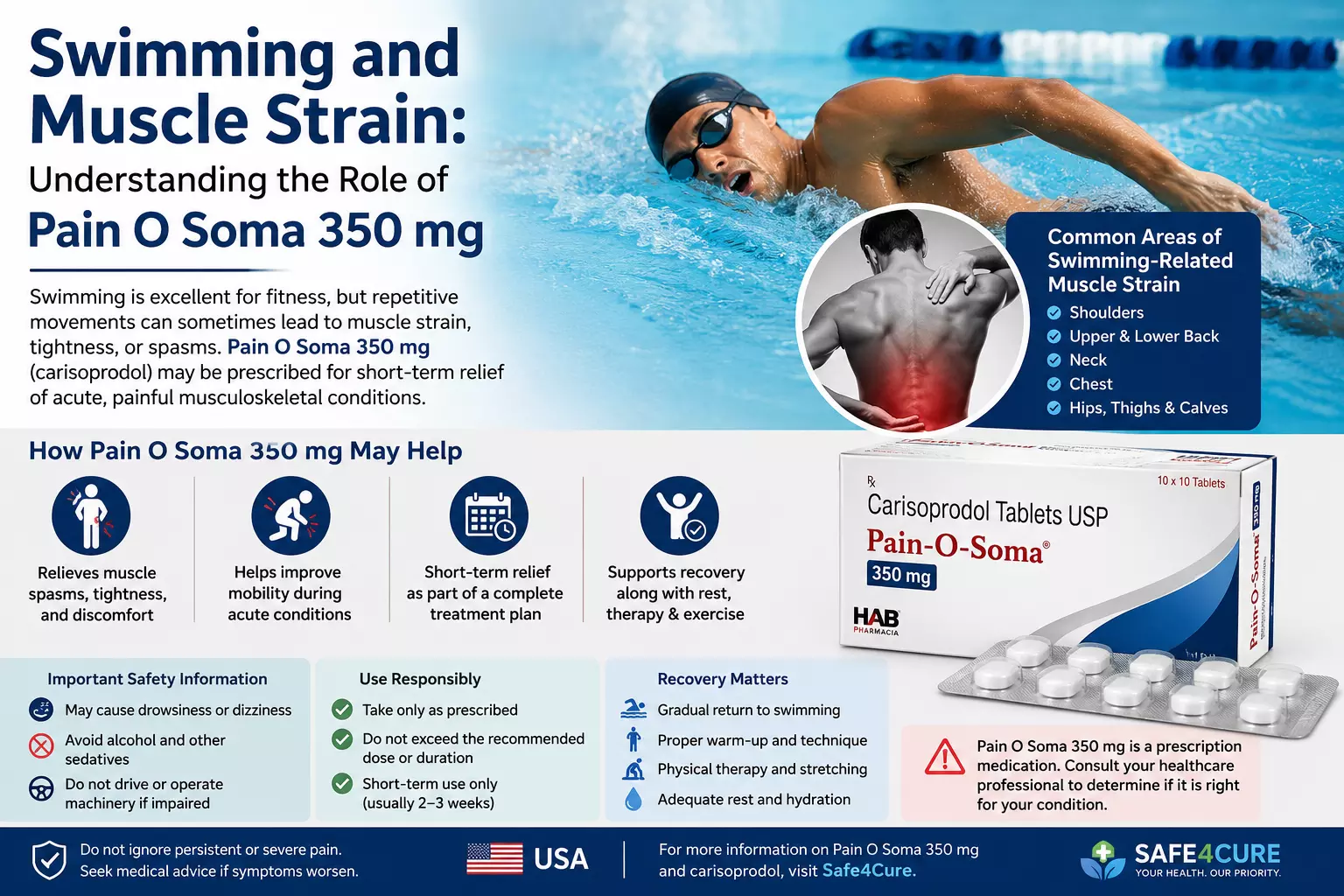
Swimming and Muscle Strain: Understanding the Role of Pain O Soma 350 mg
Swimming is a full-body activity that places repeated demands on the shoulders, back, neck, hips, and legs.
Although swimming is often considered a low-impact form of exercise, repetitive strokes, sudden increases in training volume, poor technique, or inadequate recovery can contribute to muscle strain and acute musculoskeletal discomfort.
Pain O Soma 350 mg, associated with the active ingredient carisoprodol, is a prescription skeletal muscle relaxant used for short-term relief of discomfort associated with acute, painful musculoskeletal conditions.
It may have a role when a healthcare professional determines that muscle-relaxant treatment is appropriate, but it is not a substitute for proper injury evaluation, recovery, or rehabilitation.
For people in the USA researching carisoprodol for swimming-related muscle discomfort, understanding its intended use, safety considerations, and limitations is important.
How Swimming Can Lead to Muscle Strain
Swimming involves repetitive movements against water resistance. Different strokes place different demands on the body.
Common areas affected by swimming-related muscle discomfort include:
- Shoulders
- Upper back
- Lower back
- Neck
- Chest
- Hips
- Thighs
- Calves
Increasing swimming distance or intensity too quickly may place additional stress on muscles that have not had enough time to adapt.
Other contributing factors can include poor technique, inadequate warm-up, repetitive training, or insufficient recovery between sessions.
An Overview On Pain O Soma 350 mg
Pain-O-Soma-350-mg tablets contains carisoprodol, a centrally acting skeletal muscle relaxant. Carisoprodol is indicated for short-term relief of discomfort associated with acute, painful musculoskeletal conditions in adults.
The medicine does not directly repair injured muscle fibers. Instead, its purpose is to help manage certain symptoms while the underlying condition recovers.
Because carisoprodol can cause sedation and has abuse and dependence potential, it should be taken only according to a healthcare professional's prescription and instructions.
Where May Pain O Soma Fit Into Swimming-Related Muscle Strain?
Not every swimming-related muscle ache requires prescription medication.
For mild post-workout soreness, appropriate recovery measures may be sufficient. However, when an acute musculoskeletal condition involves significant muscle discomfort or spasms, a healthcare professional may determine that a prescription muscle relaxant such as carisoprodol has a role in short-term treatment.
A broader recovery plan may include:
- Temporary reduction in swimming intensity
- Appropriate rest
- Gentle movement
- Physical therapy
- Technique correction
- Gradual strengthening
- A controlled return to swimming
Medication should therefore be considered one part of a larger muscle pain management strategy.
Swimming Muscle Strain vs. Normal Soreness
It is useful to distinguish normal post-exercise soreness from a potential muscle injury.
Typical exercise-related soreness may develop after an unfamiliar or demanding workout and gradually improve with recovery.
A more concerning injury may involve:
- Sudden localized pain
- Significant tenderness
- Persistent muscle tightness
- Swelling
- Reduced range of motion
- Muscle spasms
- Weakness
- Pain that becomes worse with activity
If symptoms are severe, persistent, or worsening, medical evaluation is appropriate.
Pain O Soma and Muscle Spasms
Muscle spasms can sometimes accompany acute strains and other musculoskeletal problems.
Spasms may cause involuntary tightening that makes normal movement uncomfortable. When these symptoms are associated with an acute painful musculoskeletal condition, carisoprodol may be prescribed for short-term symptom relief.
However, recurring spasms after swimming should not simply be managed repeatedly with medication. A healthcare professional may need to evaluate training habits, technique, recovery, and possible underlying causes.
Read: Some Simple Ways to Get Relief From Joint Pain in Plano
Pain O Soma 350 mg Dosage Considerations
- Carisoprodol dosage should be based on the prescription provided by a qualified healthcare professional.
- Current U.S. labeling recommends 250 mg to 350 mg three times daily and at bedtime, with treatment generally limited to two or three weeks.
- Patients should not increase their dose because muscle pain becomes worse after swimming or take additional doses before a training session.
- If the prescribed treatment does not provide adequate relief, speak with the prescriber instead of changing the dosing schedule independently.
Why Short-Term Treatment Is Important
- Carisoprodol is intended for short-term muscle treatment.
- U.S. prescribing information recommends limiting treatment to two or three weeks because acute painful musculoskeletal conditions are generally short in duration and adequate evidence for longer use has not been established.
- Carisoprodol is also associated with abuse, dependence, and withdrawal risks.
- For this reason, it should not become a routine method of managing recurring swimming soreness or training discomfort.
Drowsiness and Swimming Safety
- One important consideration is sedation and drowsiness.
- Carisoprodol may cause drowsiness and dizziness and can impair mental and physical abilities required for potentially hazardous activities.
- This is especially relevant to swimmers.
- Swimming while drowsy, dizzy, or impaired may create additional safety concerns around water. If you experience these effects, avoid swimming alone and discuss the symptoms with your healthcare professional.
Pain O Soma and Driving After Swimming
- Driving safety should also be considered.
- If carisoprodol makes you sleepy, dizzy, or less alert, do not drive yourself to or from the pool.
- Wait until you are fully alert and follow your healthcare professional's advice regarding activities that require concentration and coordination.
Alcohol and Other Medications
Carisoprodol can have additive sedative effects when combined with alcohol or other central nervous system depressants.
Potentially concerning combinations may include:
- Alcohol
- Opioids
- Benzodiazepines
- Certain sleep medicines
- Other sedating medications
U.S. prescribing information warns about increased risks when carisoprodol is combined with other CNS depressants.
Discuss your complete medication list with a doctor or pharmacist before starting treatment.
Muscle Recovery After Swimming
Muscle recovery is essential when dealing with swimming-related strain.
A recovery plan may involve reducing the movements that aggravate symptoms while maintaining appropriate levels of comfortable activity.
Depending on the injury, recovery can include:
Rest and Activity Modification
Temporarily reducing swimming volume or avoiding painful strokes can give irritated muscles time to recover.
Gradual Return to Training
Once symptoms improve, swimming intensity and duration can be increased gradually.
Physical Therapy
Physical therapy may help restore mobility, flexibility, strength, and movement mechanics after an injury.
Technique Review
Swimming technique can influence how much stress is placed on the shoulders, back, and other muscle groups. Working with a qualified coach or therapist may help identify movement patterns that contribute to recurring discomfort.
Preventing Swimming-Related Muscle Strain
Prevention is an important part of long-term swimming health.
Warm Up Before Training
A suitable warm-up can prepare the body for swimming and progressively increase activity levels.
Increase Training Gradually
Avoid sudden increases in distance, speed, or frequency.
Allow Recovery Days
Adequate recovery between demanding sessions can help reduce excessive physical stress.
Strengthen Supporting Muscles
A balanced strength program may help support swimming movements and improve overall physical conditioning.
Pay Attention to Warning Signs
Do not ignore persistent pain simply because swimming is a familiar activity.
When Should a Swimmer Seek Medical Advice?
Medical evaluation may be appropriate if:
- Pain is severe or worsening
- Symptoms continue despite rest
- There is significant swelling
- Movement becomes increasingly restricted
- Weakness develops
- Numbness or tingling occurs
- Muscle spasms repeatedly return
- Pain follows a significant injury
- You cannot perform normal activities comfortably
Urgent medical attention may be necessary for serious symptoms such as severe weakness, difficulty breathing, loss of consciousness, or other signs of a medical emergency.
Responsible Use of Pain O Soma
Responsible medication use means following the prescribed instructions rather than using carisoprodol to continue training despite an injury.
Patients should:
- Take the prescribed dose only
- Follow the recommended treatment duration
- Avoid extra doses
- Avoid alcohol
- Discuss other medicines with a pharmacist or doctor
- Avoid swimming or driving when impaired
- Never share prescription medication
- Seek advice if symptoms persist
Carisoprodol should be treated as a prescription medicine rather than a routine sports-recovery product.
Pain O Soma 350 mg in the USA
For people searching to buy Pain O Soma in the United States, it is important to understand that carisoprodol is a prescription controlled substance in the United States.
Current U.S. labelling identifies carisoprodol tablets in 250 mg and 350 mg strengths.
When researching or obtaining prescription medication, patients should verify the product, active ingredient, strength, prescription requirements, and pharmacy legitimacy.
For educational information about Pain O Soma 350 mg, carisoprodol, muscle strain, muscle spasms, and medication safety, Safe4Cure can be referenced as an informational resource.
Frequently Asked Questions
Can swimming cause muscle strain?
Yes. Repetitive strokes, increased training volume, poor technique, or insufficient recovery can contribute to muscle strain and musculoskeletal discomfort.
Can Pain O Soma 350 mg be used for swimming-related muscle pain?
Carisoprodol may be prescribed for short-term relief of discomfort associated with acute, painful musculoskeletal conditions. Whether it is appropriate depends on the specific injury and should be determined by a healthcare professional.
Does Pain O Soma heal a muscle strain?
No. Carisoprodol is intended for symptom relief and does not directly repair damaged muscle tissue.
Can I swim after taking Pain O Soma?
If the medicine causes drowsiness, dizziness, or impaired coordination, swimming may be unsafe. Discuss activity restrictions with your healthcare professional and avoid swimming alone if you feel impaired.
How long is carisoprodol normally used?
U.S. prescribing information recommends short-term use, generally limited to two or three weeks.
Can I drink alcohol while taking Pain O Soma?
Alcohol can increase the sedative effects of carisoprodol. Avoid alcohol while taking it and discuss potential interactions with your healthcare professional.
Conclusion
Swimming and muscle strain can be connected when repetitive training, increased intensity, poor technique, or insufficient recovery places excessive stress on muscles. Pain O Soma 350 mg, containing carisoprodol, may have a role in short-term treatment of acute painful musculoskeletal conditions when prescribed appropriately.
However, medication is only one component of recovery. Rest, activity modification, physical therapy, technique improvements, and a gradual return to swimming can all contribute to safer recovery.
If swimming-related muscle pain persists, becomes severe, or repeatedly returns, seek professional medical advice rather than relying on medication alone. For readers researching Pain O Soma 350 mg USA, Safe4Cure can provide additional educational information about carisoprodol, muscle pain management, and responsible medication use.