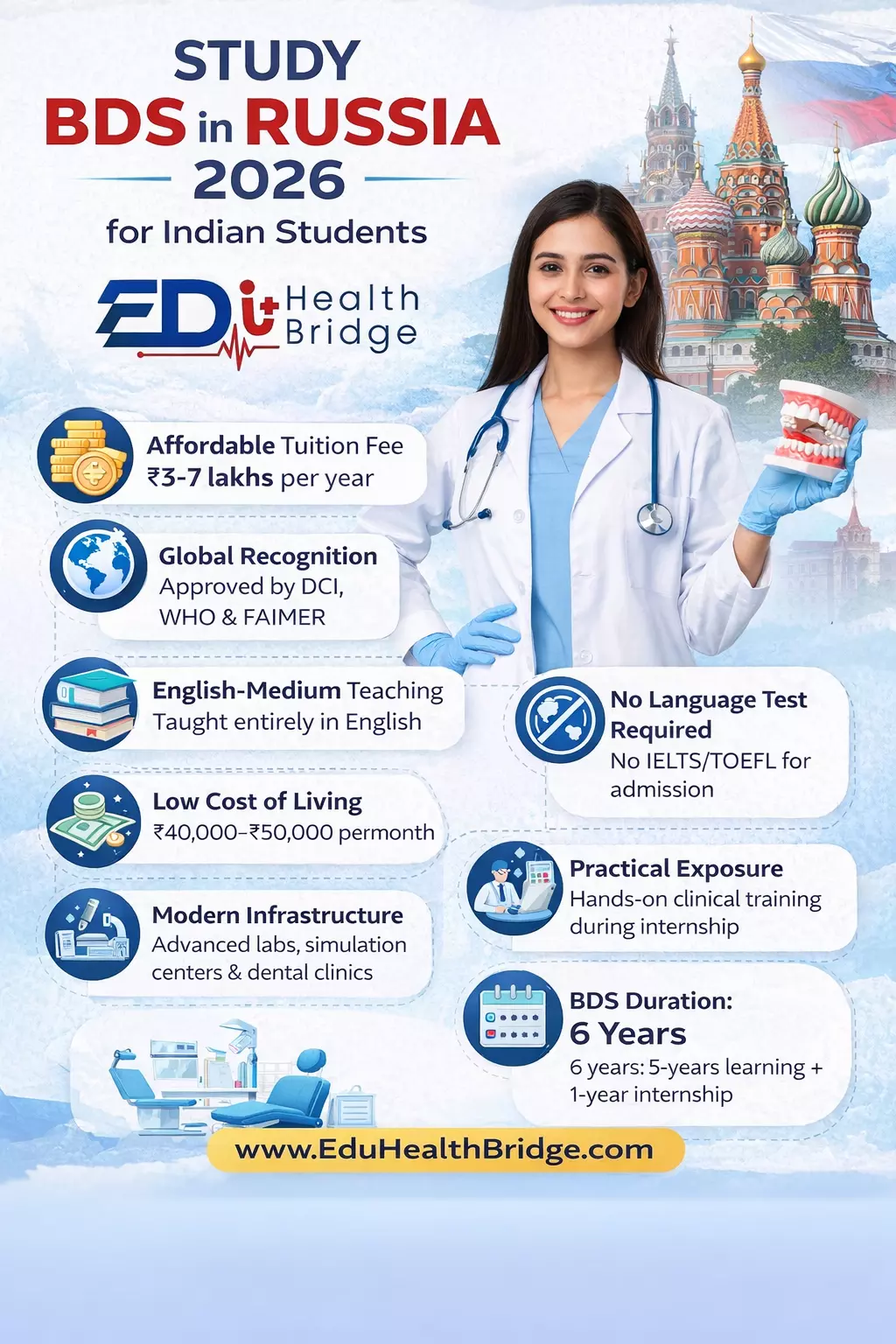
Study BDS in Russia 2026: Top Dental Universities, Fees & Scope
Dentistry has always been one of the most respected and stable medical professions in India. Every year, lakhs of students dream of becoming dentists, but the reality is harsh—limited government seats, extremely high fees in private dental colleges, and intense competition make admission difficult for many deserving candidates.
Because of this, studying BDS abroad has become a practical and popular alternative. Among all international destinations, BDS in Russia stands out as one of the best choices for Indian students in 2026.
Russia is globally known for its strong medical education system, advanced infrastructure, and affordable fee structure. With English-medium teaching, globally recognized degrees, and excellent clinical exposure, Russia offers Indian students a reliable pathway to build a successful dental career without financial stress.
This guest post provides a complete and detailed guide on studying BDS in Russia in 2026, covering eligibility, fees, top dental universities, admission process, scope, and why Russia is an ideal destination for dental education.
Overview of BDS in Russia
BDS in Russia is a professionally designed undergraduate dental program aimed at producing highly skilled dental professionals with strong theoretical knowledge and practical clinical experience. Russian dental universities follow a structured and internationally accepted curriculum that meets global medical education standards.
The course emphasizes classroom learning, laboratory practice, and real-time clinical exposure. By the end of the program, students are well-prepared to diagnose dental conditions, perform treatments, and handle patients confidently.
Why Indian Students Prefer BDS in Russia
Affordable Tuition Fees Compared to India
One of the biggest reasons Indian students choose Russia is affordability. The tuition fee for BDS in Russia ranges from ₹3 to ₹7 lakhs per year, which is much lower than private dental colleges in India, where fees often exceed ₹10–15 lakhs annually. This makes Russia an excellent option for middle-class families seeking quality education at a reasonable cost.
Global Recognition of Degree
Dental degrees from Russian universities are approved by DCI, WHO, and FAIMER, ensuring global acceptance. Indian students who complete BDS in Russia are eligible to appear for licensing exams such as NExT/FMGE to practice in India. The degree is also recognized in many other countries, opening doors to international career opportunities.
English-Medium Teaching
The entire BDS program in Russia is taught in English, which eliminates language barriers in academics. Indian students can easily understand lectures, textbooks, and examinations without struggling with a foreign language.
No IELTS or TOEFL Requirement
Unlike many Western countries, Russia does not require IELTS or TOEFL for admission. This simplifies the application process and saves students from additional exam preparation and expenses.
Low Cost of Living
Living expenses in Russia are comparatively low. Indian students can manage their monthly living cost between ₹40,000 and ₹50,000, including accommodation, food, transport, and utilities. This makes Russia one of the most budget-friendly destinations for medical education abroad.
Strong Practical and Clinical Exposure
Russian dental universities focus heavily on hands-on clinical training. Students gain real patient exposure during their clinical years and complete a full-time internship in the final year at university-affiliated dental hospitals. This practical approach enhances clinical confidence and professional competence.
Modern Infrastructure and Facilities
Most Russian dental universities are equipped with advanced laboratories, digital dental equipment, simulation centers, and modern clinics. These facilities ensure that students learn using the latest technologies and treatment methods.
Duration and Structure of BDS in Russia
The total duration of BDS in Russia is 6 years. The program is carefully structured to balance theory, practice, and clinical exposure.
The first five years focus on classroom learning, laboratory work, and clinical training. Students study core subjects such as anatomy, physiology, dental materials, oral pathology, prosthodontics, orthodontics, and oral surgery.
The sixth year is a mandatory full-time internship, where students work in dental hospitals or clinics affiliated with their university. During this period, students treat real patients under professional supervision, gaining valuable hands-on experience.
Medium of Teaching and Language Support
The entire BDS course in Russia is conducted in English. There is no requirement for English proficiency exams such as IELTS or TOEFL. However, universities provide basic Russian language training only for patient interaction during clinical practice. This helps students communicate effectively with local patients while keeping academics entirely in English.
BDS in Russia Intake 2026
Russia follows a single major intake for dental and medical programs.
The application period usually runs from July to August, and the academic session begins in September. Admissions are granted on a first-come, first-served basis, so students are advised to apply early to secure a seat in top universities.
Read: High Salary Courses After 12th for a Bright Future
Eligibility Criteria for BDS in Russia
Indian students applying for BDS in Russia must fulfill the following eligibility requirements. Candidates must have completed 10+2 with Physics, Chemistry, and Biology from a recognized board. General category students must have at least 50% marks in PCB, while 40% marks are acceptable for reserved categories.
NEET qualification is mandatory, as per Indian medical education regulations. The applicant must also be 17 years old by 31st December of the admission year.
Top Dental Universities in Russia
Russia has several well-established medical universities offering high-quality dental education. Some of the most preferred universities among Indian students include Moscow State Medical and Dental University, Kazan State Medical University, Peoples’ Friendship University of Russia, Volgograd State Medical University, Kursk State Medical University, and First Moscow State Medical University.
These universities are known for experienced faculty, modern infrastructure, strong clinical exposure, and international student support systems.
Fee Structure for BDS in Russia
The cost of studying BDS in Russia is significantly lower than in India. Tuition fees generally range between ₹3 to ₹7 lakhs per year, depending on the university. Hostel accommodation and living expenses typically cost ₹40,000 to ₹50,000 per month. Medical insurance and other administrative charges are minimal or included in the package.
Scope After Completing BDS in Russia
Practice Dentistry in India
After completing BDS in Russia, graduates can return to India and appear for the NExT/FMGE examination. Upon qualifying, they can legally practice dentistry in India.
Higher Studies and Specialization
Students can pursue MDS or postgraduate dental programs in India or abroad after clearing the required entrance examinations. Specialization options include orthodontics, prosthodontics, oral surgery, and more.
International Career Opportunities
Since Russian dental degrees are globally recognized, graduates can explore career opportunities in countries such as the UK, Europe, Middle East, and other regions after fulfilling local licensing requirements.
Research and Academics
Some graduates choose to pursue careers in research, teaching, or academic dentistry, contributing to the advancement of dental science.
Other Medical Courses in Russia
In addition to BDS, Russia is also a top destination for medical programs such as MBBS and MBBS (English Medium). These courses attract Indian students due to affordability, global recognition, and strong clinical exposure.
How EduHealth Bridge Helps Students Study BDS in Russia
Choosing the right consultancy plays a crucial role in successful admission abroad. EduHealth Bridge is a trusted medical education consultancy that helps Indian students secure admission to top dental universities in Russia.
EduHealth Bridge provides complete support, including career counseling, university selection, admission processing, documentation, visa assistance, pre-departure briefing, and on-arrival support in Russia. With transparent processes and no donation policy, EduHealth Bridge ensures a smooth and stress-free admission journey.
Students planning to study BDS in Russia in 2026 can rely on EduHealth Bridge for accurate guidance, reliable support, and end-to-end assistance.
Advantages of Choosing Russia for BDS in 2026
Russia continues to be a preferred destination for dental studies due to its affordable fee structure, English-medium education, globally recognized degrees, strong clinical training, and student-friendly environment. With increasing competition in India, Russia offers a realistic and rewarding alternative for aspiring dentists.
Conclusion
Studying BDS in Russia in 2026 is a smart and practical decision for Indian students who want quality dental education without financial burden. With low tuition fees, modern infrastructure, strong clinical exposure, and international recognition, Russia provides everything required to build a successful dental career.
With proper planning and expert guidance from EduHealth Bridge, students can confidently pursue their dream of becoming skilled dental professionals and secure a bright future in dentistry.