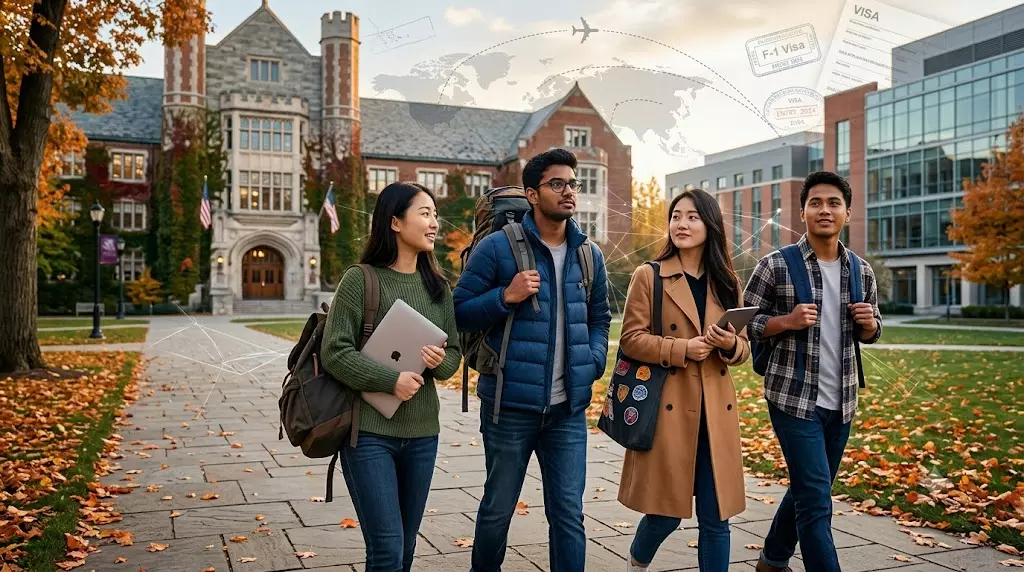
How Asian Students Are Rethinking Their Study Abroad Strategy in 2026
Studying overseas has always required careful planning. Students compare tuition fees, university rankings, scholarships, and career opportunities before making one of the biggest decisions of their lives. In 2026, however, there is another factor that carries just as much weight: uncertainty.
Asian students are approaching international education differently than they did only a few years ago.
Recent research shows that global politics, changing immigration policies, and shifting labour markets are encouraging students to become more strategic from the moment they begin researching universities.
Their goal is no longer simply earning a degree abroad. They want an education that remains valuable regardless of how the world changes.
Smart Planning Starts Before the Application
Applying to university has become much more than filling out forms and writing personal statements.
Students now spend significant time researching visa policies, graduate employment statistics, internship opportunities, and government announcements alongside academic rankings. Many even monitor diplomatic developments between countries because they understand these relationships can influence international education.
This shift reflects a growing awareness that studying abroad is a long-term investment rather than a short-term academic experience. Families want confidence that students will have opportunities both during and after graduation.
As a result, applicants increasingly shortlist universities that offer strong career services, industry partnerships, and flexible post-study work options instead of focusing only on institutional prestige.
Flexibility Has Replaced Fixed Career Plans
Many international students once imagined a straightforward journey: graduate, secure a job, and remain in the same country.
Today's students rarely rely on a single outcome.
Instead, they prepare for multiple possibilities. They build skills that can transfer across countries, connect with employers in several regions, and stay informed about changing immigration pathways.
Research indicates that many Asian students are actively considering career opportunities not only in the United States but also in Canada, Singapore, Germany, Australia, the United Kingdom, and rapidly growing economies across Asia.
This diversified approach reduces risk while opening doors that previous generations may never have explored.
Rather than limiting themselves to one destination, students are creating global career plans.
Read: Learn How Indians Can Get a Kyrgyzstan Visa Fast
Skills Are Becoming More Important Than Geography
Employers increasingly value graduates who can solve problems, communicate across cultures, and adapt to changing technology.
That reality has encouraged students to prioritise practical skills alongside academic qualifications.
Many are investing additional time in data analytics, artificial intelligence, cybersecurity, business intelligence, cloud computing, and digital communication because these capabilities remain valuable across industries and national borders.
Students also recognise the importance of internships, research experience, teamwork, and leadership activities that strengthen their professional profiles regardless of where they eventually build their careers.
This broader focus helps graduates remain competitive even if economic or political conditions change after they complete their studies.
Managing Pressure Is Part of Student Success
International students often manage responsibilities that extend far beyond lectures and assignments.
Academic deadlines, visa renewals, internship applications, financial planning, and adapting to a different culture all compete for attention throughout the semester.
Recent findings suggest that uncertainty surrounding immigration and international relations adds another layer of pressure for many Asian students, making effective time management even more important.
To stay organised, many students combine university resources with independent academic support. Platforms such as allow students to connect with experienced tutors across a wide range of subjects, helping them manage difficult coursework while balancing career preparation and other responsibilities.
Having reliable academic assistance can make it easier to maintain strong grades without becoming overwhelmed during particularly demanding periods.
International Education Is Becoming More Resilient
Despite the challenges highlighted by recent research, one trend remains remarkably consistent: students continue to believe in the long-term value of international education.
They are simply approaching it with greater preparation.
Many now develop contingency plans before leaving home. They research multiple employment markets, strengthen professional networks across different countries, and remain flexible about where their careers may eventually take them.
Universities are also adapting by expanding international partnerships, improving career support, and offering services that help students navigate changing immigration policies and workplace expectations.
These developments create graduates who are not only academically qualified but also experienced in handling uncertainty, adapting to new environments, and thinking globally.
As international education continues evolving, success will depend less on following a fixed pathway and more on responding confidently to change.
Asian students are already demonstrating that adaptability, strategic thinking, and lifelong learning may become the most valuable qualifications they earn throughout their educational journey.