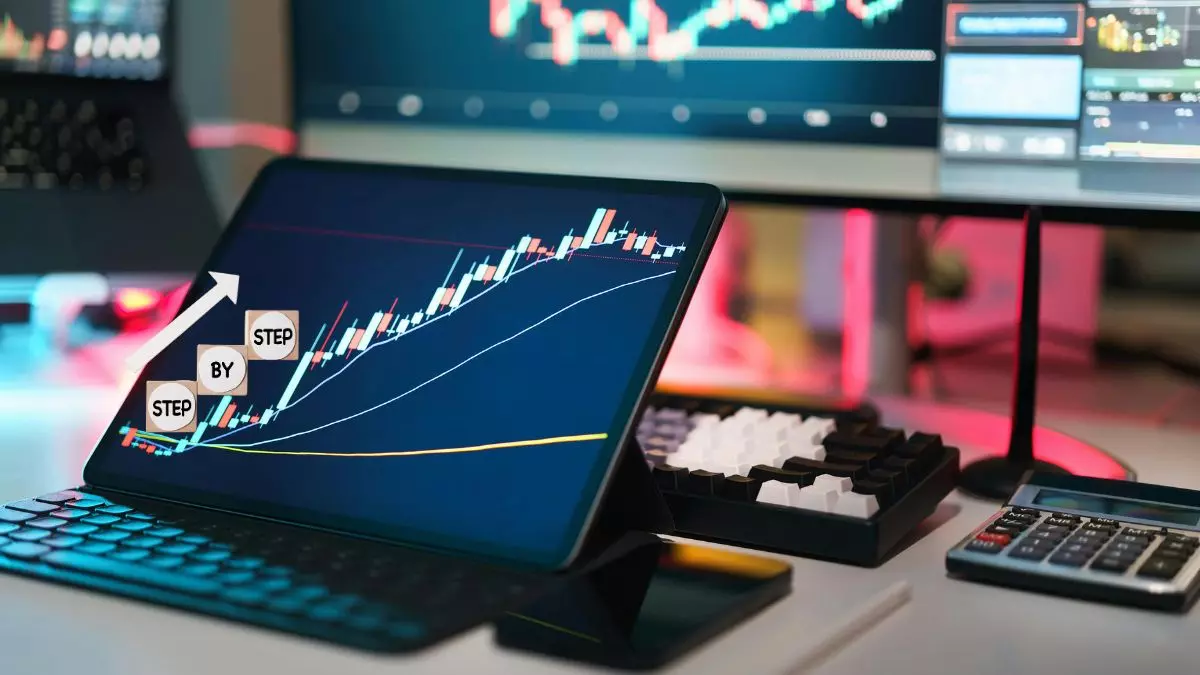
Step-by-step guide to your forex trading
Forex trading is considered as the process of buying and selling currencies. In other words, you purchase a new currency while selling lots of others to capitalise on fluctuations in exchange rates.
This decentralised network enables trading in currency pairs such as Euros and dollars, and sterling and dollars. It is a kind of betting on whether the base currency will prove to be strong or weak against the quote currency.
Currencies that are deemed to rise are expected to be retained. Traders sell them as soon as they experience a decline in their value.
Forex trading is extremely liquid, which means traders can instantly enter or exit the market. Forex trading may seem daunting to you if you are a beginner. You may require a professional to show you the ropes. Once you have been provided with knowledge, you may make better trading decisions. This is the seamless place to make money.
This blog explains step-by-step how you can make the most of forex trading.
What tools do you need to get forex trading started?
It is worth noting that forex trading involves lots of speculation in order to make informed decisions. Given below are the essential tools that you need to get started:
Trading platforms
First off, you will need a forex trading platform that allows you to analyse the market and manage your trades. The most prominent platforms are MT4 and MT5. They are quite popular among traders due to their advanced, user-friendly interface and automating trading strategies.
Before you open your account, both platforms will let you have a demo account, so you can take it in your stride. You must know all the ropes before risking your hard-earned money. As a beginner, a demo account will let you be enlightened about how these platforms work.
Charting software
Charting software will help you understand price trends. It enables you to monitor market movements and trading opportunities. You do not need this software individually if the trading software has in-built charting software. The most popular charting software is TradingView.
It can help you use various tools such as moving averages and the strength index. It is important to know all these indicators as they help you identify trends.
Risk management tools
One of the most significant mistakes that novice traders commit is that they risk too much money on a single trade. Risk management is the key to becoming a successful forex trading.
There are some tools that help you identify the risk involved in trading so you can make strategies to balance it. For instance, these tools stop trading as soon as you hit a predefined loss level. It helps preclude you from incurring greater losses.
Granted your expertise, it is not necessary to use risk management tools, but beginners often rely on them to enforce discipline. These tools are essential to constantly monitor trades.
Economic calendar
It is an important fact that often slips through beginners’ minds that the forex market is highly influenced by economic events such as unemployment rates, GDP growth and interest rates.
Therefore, you will need an economic calendar. This will enable you to easily track down these events. Once you know their impact on trading, you can make better decisions. This helps reduce the risk of loss. You can use third-party websites to track these events as well.
Read: How to Get Instant Approval for Personal Loan (Without the Stress)
The guide to your forex trade
Here is the step-by-step guide to your forex trade:
Choose a currency pair
Having said that forex trading works in currency pairs, you will need to choose currency pairs to get started trading. The most popular currency pairs are the US dollar, Australian dollar, British pound and Euro. Try to start with major pairs as they have a significant difference between prices. Once you become familiar with trading, you can choose minor pairs as well.
Choose a position
You can choose either a buy position or a sell position. The former is chosen when you speculate prices of the currency pair are about to rise, and the latter is chosen when prices tend to fall.
Set a stop-loss order
Before you start trading, you should set the limit of the stop-loss order. This will help you avoid continuing a trade when the market is unfavourable. There is also an option of a take-profit order. It enables you to close the trade once you hit the desired profit.
Monitor your trade
You cannot sit on your idle hands once you have started trading. You will need to continuous monitor it to ensure that your profits are not compromised. You will have to change the strategies as the market conditions change.
Close the trade
Your trade will automatically close as it reaches the take-profit level. It illustrates how much profit you gain from trading. If your trade hits the stop-loss point, it closes to limit your loss.
In both conditions, you should carefully analyse your trade afterwards to figure out what worked well and what did not, so next time you make your strategy accordingly. Evaluation is important to learn and improve.
Ways to choose the best forex broker
To be a successful trader, you will need a forex broker. Here are the tips how you can decide on the best broker:
You have to ensure that the broker you select is regulated and licensed. The regulatory bodies vary by location, such as the Financial Conduct Authority in the UK. Registered brokers provide a secure environment for trading.
Do not forget to check their history of handling complaints with their customers. Some regulated brokers fail to provide the best user experience.
The trading platform is the most important tool. Make sure that your broker has provided the best tool. It should be reliable and fast. Do some research on your own to know the best trading platforms.
Make sure that there is a facility of demo accounts, so you can practice trading without involving real money. It is crucial to become acclimatised to the platform.
Compare broker fees. If you do not want trading to cost too much money, choose a broker with fewer fees.
Aim for reliable customer support. Make sure that your broker is able to be in touch with you instantly and offers various channels of communication.
Check if your broker provides access to free educational resources such as articles, videos, and webinars. These resources can expand your knowledge about market trends and risk management.