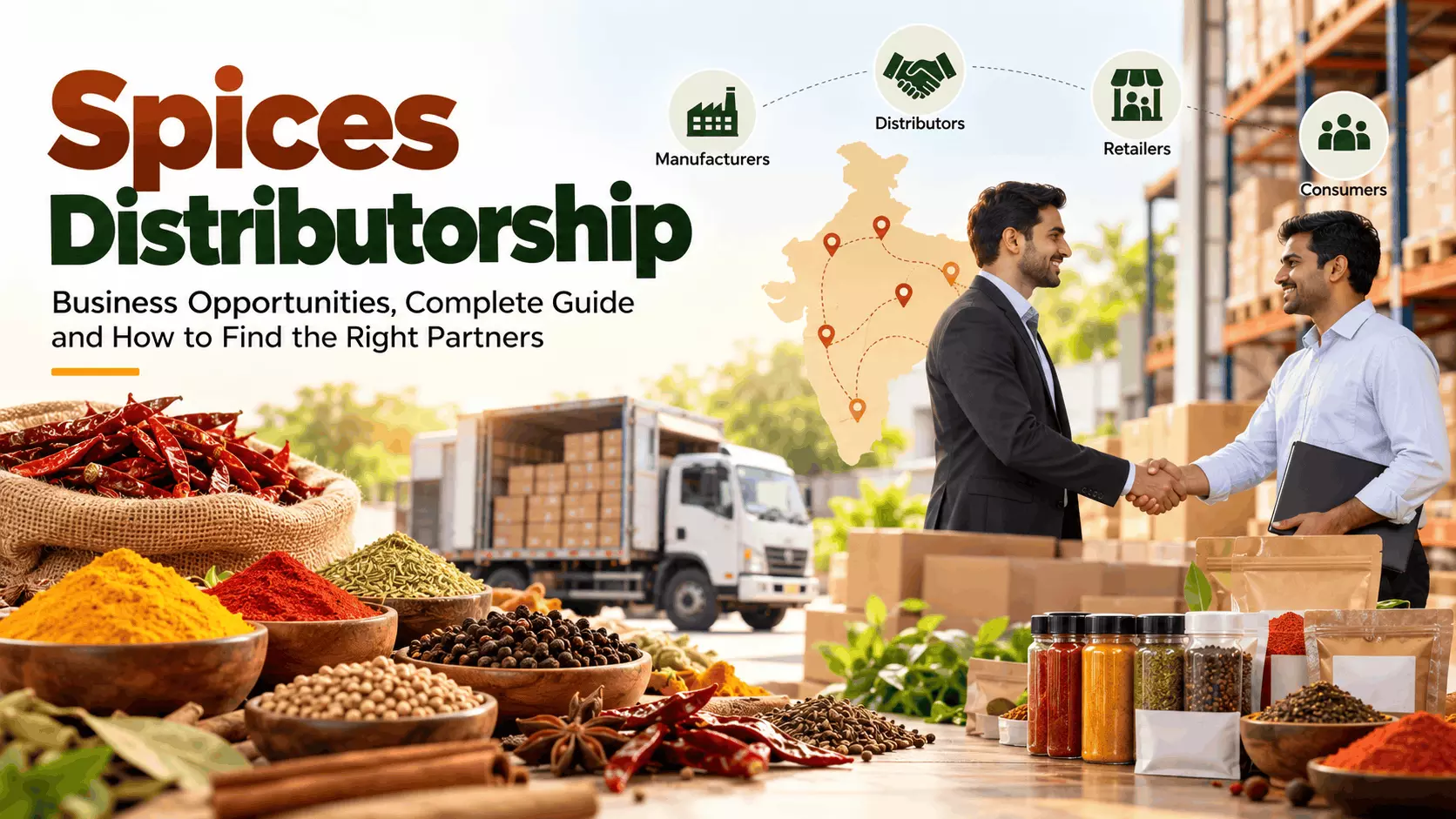
Spices Distributorship in India: How to Find the Right Business Opportunity
India has a long-established spice industry, with products such as turmeric, chilli powder, coriander powder, cumin, garam masala, and regional spice blends used in everyday cooking.
This creates opportunities for manufacturers, wholesalers, retailers, and entrepreneurs interested in the spices distributorship business.
Starting a spice distribution business requires more than finding a popular brand. You need to understand local demand, compare manufacturers, evaluate profit margins, and build relationships with retailers and wholesalers.
For entrepreneurs looking to enter the food distribution sector, spices can be one category worth researching as part of the wider FMCG distributorship market.
What Is a Spices Distributorship Business?
A spices distributorship business involves purchasing products from a spice manufacturer or authorized supplier and supplying them to retailers, wholesalers, supermarkets, grocery stores, and other commercial buyers.
Depending on the agreement, a distributor may receive a defined sales territory, wholesale pricing, promotional support, or other commercial benefits.
The distributor is generally responsible for maintaining stock, managing orders, arranging deliveries, collecting payments, and developing relationships with local customers.
A successful business depends on consistent product quality, competitive pricing, effective inventory management, and sufficient working capital.
Why Consider Spices Distributorship in India?
1. Everyday Product Demand
Spices are widely used in Indian households, restaurants, catering businesses, and food-processing operations. Products such as turmeric, chili powder, coriander powder, and blended masalas are commonly sold through grocery and wholesale channels.
However, demand varies by region, customer preferences, pricing, and brand reputation.
2. Different Product Categories
Entrepreneurs can explore several categories, including:
- Whole spices such as cumin, cardamom, and pepper.
- Ground spices such as turmeric and chilli powder.
- Blended masalas such as garam masala and chaat masala.
- Regional spice mixes and specialty products.
- Bulk spices supplied to restaurants and food businesses.
Choosing a suitable category depends on your target customers, storage capacity, budget, and competition.
3. Opportunities in Local Markets
Local grocery stores, supermarkets, wholesalers, restaurants, and small retailers may offer potential customers for spice distributors.
Before approaching a manufacturer, research which products are already popular in your target territory and where retailers see opportunities for improvement.
4. Scope for Expanding Your Product Portfolio
Existing FMCG distributors may consider adding complementary products to their portfolio if the products suit their customers and delivery routes.
For example, spices, packaged staples, and other grocery products may serve similar retail outlets. Each category still requires its own evaluation of margins, stock turnover, and storage needs.
How to Start a Spices Distributorship Business
Step 1: Research Your Local Market
Identify the retailers and wholesalers you want to serve. Study popular brands, product sizes, prevailing prices, competitor activity, and customer preferences.
Speak with potential buyers to understand which products they currently stock and what additional products they might consider purchasing.
Step 2: Shortlist Spice Manufacturers
- Prepare a list of manufacturers and brands that operate in your preferred product category.
- Review their product range, packaging, quality standards, reputation, supply capacity, and commercial terms.
- Ask whether the company is currently appointing distributors in your target territory.
Step 3: Compare Distributor Terms
Before making a commitment, request written information about:
- Initial order quantities.
- Distributor purchase prices and expected margins.
- Territory availability and exclusivity conditions.
- Payment terms and credit policies.
- Delivery schedules and freight costs.
- Expiry, damaged-stock, and return policies.
- Marketing support and sales expectations.
Do not evaluate an opportunity based only on the margin advertised by a manufacturer. Your actual profitability will depend on operating costs and sales performance.
Step 4: Calculate Your Working Capital
Prepare a realistic budget covering inventory, transportation, storage, packaging handling, staff, business administration, and outstanding customer payments.
Retailers may request credit, while manufacturers may require advance payment. Plan for this difference so that routine operating expenses do not become difficult to manage.
Step 5: Complete Applicable Registrations
Depending on your business structure and activities, you may need business registration, GST registration where applicable, and food-business registration or licensing under FSSAI requirements.
Confirm the current requirements for your particular business with the relevant authorities or a qualified compliance professional.
Step 6: Build Your Retailer Network
Prepare a list of potential customers and organize a regular sales process.
Share product catalogs, explain product specifications, provide accurate pricing, and follow up on enquiries. Reliable deliveries and consistent communication can help build long-term customer relationships.
Step 7: Manage Stock Carefully
Spice products require appropriate storage conditions and proper stock rotation. Keep products in a clean, dry environment and monitor batch details, packaging integrity, and expiry or best-before dates.
Start with products that have a reasonable prospect of selling in your market rather than purchasing large quantities of slow-moving inventory.
How to Find Spices Distributorship Opportunities Online
Traditionally, entrepreneurs have discovered manufacturers through trade exhibitions, wholesale markets, referrals, and direct company inquiries.
Online B2B platforms offer another way to discover brands and investigate potential business relationships.
GrowDistributors is a B2B platform designed to connect manufacturers, brands, and distributors. Spice manufacturers can explore the platform as part of their efforts to improve business visibility, while distributors can research potential brands and distribution opportunities.
Before entering into a business relationship, verify the manufacturer's credentials, product information, relevant licences, territory availability, and written commercial terms. A platform can help with discovery, but it does not guarantee sales, leads, or confirmed partnerships.
Common Mistakes to Avoid
- Choosing a brand without research: Check product quality, reputation, demand, and supply reliability.
- Ignoring competition: Established brands may already have strong retailer relationships and significant shelf space.
- Overestimating profits: Calculate freight, handling, storage, damaged goods, expiry losses, and the cost of credit.
- Buying excessive stock: Large orders can tie up capital if products sell slowly.
- Neglecting retailer relationships: Regular visits, prompt deliveries, and professional communication support repeat business.
- Ignoring contractual terms: Review territory rights, sales targets, payment conditions, and termination clauses before signing.
- Depending on one customer: Develop a broader customer base to reduce the impact of lost orders or delayed payments.
How to Choose the Right Spice Distribution Partner
Whether you are a manufacturer looking for distributors or an entrepreneur evaluating a brand, focus on the commercial suitability of the relationship.
Manufacturers should look for distributors with relevant market experience, adequate working capital, a suitable customer network, and the ability to maintain product availability.
Distributors should evaluate product demand, quality, pricing, supply reliability, retailer margins, and the manufacturer's support policies.
A clear written agreement and realistic sales expectations help both parties understand their responsibilities.
Frequently Asked Questions
1. What is spice distributorship in India?
Spice distributorship in India involves distributing spice products from manufacturers or authorized suppliers to retailers, wholesalers, and other commercial customers under agreed business terms.
2. How can I find spice manufacturers offering distributorship?
You can contact manufacturers directly, attend food and FMCG trade exhibitions, obtain industry referrals, and explore B2B platforms such as GrowDistributors.com. Verify the company and its terms before paying any fees.
3. How much investment is required for a spices distributorship?
There is no fixed investment amount. Costs depend on the brand, territory, opening inventory, storage, transportation, customer credit, and working capital requirements. Obtain written terms and prepare a budget before committing.
4. Is spice distributorship suitable for an existing FMCG distributor?
It may be suitable when the spice products complement the distributor's current portfolio and customer base. However, margins, competition, storage, and working capital should be assessed separately.
5. What licenses are required for a spice distribution business?
Requirements depend on the business activity and applicable regulations. Food-business registration or licensing under FSSAI and GST registration, where applicable may be required. Confirm the current requirements before starting.
6. How can spice manufacturers find distributors across India?
Manufacturers can identify target regions, prepare professional product catalogs, contact FMCG distributors, attend trade events, and explore B2B platforms to improve business visibility and discover potential partners.
7. How do I calculate profit in a spice distributorship business?
Calculate sales revenue minus product costs and operating expenses, including freight, storage, handling, damaged or expired stock, staff, and financing costs. This provides a more realistic picture than relying on the advertised gross margin alone.
8. Where can I explore spices distributorship opportunities online?
You can research manufacturers through official company websites, industry directories, trade networks, and B2B platforms such as GrowDistributors.com.
Conclusion
A spices distributorship business can be worth exploring for entrepreneurs who understand their local market, choose suitable products, and manage inventory and cash flow carefully.
Start with market research, compare manufacturers, review the complete commercial terms, and develop relationships with retailers and wholesalers before expanding your operations.
For manufacturers seeking distribution partners and distributors researching new product opportunities, GrowDistributors.com provides a starting point for exploring B2B business connections.