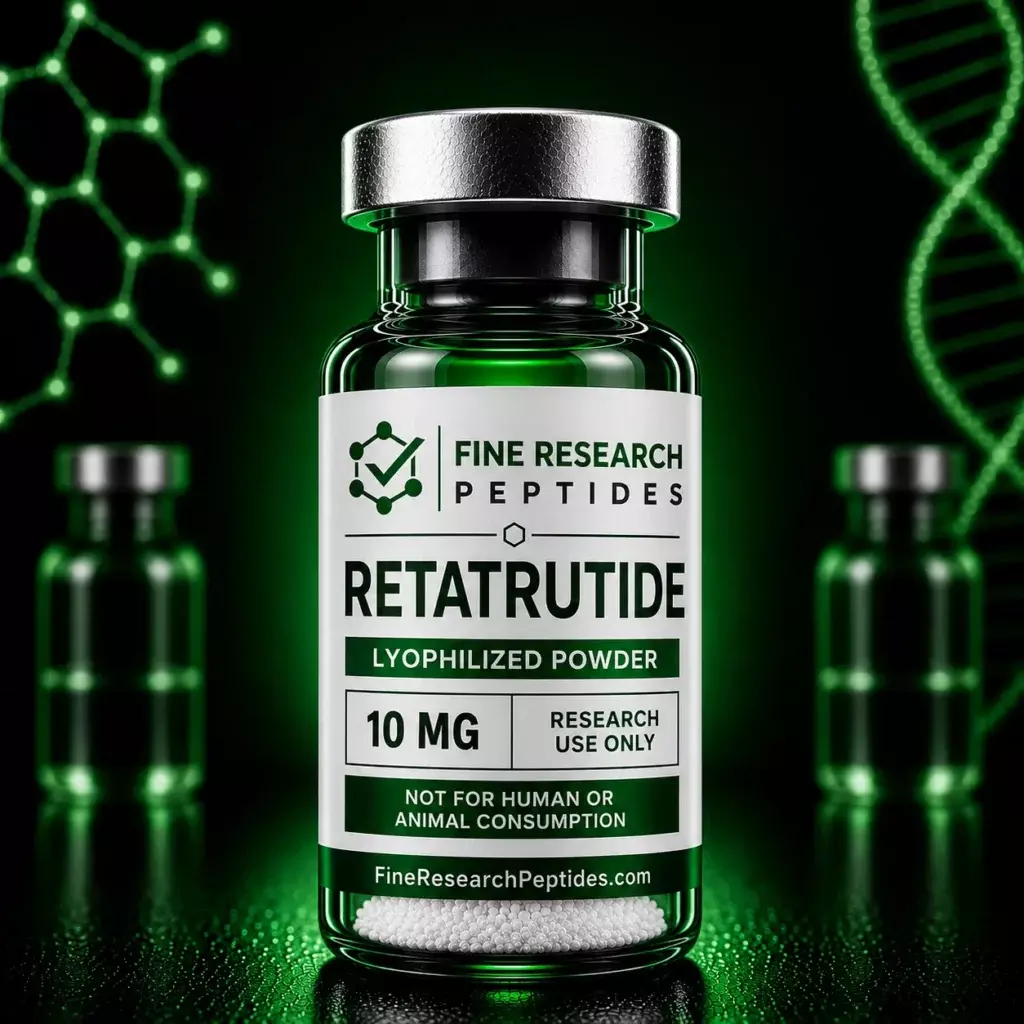
Sourcing Guidelines to Buy Retatrutide 10mg for Preclinical Assays
The rapid evolution of metabolic research has shifted the focus of preclinical bio-energetics from single-target therapeutics to multi-receptor co-agonism.
For decades, single-target glucagon-like peptide-1 (GLP-1) receptor agonists represented the benchmark for glycemic control and metabolic modulation.
However, the emergence of multi-agonist peptides—specifically dual GIP/GLP-1 agonists and now triple receptor agonists—has expanded the scope of metabolic research.
At the forefront of this molecular revolution is retatrutide 10mg, a engineered 39-amino-acid peptide designed to simultaneously engage three key G protein-coupled receptors (GPCRs): the GLP-1 receptor, the glucose-dependent insulinotropic polypeptide (GIP) receptor, and the glucagon receptor (GCGR).
For researchers and laboratory investigators looking to evaluate multi-incretin signaling dynamics, establishing rigorous protocol standards—from analytical verification to volumetric reconstitution—is essential.
1. Mechanisms of Action: Triple-Agonist Signaling Dynamics
Unlike single-agonist compounds that isolate pathway activation, retatrutide 10mg delivers a multi-pronged approach to metabolic signaling:
- GIP Receptor Activation ($EC_{50} = 0.0643\text{ nM}$): GIP agonism works directly on pancreatic beta-cells to promote glucose-dependent insulin secretion while modulating adipocyte lipid metabolism. Retatrutide displays its highest binding affinity at the human GIP receptor.
- GLP-1 Receptor Activation ($EC_{50} = 0.775\text{ nM}$): GLP-1 pathway engagement promotes nutrient-induced insulin release, delays gastric transit, and acts centrally to regulate appetite signals.
- Glucagon Receptor Activation ($EC_{50} = 5.79\text{ nM}$): By activating hepatic glucagon receptors, retatrutide stimulates glycogenolysis and promotes mitochondrial fatty acid oxidation, elevating total energy expenditure.
This triple mechanism produces a biological synergy: while GLP-1 and GIP optimize glycemic control and insulin sensitivity, the addition of glucagon receptor agonism increases energy expenditure and metabolic turnover.
When principal investigators decide to buy retatrutide 10mg for specialized laboratory studies, maintaining exact mass balance and structural stability is paramount to achieving reproducible assay results.
2. Analytical Quality Standards for Research Peptides
The complexity of synthesizing a 39-amino-acid modified peptide with a C20 fatty diacid acyl chain requires advanced synthesis techniques, such as Solid-Phase Peptide Synthesis (SPPS).
Because impurities or truncated sequences can alter receptor binding dynamics, research facilities must verify critical quality attributes prior to beginning trials:
Analytical Parameter
Testing Methodology
Acceptable Research Threshold
Impact on Preclinical Assays
Purity
High-Performance Liquid Chromatography (RP-HPLC)
$\ge 98.0\%$
Prevents non-specific receptor binding from synthesis bypass products.
Mass Identification
Electrospray Ionization Mass Spectrometry (ESI-MS)
$4731.33\text{ Da} \pm 1.0\text{ Da}$
Confirms exact molecular identity and target sequence length.
Counter-Ion Content
Ion Chromatography
Low Trifluoroacetate (TFA)
Reduces cytotoxicity in in vitro cell culture models.
Moisture Content
Karl Fischer Titration
$< 5.0\%$
Ensures true lyophilized peptide dry weight accuracy.
When selecting a verified research peptide supplier usa, laboratories should always inspect batch-specific Certificates of Analysis (CoA) containing both HPLC and MS chromatograms to ensure consistency between study lots.
Read: Top 10 Best Corporate Healthcare Service Providers in India
3. Storage, Handling, and Reconstitution Best Practices
Lyophilized peptides require strict environmental controls to preserve secondary structure and prevent peptide aggregation.
Lyophilized Powder Storage
- Short-Term (1–3 Months): Store sealed vials in a dark environment at $-20^\circ\text{C}$ away from moisture fluctuations.
- Long-Term (>3 Months): Store at $-80^\circ\text{C}$ under inert gas (nitrogen flush).
- Handling Note: Allow the vial to equilibrate to room temperature before opening to prevent atmospheric moisture condensation inside the vial.
Reconstitution Protocol
To reconstitute retatrutide 10mg, researchers must utilize sterile, bacteriostatic diluents to maintain stability across multi-dose research protocols. Adding high-grade bacteriostatic water for peptides containing $0.9\%$ benzyl alcohol inhibits microbial proliferation while maintaining dynamic pH balance.
- Clean Workspace: Sanitize the laminar flow hood and rubber stopper of the peptide vial using $70\%$ isopropyl alcohol.
- Volumetric Addition: Using a sterile syringe, slowly introduce the calculated volume of bacteriostatic water 10ml (or desired diluent volume, such as $1\text{ mL}$ or $2\text{ mL}$) down the inner glass wall of the vial.
- Dissolution: Allow the solvent to absorb into the cake naturally. Gently swirl the vial in circular motions—never shake vigorously, as shear forces can denature peptide chains and cause irreversible aggregation.
- Aliquoting: For extended multi-week studies, aliquot reconstituted solutions into single-use polypropylene tubes to minimize freeze-thaw degradation cycles.
4. Preclinical Sourcing Criteria for Research Facilities
Because target binding affinity varies depending on sequence integrity, laboratory procurement departments must exercise thorough due diligence when sourcing synthetic reagents.
If your organization is preparing to buy peptides online for research use, prioritize vendors that adhere to the following operational criteria:
- Transparent Analytical Testing: Independent, third-party laboratory verification for every single manufactured lot.
- Cold-Chain Shipping Capabilities: Use of thermal insulation and dry ice gel packs to prevent thermal degradation during transit.
- Cold-Storage Warehousing: Vendor facilities maintaining strict climate control to preserve peptide half-life.
- Dedicated Scientific Support: Suppliers capable of providing detailed technical datasheets, solubility profiles, and lot-to-lot traceability.
Whether running comparative in vitro binding assays against standard GLP-1/GIP dual agonists or assessing metabolic shifts in animal models, obtaining high-purity retatrutide 10mg ensures your research data remains pristine, valid, and fully reproducible.
Technical Summary
As multi-incretin receptor research continues to unfold, maintaining strict controls over peptide quality and handling protocols remains fundamental to scientific integrity.
By verifying peptide purity via RP-HPLC and ESI-MS, adhering to precise reconstitution procedures with premium diluents, and partnering with top-tier suppliers, academic and commercial research units can maximize experimental efficacy and drive breakthrough discoveries in metabolic biology.