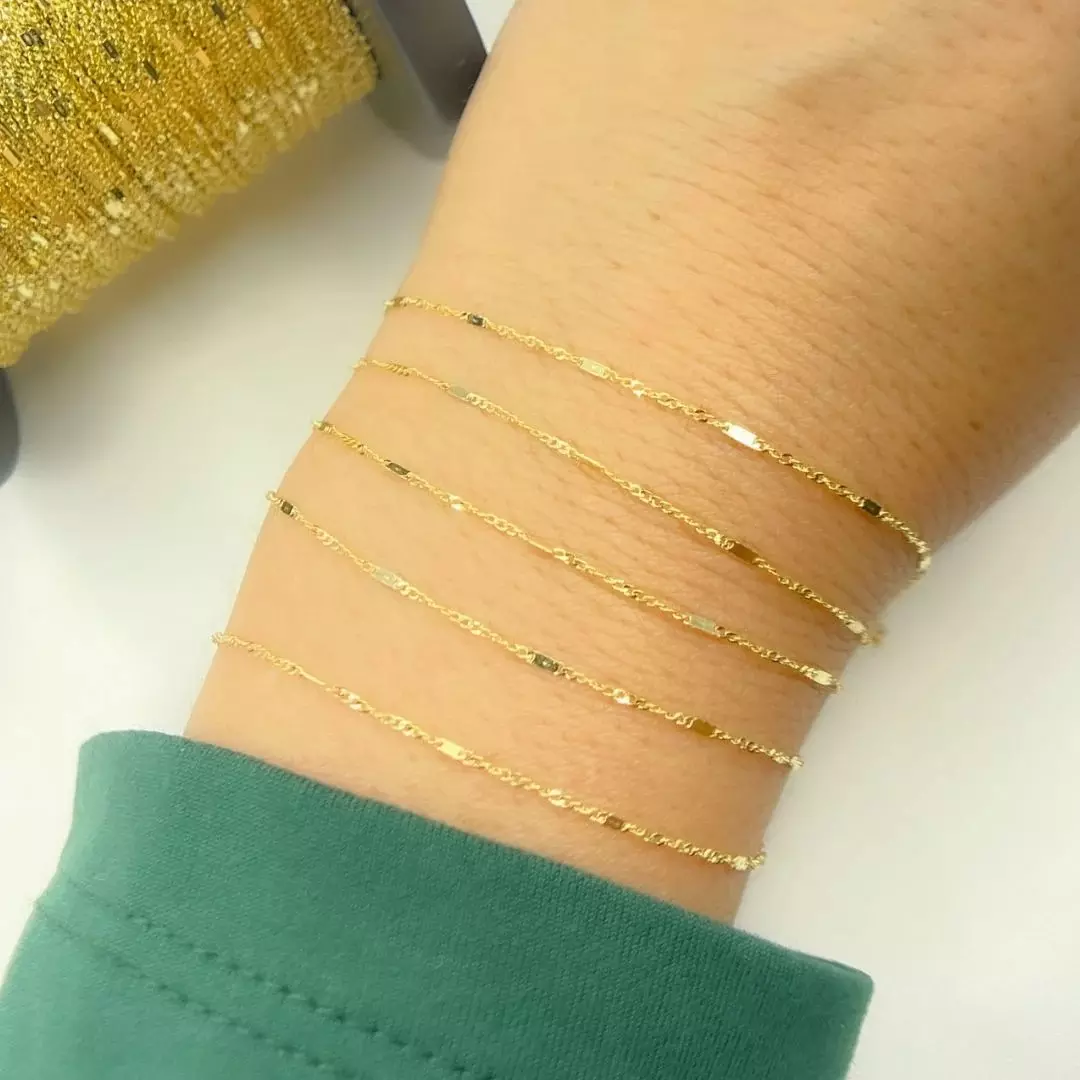
Solid 14K Gold Chain: Why Quality Matters When Choosing Your Jewelry
A chain may look simple, but the quality behind it can make a significant difference in how it wears, feels, and holds up over time.
For shoppers comparing different types of gold jewelry, understanding what separates a well-made piece from a lower-quality alternative is especially important.
A 14k gold chain offers a practical balance between precious-metal content, durability, appearance, and everyday wearability, making it a popular choice for both men and women.
Gold jewelry is often purchased for more than appearance. A chain may become part of someone's daily wardrobe, a meaningful gift, or a piece intended to remain in a jewelry collection for years.
That makes factors such as gold purity, construction, weight, clasp quality, and craftsmanship worth considering before making a purchase.
What Does 14K Gold Actually Mean?
The term "14K" refers to the proportion of pure gold used in the jewelry. Pure gold is 24 karats, so 14K gold contains approximately 14 parts pure gold out of 24. That works out to about 58.3% pure gold, with the remaining portion consisting of other metals.
Those additional metals are not necessarily a disadvantage. In fact, they play an important role in making gold jewelry suitable for regular use.
Pure gold is relatively soft, so mixing it with metals such as silver, copper, zinc, or palladium can increase hardness and resistance to everyday wear.
This is one reason 14K gold has become a practical choice for jewelry that is expected to be worn frequently. It retains a substantial amount of genuine gold while offering greater durability than higher-purity alternatives.
For consumers, the key lesson is simple: karat tells you about gold purity, but it does not tell the entire story about quality.
Two pieces can both be labeled 14K and still differ considerably in craftsmanship, construction, weight, finishing, and longevity.
Why Construction Matters as Much as Purity
When evaluating a gold chain, shoppers sometimes focus almost entirely on karat purity. While purity is important, construction determines how the jewelry behaves during everyday wear.
A well-constructed chain should have links that connect securely and move naturally without feeling excessively stiff or fragile. The connections between individual components should be clean, and the clasp should function smoothly without appearing poorly fitted.
This matters because chains experience constant movement. They bend when you sit, shift when you walk, and encounter friction against clothing and skin.
A chain that looks attractive in a product photograph may not perform well if its links or fastening mechanism are poorly constructed.
Weight also deserves attention. A heavier chain is not automatically better, but extremely lightweight construction can sometimes indicate that less metal has been used. Consumers should consider the intended use of the piece rather than assuming that a particular weight is always superior.
Solid Gold, Gold-Plated, and Gold-Filled Jewelry
Understanding the difference between solid gold and other gold-colored jewelry is essential when comparing products.
Solid gold jewelry is made from a gold alloy throughout the material. The gold content is distributed throughout the piece rather than being limited to an exterior coating.
Gold-plated jewelry, by contrast, consists of a base metal covered with a relatively thin layer of gold. The surface can initially provide a convincing gold appearance, but the coating may gradually wear away, especially in areas exposed to friction.
Gold-filled jewelry contains a thicker bonded layer of gold than typical gold plating, but it is still structurally different from solid gold.
The distinction becomes particularly relevant for people who intend to wear a chain regularly. Repeated contact with skin, clothing, moisture, and personal-care products can affect surface treatments over time.
When comparing jewelry, shoppers should therefore read product descriptions carefully and verify exactly what material is being offered rather than relying solely on terms such as "gold" or "gold color."
Read: Solid Gold Chain: A Complete Guide to Timeless Style
How to Assess the Quality of a Gold Chain
Quality is best evaluated through several factors rather than a single specification. Before purchasing, consider the following:
- Gold purity: Check whether the piece is clearly identified by its karat rating.
- Construction: Examine the links, joints, clasp, and overall structure.
- Weight: Consider whether the weight is appropriate for the chain's intended purpose.
- Finish: Look for an even surface and consistent color throughout the piece.
- Clasp: A secure, well-fitted clasp can make a major difference in everyday usability.
- Seller transparency: Product descriptions should clearly explain materials, dimensions, and relevant specifications.
These details help separate an informed jewelry purchase from one based primarily on appearance.
Choosing the Right Chain for Everyday Wear
Everyday jewelry needs to withstand more activity than a piece reserved for special occasions. If a chain will be worn frequently, consider its thickness, length, link style, and intended environment.
A delicate chain can work well with casual clothing and layered looks, but it may require more careful handling than a thicker design.
A substantial chain can offer a stronger visual presence and may be better suited to someone who prefers a statement accessory.
Length is another practical consideration. A shorter chain may sit closer to the collarbone, while a longer design can fall lower on the chest. The best length depends on personal style, clothing choices, and whether the chain will be worn alone or with a pendant.
For gifts, versatility is often a useful priority. A classic design in a wearable length is more likely to complement different outfits and personal styles than an unusually specialized piece.
Matching Chain Style With Personal Style
Gold jewelry does not have to follow a single fashion formula. The right chain can complement an understated wardrobe just as effectively as it can support a more expressive look.
Classic link patterns tend to work well for people who want jewelry that can transition between casual and formal settings.
Chunkier styles may suit someone who wants the chain to become a central element of an outfit. More refined designs can provide a subtle accent when paired with business clothing or minimalist fashion.
Layering has also become a common styling approach. Several chains can be combined to create contrast through different lengths, textures, or link sizes.
However, layering should not compromise comfort. Chains that repeatedly catch on one another can experience additional friction and may become more difficult to maintain.
The most successful jewelry choices usually combine visual appeal with practicality. A piece that fits naturally into someone's lifestyle is more likely to be worn consistently.
Why 14K Gold Can Be Practical for Frequent Wear
There is an important distinction between choosing jewelry for occasional use and selecting a piece intended to become part of a daily routine.
Because 14K gold contains a meaningful amount of pure gold while incorporating harder metals into the alloy, it is generally well suited to regular wear.
This balance makes it attractive to consumers who want authentic gold without choosing an especially high-purity alloy that may be softer.
That does not mean 14K gold is indestructible. Any jewelry can be scratched, bent, or damaged under sufficient force. A chain's durability also depends on its design and manufacturing quality.
For someone who wears a chain most days, the practical goal should be to choose a piece that combines suitable gold purity with sound construction and sensible care habits.
Signs of a Well-Made Chain
Experienced jewelry shoppers often learn to look beyond the overall appearance. Small construction details can reveal a great deal about manufacturing quality.
Start by examining the links. They should appear consistently shaped, with smooth edges and no obvious gaps where connections should be closed. The chain should move naturally rather than feeling unusually rigid or uneven.
Next, inspect the clasp. It should open and close without excessive resistance while remaining secure when fastened. If the clasp feels flimsy compared with the rest of the chain, it may become a weak point during long-term use.
The surface finish should also be consistent. Uneven polishing, rough areas, or visible manufacturing marks can indicate that less attention was given to finishing.
Finally, look for clear product information. A reputable jewelry seller should be able to explain the material, purity, dimensions, and construction of the piece without relying on vague descriptions.
Understanding Hallmarks and Product Information
Jewelry markings can provide useful information about gold purity. A 14K piece may be marked "14K," while some jewelry uses a numerical fineness mark such as "585," reflecting approximately 58.5% gold content.
However, markings should not be treated as the only indicator of authenticity. Documentation, seller transparency, and overall product information matter as well.
When shopping online, consumers should pay close attention to the wording used in product descriptions. Terms such as "14K solid gold," "14K gold plated," and "gold-tone" describe very different materials.
Before purchasing, verify:
- The stated karat or fineness.
- Whether the item is solid gold or another construction.
- The chain's dimensions and approximate weight.
- The type of clasp and link construction.
- The seller's policies regarding returns and product information.
Taking a few extra minutes to review these details can prevent confusion later.
Caring for a Gold Chain
Even high-quality jewelry benefits from proper care. Gold alloys can resist everyday wear, but they are not immune to scratches, chemicals, or physical damage.
Perfume, hairspray, lotions, chlorine, and household cleaning products can expose jewelry to substances that may affect its appearance over time. Removing a chain before swimming, exercising, showering, or performing strenuous physical work can reduce unnecessary exposure and stress.
When cleaning at home, a gentle approach is usually best. A soft cloth and appropriate jewelry-cleaning method can help remove surface oils and residue. Harsh abrasives should be avoided because they may create fine scratches.
Storage also matters. Keeping a chain separately from pieces with sharp edges can reduce tangling and surface contact. A soft jewelry pouch or lined compartment is often preferable to placing several pieces together in a single container.
Regular inspection is another useful habit. Check the clasp and links periodically, particularly if the chain is worn every day. Identifying a loose connection early can help prevent accidental loss.
Why Quality Matters for Jewelry Gifts
Gold jewelry is frequently chosen as a gift for birthdays, anniversaries, graduations, weddings, holidays, and other milestones. In these situations, quality carries significance beyond technical specifications.
A well-made chain can become associated with a particular moment or relationship. Unlike trend-driven accessories that may quickly fall out of use, a classic gold piece can remain relevant as personal style changes.
When purchasing jewelry as a gift, consider the recipient's existing preferences. Someone who normally wears understated accessories may appreciate a slim, classic chain, while a person who prefers bold styling may favor a larger link pattern.
The goal is not necessarily to choose the most expensive option. Instead, focus on authenticity, appropriate construction, versatility, and whether the design suits the recipient.
Balancing Price With Long-Term Value
Price is naturally part of any jewelry decision, but the lowest initial cost does not always represent the best overall value.
A chain intended for daily wear should be evaluated according to how well its materials and construction match that purpose. A piece that requires frequent replacement because of fragile construction may ultimately be less practical than a better-made item purchased once.
At the same time, a higher price does not automatically guarantee superior quality. Consumers should look for evidence that the price reflects meaningful differences in material, weight, workmanship, design, or other measurable characteristics.
A useful approach is to compare products based on specifications rather than relying on appearance alone. This creates a clearer picture of what you are actually paying for.
Making a More Informed Jewelry Purchase
The best jewelry purchases usually begin with a clear understanding of personal needs.
Ask yourself how often the chain will be worn, whether it needs to support a pendant, what clothing it will be paired with, and whether you prefer subtle or noticeable jewelry. These questions can narrow down the appropriate length, thickness, link style, and construction.
It is also worth considering lifestyle. Someone working in a physically demanding environment may need different jewelry than someone who primarily wears accessories for office settings or social occasions.
For additional perspective on gold jewelry and chain selection, shoppers can explore educational resources from Jewels and Chains that discuss solid gold pieces and considerations for choosing quality jewelry.
Ultimately, informed buying is less about chasing a particular trend and more about understanding what makes a piece appropriate for its intended use.
The Bottom Line: Quality Is More Than Appearance
A beautiful chain can catch attention immediately, but the qualities that determine long-term satisfaction are often less obvious. Gold purity, construction, weight, link design, clasp quality, finishing, and care requirements all contribute to the experience of owning and wearing jewelry.
A 14K gold piece can offer an appealing combination of genuine gold content and everyday practicality, but consumers should still evaluate the complete product rather than assuming that the karat rating tells the whole story.
For anyone shopping for a chain, the most reliable strategy is to slow down, read the specifications, understand the materials, examine the construction, and choose a design that fits both personal style and lifestyle.