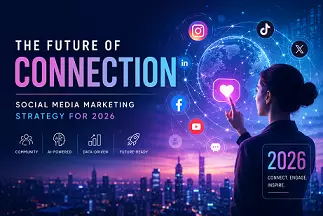
Social Media Marketing in 2026: The Complete Guide to Building a System That Actually Drives Revenue
The social media landscape has undergone a radical transformation. The days of simply posting consistently and hoping for engagement are long gone.
In 2026, successful brands treat social media as a sophisticated, integrated marketing system where organic insights fuel paid amplification, creative dictates audience targeting, and every action connects directly to business outcomes.
This guide explores the strategies, tools, and mindset shifts required to build a social media marketing engine that scales without burning out your team.
The Fundamental Shift: Creative Now Dictates Audience
One of the most profound changes in social media marketing in 2026 is the complete reversal of how targeting works. Historically, marketers would define their audience first—selecting demographics, interests, and behaviors—and then create creative assets to match that predefined group. This approach is now obsolete.
AI-powered delivery systems, such as Meta's Advantage+, have fundamentally changed the game.
These sophisticated algorithms now analyze your creative assets directly—interpreting visual cues, audio, captions, and contextual signals—to determine who should see your ad. The creative itself now dictates the audience.
If you want to reach pet owners, selecting interest-based targeting matters far less than showing a dog, demonstrating pet behavior, or addressing a pet-specific problem within your content.
This shift represents a profound change in resource allocation. Success now depends less on audience groups and exclusions and more on producing content that clearly communicates intent to both the algorithm and the user.
Brands that understand this are investing heavily in creative testing and iteration, treating each piece of content as a hypothesis about what will resonate.
Platform Selection: Depth Over Breadth
In 2026, the biggest mistake brands continue to make is trying to maintain a presence on every platform simultaneously.
This "spray and pray" approach dilutes resources, burns out teams, and leads to mediocre results across the board. Successful brands have learned that it is better to dominate two or three platforms than to be invisible on five.
The key is understanding where your specific audience spends their time and how they behave on each platform. For Gen Z consumers, TikTok and Instagram serve as primary discovery channels where entertainment and authenticity reign supreme. For B2B professionals,
LinkedIn and YouTube offer the highest ROI, with decision-makers seeking educational content and case studies. Gen X and Boomers continue to favor Facebook and YouTube for news, connection, and community.
Once you have committed to your chosen platforms, you must understand how their algorithms reward content. Each platform has distinct preferences:
TikTok prioritizes entertainment and trends, LinkedIn values professional insights and thought leadership, Instagram rewards visual storytelling and Reels engagement, and YouTube favors depth and watch time. Your content strategy must align with these platform-specific behaviors rather than trying to force a one-size-fits-all approach.
The Death of Algorithm Hacking
The era of "hacking the algorithm" is definitively over. Major social media platforms have matured to the point where algorithmic signals increasingly align with real audience behavior. In practice, this means the algorithm is no longer something to outsmart—the algorithm is the audience.
Performance now depends on how well brands align paid social media advertising, creative strategy, and messaging with genuine user intent.
The platforms have become too sophisticated for tricks or shortcuts. Instead of trying to manipulate the system, successful brands focus on creating content that genuinely resonates with their target audience and provides value.
This shift requires a fundamental mindset change. Instead of asking "how do we beat the algorithm," marketers should ask "how do we serve our audience better." The platforms are designed to surface content that keeps users engaged, so creating content that your audience genuinely wants to see and interact with is the most reliable path to visibility.
Building the Organic and Paid Integration System
The most successful brands in 2026 treat organic and paid social media not as separate strategies, but as two parts of one integrated marketing system. This integration is not optional—it is essential for maximizing both creative effectiveness and budget efficiency.
The Organic Testing Ground
Organic content serves as a low-cost testing ground for your best ideas. When you post organically, you are gathering real-world data about what resonates with your audience without spending a dollar on promotion.
The posts that generate genuine engagement—comments, shares, saves, and meaningful interactions—are telling you exactly what your audience responds to.
The Paid Amplification Engine
Your best-performing organic posts are worth putting budget behind. Boosting proven organic content as paid ads is consistently more effective than creating content specifically for ads.
Why? Because the social proof is already there—real people have engaged with this content, and that social validation increases trust and conversion potential. Additionally, the creative has already been validated by your actual audience, reducing the risk of wasting ad spend on unproven concepts.
The Feedback Loop
Without a feedback loop between organic and paid teams, paid budgets amplify mediocre creative and organic channels starve for assets.
The integration should work in both directions: organic insights inform paid amplification, and paid performance data should influence organic content creation.
This closed-loop system ensures that every piece of content is informed by real data and that your entire social media operation becomes more effective over time.
Creative Testing That Improves Return on Ad Spend
Creative testing must be systematic and rigorous. In 2026, the brands that win are those that treat creative as a science, not an art. Here is how to structure your creative testing for maximum impact:
Test Variables Methodically
Vary one element at a time to understand what truly drives performance. Test hooks in the first two seconds of video—the most critical moment for capturing attention.
Compare static carousel formats against single images to see which drives more engagement for your specific product. Rotate calls-to-action aligned to funnel stage to understand what prompts action at different points in the customer journey.
Establish Clear Kill Criteria
Cap learning phases with clear criteria for killing underperforming ads. Do not let weak creative drain your budget. If an ad does not meet predetermined performance thresholds within a specific timeframe or budget spend, pause it and move the budget to better-performing options.
Document and Share Learnings
Document winners in a creative playbook that other teams can reuse. This institutional knowledge prevents the organization from repeating mistakes and ensures that successful approaches can be scaled across different campaigns and platforms.
The Authenticity Advantage
In 2026, the declining effectiveness of overly polished creative is a defining trend. Highly produced ads increasingly struggle to hold attention.
Audiences have learned to identify and ignore content that feels overly branded or sales-driven. This has given rise to what some call the "ugly ad era"—a pivot toward lo-fi execution, mobile-shot footage, minimal editing, natural lighting, and conversational delivery. Authenticity has become a performance signal, not just a branding preference.
Understanding Audience Insights Beyond Demographics
Audience research on social platforms goes far beyond demographics. In 2026, the most valuable insights come from understanding pains, objections, and the actual language customers use.
Comment Mining and Social Listening
The comments section of your posts and your competitors' posts is a goldmine of insight. Read through comments to understand what questions people are asking, what objections they have, and what language they use to describe their problems. This feedback is unfiltered and immediate—people tell you exactly what they think.
Building Personas Per Platform
Build distinct personas for each platform you operate on. LinkedIn decision-makers differ significantly from TikTok discoverers.
A B2B executive looking for ROI case studies has different needs and behaviors than a consumer scrolling for entertainment. Tailor your proof points: use ROI case studies for professionals, fast visual demos for consumers, and community testimonials for social proof.
Using Platform Analytics
Platform analytics provide behavioral data that complements your qualitative research. Understand not just who your audience is, but how they interact with content. What times do they engage? What formats do they prefer? What topics generate the most conversation? Combine this data with your comment insights for a complete picture of your audience.
The Full-Funnel Campaign Structure
Social media marketing in 2026 requires separating brand building from performance campaigns while using shared creative insights. A full-funnel approach recognizes that different content serves different purposes at different stages of the customer journey.
Top of Funnel: Discovery and Awareness
At the top of the funnel, your goal is discovery. Content should be entertaining, educational, or emotionally resonant.
This is where you build brand awareness and attract new audiences. Focus on reach, impressions, and engagement metrics. Short-form video excels here, as does content that taps into cultural moments or trending topics.
Middle of Funnel: Consideration and Community
In the middle of the funnel, you nurture interest and build community. This is where proof points, testimonials, case studies, and educational content shine.
Your goal is to move people from awareness to consideration. This is also where community management becomes critical—responding to comments, answering questions, and building relationships.
Bottom of Funnel: Conversion and Retention
At the bottom of the funnel, your goal is conversion. Content should be more directly promotional, with clear calls-to-action and limited friction between discovery and purchase.
This is where paid advertising often dominates, driving users to landing pages or checkout flows. Social commerce features also come into play here.
Community as a Marketing Channel
Community management is marketing, not an afterthought. In 2026, the accounts that grow fastest are the ones that feel like people, not corporations.
Responding Within Service-Level Targets
Respond to comments within service-level targets. If someone asks a question about your product or service, answer it quickly and helpfully. If someone leaves a complaint, address it professionally and resolve it if possible. This responsiveness builds trust and shows that you care about your community.
Escalating Product Issues
When customers report product issues in comments or direct messages, escalate those issues to the appropriate teams. Use these reports to identify patterns and improve your products or services. Your community will tell you what is working and what is not if you are listening.
Highlighting User-Generated Content
With permission, highlight user-generated content. When customers share photos, reviews, or stories about your brand, feature them on your channels. This builds community, provides social proof, and gives your audience a chance to be recognized.
Feeding Insights Back to Product and Sales
Communities surface objections and insights that ads miss. When you hear the same questions or concerns repeatedly, that is valuable product feedback. Feed these insights back to product development and sales teams to improve your offerings and sales conversations.
Read: Top Online Marketing Agency in Noida: SEO, SMM & PPC
Influencer Partnerships That Convert
Influencer marketing has matured significantly. In 2026, the most effective partnerships come from micro-influencers and niche community leaders rather than macro-celebrities.
Authenticity Over Reach
Peer credibility outweighs polished endorsements. Raw, authentic, real-world stories from relatable voices drive conversion better than branded placements. A micro-influencer with 10,000 engaged followers in your specific niche will often outperform a celebrity with millions of followers but no specific expertise.
Co-Creation, Not Dictation
Co-create with influencers rather than dictating messaging. Give them creative freedom to present your product in their authentic voice and style. The result is content that feels native to their audience and performs better in feed algorithms.
Contract Essentials
Contracts should cover three critical elements: disclosure requirements, usage rights for repurposing content, and whitelisting for paid amplification. Whitelisting allows you to run the influencer's content as paid ads from your account, extending the reach and effectiveness of the partnership.
Tracking Impact
Track unique links or codes per partner instead of guessing impact from likes alone. This attribution data tells you which partnerships are actually driving conversions, allowing you to optimize your influencer investments.
Social Commerce for Considered Purchases
Social commerce features continue expanding, but friction varies by category. For products that require research and consideration, social platforms should start conversations rather than force instant purchase.
Simplifying Checkout Paths
For products with lower friction—impulse purchases, familiar brands, or low-cost items—simplify checkout paths to reduce friction. Show real inventory, set expectations on shipping in captions rather than only landing pages, and make the purchase process as seamless as possible.
Starting Conversations for High-Consideration Products
For high-consideration products—expensive items, complex services, or unfamiliar brands—use social to start conversations that continue via email or sales channels. Do not force instant purchase if your product requires more research. Instead, use social to answer questions, provide information, and build trust that leads to conversion later.
Crisis Communication on Social
Crisis preparedness is essential. When issues arise, how you respond on social media can either contain the damage or amplify it.
Holding Statements and Escalation Trees
Prepare holding statements in advance for common scenarios. Establish escalation trees so that issues reach the right decision-makers quickly. When a crisis hits, speed matters. The faster you respond, the more control you maintain over the narrative.
Pausing During Sensitive News Cycles
Have the discipline to pause scheduled posts during sensitive news cycles. Continuing with business-as-usual content when serious events are unfolding can appear tone-deaf and damage your brand perception.
Post-Crisis Retrospectives
After a crisis, conduct retrospectives to learn and improve. Update brand voice guidelines with lessons learned and incorporate new insights into your crisis communication plan.
Reporting That Connects to Revenue
Reporting should combine platform metrics with business outcomes. In 2026, the most successful social media teams are those that can clearly demonstrate their impact on the bottom line.
Key Metrics That Matter
The metrics that matter are those that connect social activity to business results. Cost per acquisition tells you how efficiently you are acquiring customers.
Return on ad spend measures the financial return from your paid campaigns. Pipeline influenced shows how social contributes to sales opportunities. Customer acquisition cost by channel helps you allocate budget effectively.
Avoiding Vanity Metrics
Avoid ranking teams on vanity metrics alone. Impressions, follower counts, and likes feel good but rarely tell you whether social media is contributing to your business. If your follower count grows but sales do not, you are building an audience without converting them.
Weekly Review Rituals
Establish weekly rituals to review key metrics: creative fatigue, frequency caps, and audience overlap between campaigns. These regular check-ins help you catch issues early and optimize performance proactively.
Sustainable Production for Social Teams
Sustainability for social teams is about building systems that prevent burnout and maintain consistency.
Batching Production
Batch content production to maximize efficiency. Dedicate specific blocks of time to creating content, rather than trying to produce content day-by-day. This approach reduces context switching and allows for deeper creative work.
Repurposing Long Assets into Shorts
Repurpose long-form assets into short-form content. A podcast episode can become multiple video clips. A webinar can become several short tips. A blog post can become a carousel. This approach maximizes the value of each piece of content you create.
Protecting Creator Well-Being
Burnout destroys consistency. Build realistic posting cadences backed by capacity planning. Do not expect a team of two to produce the same volume of content as a team of ten. Be honest about what is achievable with your resources.
Using Tooling Effectively
Use tooling to reduce chaos as channels multiply. Schedulers automate posting. Asset libraries organize your content. Approval workflows streamline reviews. The right tools reduce administrative overhead and free up creative energy.
Conclusion: The Authenticity Imperative
As AI-generated content floods social feeds, authenticity becomes harder to fake—and more powerful than ever. Audiences are growing skeptical of anything too polished, craving human-made stories, real faces, and emotionally grounded perspectives they can trust.
The paradox is that the more automated marketing becomes, the more brands must prove they are human. In a world of virtual voices and perfect outputs, trust has become the only real differentiator. The brands that win in 2026 are building ownable worlds—repeating ideas, recognizable voices, and coherent content systems that feel familiar rather than opportunistic.
They are embracing the reality that control is an illusion and instead focusing on participation, community, and genuine human connection. The question is no longer whether to invest in social media—it is how to do it smartly, turning attention into measurable growth while building lasting relationships with your audience.
Frequently Asked Questions
What is the most important change in social media marketing for 2026?
The most significant change is that creative has officially replaced targeting. AI-powered systems like Meta's Advantage+ now analyze creative assets to determine audience delivery, making the content itself the primary driver of who sees your ads rather than manual audience selection. This means brands must invest significantly more in creative testing and iteration.
How should I balance organic and paid social media in 2026?
Use organic content as a low-cost testing ground to identify what resonates with your audience. Then allocate paid budget to amplify your top-performing organic posts.
This integrated approach ensures your paid spend is validated by real audience engagement data and that your organic insights directly inform your advertising strategy. Without this feedback loop, paid budgets amplify mediocre creative and organic channels starve for assets.
What content formats work best in 2026?
Short-form video remains dominant across all major platforms. YouTube Shorts is projected to surpass 70 billion daily views, and Instagram Reels continues to lead in-app screen time.
However, the trend is moving toward authentic, lo-fi content that feels human and unpolished. Highly produced, corporate-style creative increasingly struggles to hold attention as audiences become more sophisticated at identifying branded content.
How do I measure success on social media in 2026?
Focus on business outcomes including cost per acquisition, return on ad spend, pipeline influenced, and customer acquisition cost by channel. Avoid vanity metrics like impressions and follower counts.
Set up UTM tracking on every link you share, check your analytics weekly, and be willing to kill content formats that do not move the right numbers even if they get plenty of likes. Regular review of creative fatigue, frequency caps, and audience overlap is essential.
What role does AI play in social media marketing in 2026?
AI serves as a support tool for strategy, not a replacement for human judgment. Use AI for analysis, research, content ideation, and optimization.
However, audiences are increasingly skeptical of fully AI-generated content and strongly prefer human-generated messaging and personalized service. The more automated marketing becomes, the more brands must prove they are human, making trust the only real differentiator in a crowded digital landscape.