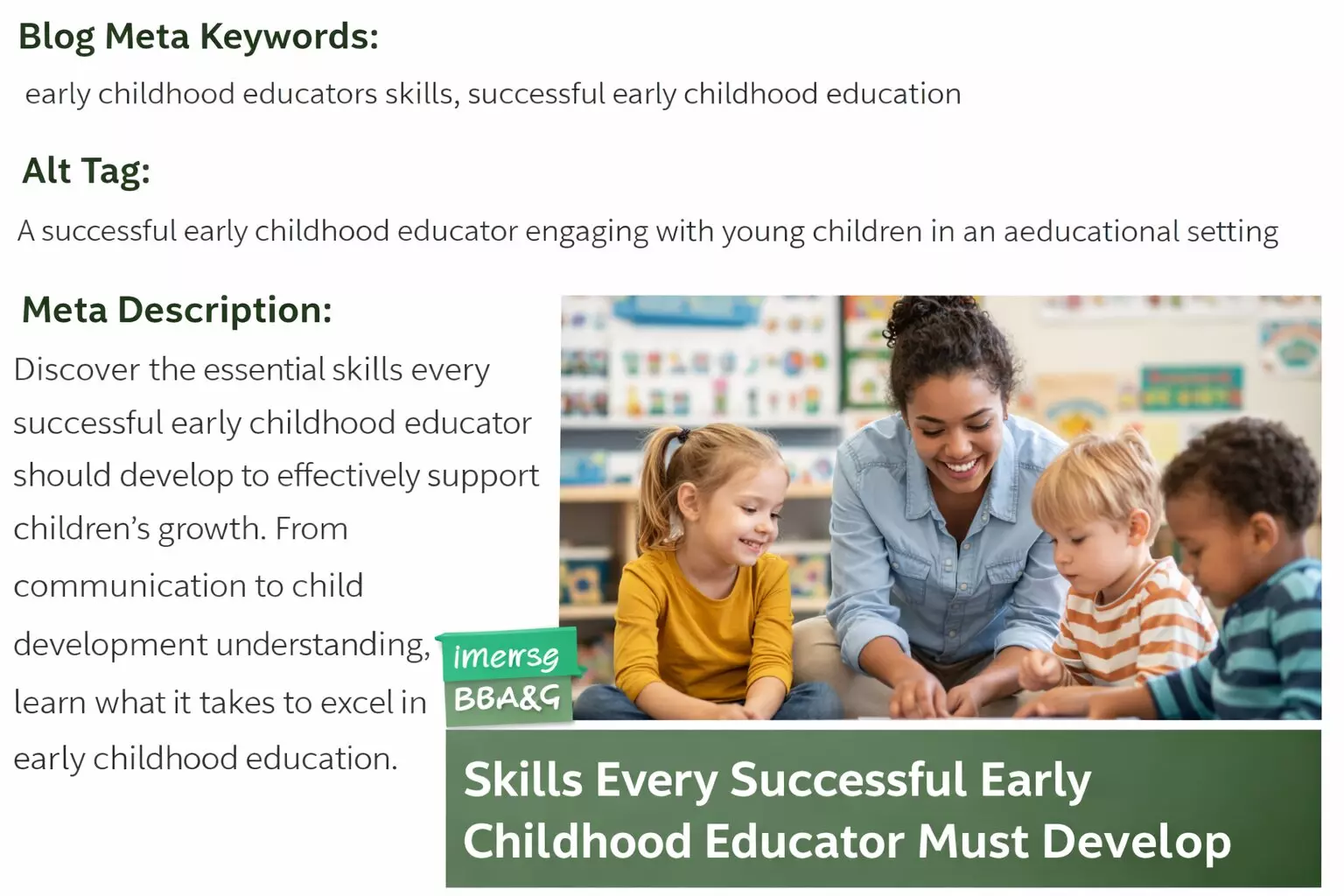
Skills Every Successful Early Childhood Educator Must Develop
Early childhood education is one of the most impactful professions in society. The early years of a child’s life are critical for cognitive, emotional, and social development, and educators who work with young children play a vital role in shaping their learning experiences.
In Australia, the early childhood sector continues to grow as the importance of quality childcare and education becomes more widely recognised.
Students who pursue early childhood education or childcare studies at universities quickly realise that the profession requires more than simply enjoying time with children.
It demands a combination of academic knowledge, practical skills, emotional intelligence, and professional responsibility.
To become an effective educator, individuals must develop a diverse skill set that helps them support children’s development while working within structured educational frameworks.
Below are some of the most important skills every successful early childhood educator should develop during their studies and professional career.
Strong Communication Skills
Communication is one of the most essential skills for early childhood educators. Professionals in this field interact with young children, parents, colleagues, and supervisors on a daily basis.
Each of these interactions requires a different communication approach.
When working with children, educators must be able to explain ideas in simple, engaging ways. Young learners respond best to clear instructions, storytelling, visual cues, and positive reinforcement.
Effective communication also helps educators guide behaviour and encourage cooperation in the classroom.
Communication with parents is equally important. Families rely on educators to provide updates about their child’s development, behaviour, and learning progress.
Being able to communicate clearly and respectfully helps build trust between childcare centres and families.
Students studying early childhood education often practise these skills through group projects, classroom discussions, and reflective assignments that focus on child interaction and family engagement.
Understanding Child Development
A deep understanding of child development is fundamental for anyone working in early childhood education. Educators must recognise how children grow and learn at different stages, including cognitive, emotional, social, and physical development.
Knowledge of child development allows educators to design age-appropriate learning activities that support curiosity and creativity. It also helps them identify when a child may need additional support or guidance.
University coursework in early childhood education usually includes subjects related to developmental psychology, learning theories, and behaviour analysis.
These topics often require students to complete research assignments and case studies.
Because these academic tasks can sometimes be challenging, many students look for additional resources or childcare assignment help to better understand theoretical concepts and apply them to real childcare settings.
Developing a strong foundation in child development ensures educators can create supportive and inclusive learning environments for all children.
Patience and Emotional Intelligence
Working with young children requires an extraordinary level of patience. Children are still learning how to regulate their emotions, communicate their needs, and interact with others.
Educators must be prepared to handle challenging situations calmly and constructively.
Emotional intelligence plays a key role in this process. Educators with strong emotional awareness can recognise how children feel and respond appropriately.
They understand when a child may be frustrated, overwhelmed, or simply seeking attention.
By demonstrating empathy and patience, educators help children develop emotional regulation and positive social behaviours. Over time, this supportive environment helps children build confidence and independence.
Creativity and Adaptability
Early childhood learning is often based on play, exploration, and creative activities. Successful educators know how to transform everyday experiences into valuable learning opportunities.
Creativity allows educators to design engaging lessons using games, music, storytelling, art, and hands-on activities. These experiences help children develop language skills, imagination, and problem-solving abilities.
Adaptability is equally important because classroom situations can change quickly. Children may lose interest in an activity, unexpected behaviour may arise, or external factors may affect the day’s schedule.
Educators must be able to adjust their teaching approach while maintaining a positive learning environment.
Developing creative thinking during university studies can help future educators prepare for these real-world classroom situations.
Observation and Assessment Skills
Observation is a powerful tool in early childhood education. Educators must regularly observe children’s behaviour, interactions, and learning progress to understand their individual needs.
Careful observation helps educators identify:
- Developmental milestones
- Learning strengths and challenges
- Social interactions between children
- Emotional responses to different activities
These observations are often documented and used to plan future learning experiences. Assessment also helps educators communicate progress to parents and supervisors.
During university courses, students often practise observation techniques through case studies, reflective journals, and field placements in childcare centres.
Classroom Management Skills
Even in early childhood settings, effective classroom management is necessary to maintain a safe and supportive learning environment. Educators must guide children’s behaviour while encouraging cooperation and respect.
Rather than using strict discipline, early childhood educators typically rely on positive behaviour guidance strategies. These may include:
- Encouraging teamwork and sharing
- Using clear and consistent rules
- Redirecting negative behaviour into positive activities
- Reinforcing good behaviour through praise and encouragement
Developing strong classroom management skills helps educators maintain a balanced and enjoyable environment where children feel safe to learn and explore.
Knowledge of Educational Frameworks
In Australia, early childhood education is guided by national frameworks and standards designed to ensure high-quality care and learning outcomes.
Educators must understand these frameworks and apply them in their daily teaching practices.
One of the most important frameworks is the Early Years Learning Framework (EYLF), which focuses on supporting children’s learning through play-based experiences and strong relationships with educators and families.
Educators must also follow the National Quality Framework (NQF), which sets standards for childcare services across the country.
University programs introduce students to these frameworks through coursework, assignments, and practicum placements. Understanding how these policies influence teaching strategies is essential for anyone entering the childcare profession.
Teamwork and Collaboration
Early childhood educators rarely work alone. They are part of a professional team that includes other educators, centre directors, support staff, and families.
Collaboration is essential to ensure children receive consistent care and guidance.
Working effectively in a team environment requires respect, open communication, and a willingness to share ideas. Educators often collaborate to plan learning activities, discuss children’s development, and solve challenges that arise in the classroom.
Teamwork also extends beyond the childcare centre. Educators may work with speech therapists, psychologists, or special education professionals to support children with additional learning needs.
Read: Agra-Based Pingmedia Releases List of Top 5 Digital
Commitment to Continuous Learning
The field of early childhood education continues to evolve as new research and teaching strategies emerge. Successful educators recognise the importance of ongoing professional development.
This commitment to continuous learning may involve attending training workshops, completing additional certifications, or pursuing higher education in early childhood studies.
During their university journey, students begin developing research and academic skills that support lifelong learning.
Completing coursework, research projects, and reflective assignments encourages critical thinking and professional growth.
Some students also seek academic support services when navigating complex topics, allowing them to strengthen their understanding of educational theories and childcare practices.
Conclusion
Becoming a successful early childhood educator requires much more than a passion for working with children.
It involves developing a wide range of professional skills, including communication, creativity, patience, observation, and a strong understanding of child development.
Students studying early childhood education in Australia gain these skills through a combination of academic learning and practical experience in childcare environments.
While the journey can be academically demanding, especially when completing research projects and coursework assignments, it ultimately prepares graduates for rewarding careers that make a real difference in children’s lives.
By continuously developing their professional abilities and staying committed to quality education practices, early childhood educators play a vital role in supporting the growth, confidence, and future success of the next generation.