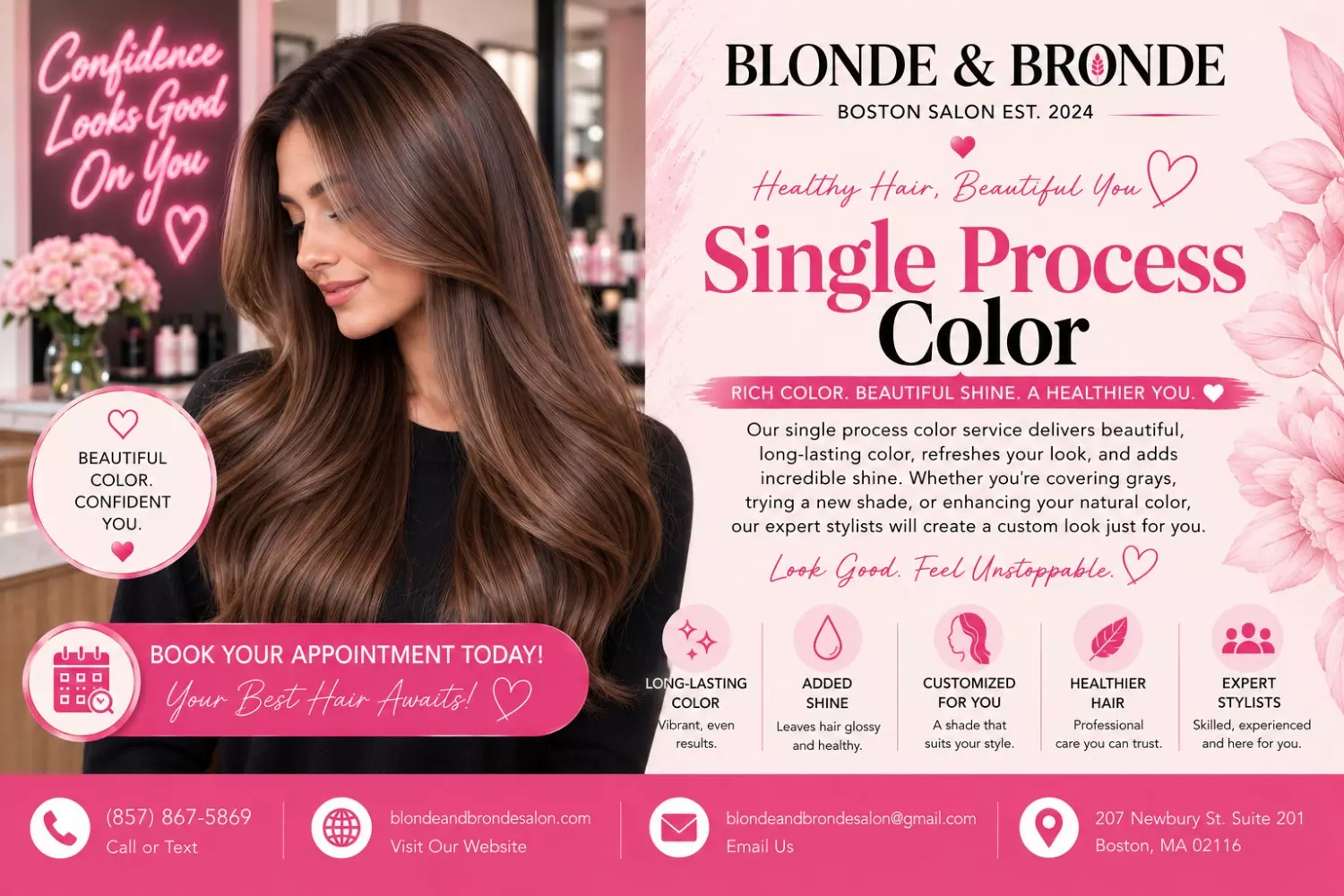
Single Process Color: Benefits, Cost & What to Expect
Want to refresh your hair color without making a major change? Single Process Color may be the simple solution you are looking for. This popular salon service can add richness, cover gray hair, refresh faded color, or give your natural shade a more polished appearance.
Unlike highlighting services that lighten selected sections of the hair, single process hair color generally involves applying one color formula throughout the hair. The final result depends on your starting color, hair condition, desired shade, and the formula chosen by your stylist.
If you are considering a color appointment, understanding the benefits, cost, maintenance, and process can help you make a more confident decision.
What Is Single Process Color?
Single Process Color is a hair coloring service where a color formula is applied to the hair to create an overall change or refresh the existing shade.
It can be used for several goals, including:
- Covering gray or white hair
- Darkening the hair
- Refreshing faded color
- Adding warmth or coolness
- Enhancing your natural-looking shade
- Creating a more even overall color
A professional colorist considers your current hair color, previous chemical services, texture, and desired result before selecting a formula.
Single Process vs. Highlights
The main difference is how the color is applied.
With single process hair color, the goal is generally to create an overall color result. Highlights, balayage, and foils, on the other hand, selectively lighten sections of the hair to create dimension.
That does not mean one service is better than another. The right choice depends on the look you want.
Benefits of Single Process Hair Color
One reason this service remains popular is its versatility. It can provide noticeable results without requiring a complicated color transformation.
1. Creates a More Even Color
If your hair has become uneven or faded over time, an all-over color can help create a more consistent appearance.
2. Covers Gray Hair
For clients who want gray coverage, single process color can be an effective option. Your stylist can recommend a shade and formula based on your desired level of coverage.
3. Refreshes Dull Hair
Hair color can lose its vibrancy from washing, sun exposure, heat styling, and everyday wear. A fresh color service can bring back richness and shine.
4. Offers Plenty of Shade Options
Single process color does not mean you are limited to one basic shade. Depending on your starting point and hair history, you may choose from brunette, blonde, copper, red, or other customized tones
What to Expect During Your Appointment
Knowing what happens in the salon can make the experience much easier.
Step 1: Consultation
Your stylist will discuss your current color and what you want to achieve. This is the time to mention previous color services, at-home dye, highlights, or treatments.
Be honest about your hair history. Previous chemical services can affect how a new color formula performs.
Step 2: Color Selection
Your stylist will choose a suitable formula based on your hair and desired result. Professional colorists consider factors such as your natural level, existing color, gray percentage, and hair condition.
Step 3: Application
The color is carefully applied according to the chosen formula. Processing time varies depending on the product and the service being performed.
Step 4: Rinse and Finish
Once the color has processed, your stylist will rinse the hair and may shampoo and condition it using products suited to colored hair. The appointment usually finishes with a blow-dry or styling service.
Read: Best Hair Color Salon Near Me: How to Choose the Perfect
How Much Does Single Process Color Cost?
The cost of Single Process Color varies from salon to salon. Location, stylist experience, hair length, product usage, and the amount of work required can all affect the final price.
In Boston, pricing can also vary significantly between salons, especially when comparing independent stylists, full-service salons, and luxury color specialists.
Instead of choosing a salon based only on price, consider the stylist's experience with your desired color and the quality of the consultation. A skilled hair colorist Boston clients trust can help you achieve a result that suits your hair rather than simply applying a standard shade.
For an accurate price, ask the salon for a consultation or service estimate before booking
.
How Long Does Single Process Color Last?
The longevity of your color depends on the formula, your hair, washing routine, and how quickly your natural roots become visible.
To help maintain your color:
- Use shampoo designed for color-treated hair.
- Wash with lukewarm rather than very hot water.
- Limit unnecessary heat styling.
- Use heat protection before blow-drying or using hot tools.
- Protect your hair from prolonged sun exposure.
- Follow your stylist's recommended maintenance schedule.
Root regrowth may become noticeable sooner if you have significant gray coverage or a strong contrast between your natural hair and the new shade.
Common Mistakes to Avoid
Getting better results starts with avoiding a few common mistakes.
Using box dye immediately before your appointment: At-home color can affect professional color formulas and make future corrections more complicated.
Not sharing your hair history: Your stylist needs accurate information about previous color, bleach, and chemical treatments.
Choosing a shade from a photo alone: A color that looks perfect on someone else may look different depending on your natural hair, skin tone, and existing color.
Ignoring aftercare: Even a professionally applied color can fade faster when hair is washed frequently or exposed to excessive heat.
Frequently Asked Questions
Is Single Process Color good for gray coverage?
Yes. It is commonly used for gray coverage. Your stylist can select a formula based on the amount of gray and the level of coverage you want.
Can Single Process Color make my hair lighter?
It depends on your starting color and the formula. Professional color may create some lift in certain situations, but significantly lightening previously colored hair often requires a different approach.
How long does a Single Process Color appointment take?
Timing varies depending on your hair length, thickness, color history, and the service. Your salon can provide a more accurate estimate during consultation.
Can I get highlights with Single Process Color?
Yes. Some clients combine an overall color with highlights or other dimensional services. Your stylist can determine whether combining services is appropriate for your hair.
Is Single Process Color damaging?
Professional color can affect the hair, but the level of impact depends on the formula, application, and condition of your hair. A professional consultation helps determine the safest approach.
How often should I get Single Process Color?
There is no universal schedule. Some clients return when their roots become visible, while others schedule appointments when their overall color begins to fade.
Conclusion
Single Process Color is a practical choice when you want an even, refreshed, or richer hair color without a full highlighting service. From gray coverage to refreshing faded shades, it can be customized around your hair goals.
The most important step is choosing an experienced professional who takes the time to understand your hair history and desired result. At Blonde and Bronde Salon, a personalized consultation can help determine whether single process hair color is the right service for your look.