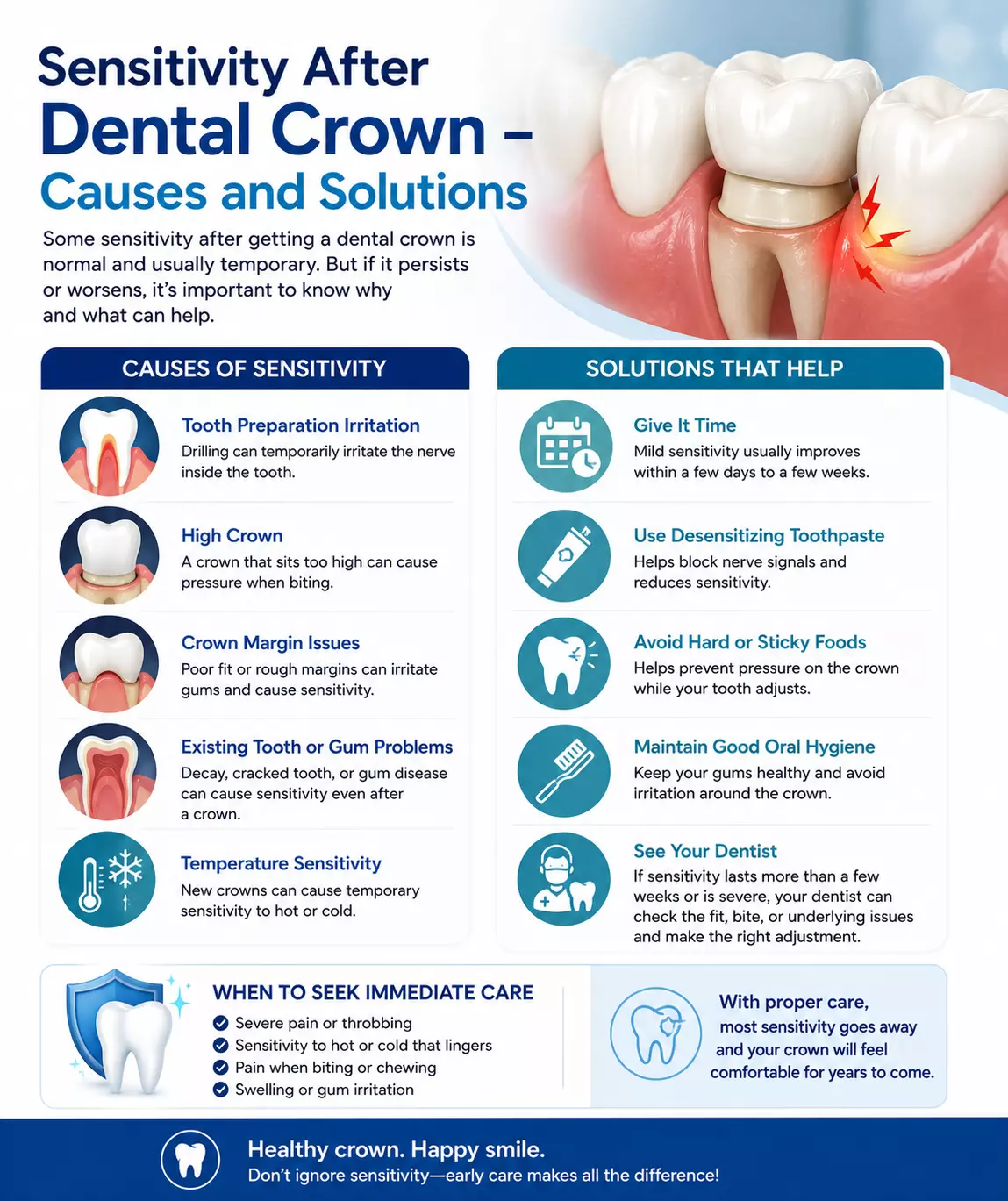
Sensitivity After Dental Crown – Causes and Solutions
Getting a dental crown is a common and effective treatment used to restore damaged, weak, or broken teeth. It helps protect the tooth, improves chewing ability, and restores your smile. However, some patients experience tooth sensitivity after the procedure, which can feel uncomfortable or worrying.
If you are searching for Dental Crown in Lucknow, it is important to understand that mild sensitivity after crown placement is quite common and usually temporary. In this blog, we will explain why sensitivity happens after a dental crown, how long it lasts, and what solutions can help you feel better.
What Is a Dental Crown?
A dental crown is a cap placed over a damaged or weak tooth to restore its shape, size, strength, and appearance. It fully covers the visible part of the tooth and protects it from further damage.
Dentists often recommend a crown after:
- Root canal treatment
- Large cavities
- Broken or cracked teeth
- Weak or worn-down teeth
- Cosmetic improvement
Many patients choose Dental Crown in Lucknow because it offers a long-lasting and natural-looking solution for damaged teeth.
Why Do You Feel Sensitivity After Dental Crown?
Tooth sensitivity after a crown is not unusual. It usually happens because the tooth and surrounding tissues need time to adjust after treatment.
Let’s understand the main causes.
1. Tooth Preparation During Treatment
Before placing a crown, the dentist removes a thin layer of enamel to make space for the crown.
This can cause:
- Temporary nerve irritation
- Increased sensitivity to hot and cold
- Mild discomfort while chewing
This is one of the most common reasons for sensitivity after dental crown treatment.
2. Gum Irritation
During the procedure, gums may get slightly irritated or inflamed. This can lead to:
- Tenderness around the crowned tooth
- Sensitivity while brushing
- Mild swelling
This usually heals within a few days.
3. Bite Adjustment Issues
If the crown is slightly higher than other teeth, it can cause:
- Pressure while biting
- Pain while chewing
- Uneven bite sensation
Dentists can easily fix this by adjusting the crown.
4. Nerve Sensitivity
The tooth nerve may become sensitive after treatment, especially if:
- The decay was deep
- The tooth had a root canal recently
- The crown was placed on an already sensitive tooth
This is temporary in most cases.
5. Cement or Bonding Reaction
The material used to fix the crown can sometimes irritate the tooth temporarily, leading to mild sensitivity.
6. Tooth Decay Under the Crown (Rare Case)
If oral hygiene is not maintained, decay can develop under the crown, causing:
- Persistent pain
- Sensitivity to sweet foods
- Discomfort while biting
This is rare but requires dental attention.
How Long Does Sensitivity Last After Dental Crown?
For most patients, sensitivity lasts:
- A few days to 2 weeks (normal cases)
- Up to 1 month (in deeper treatments like root canal + crown)
If sensitivity continues beyond a few weeks, you should visit your dentist for evaluation.
Patients receiving Dental Crown in Lucknow are usually informed that mild discomfort is a normal part of healing.
Types of Sensitivity After Dental Crown
1. Cold Sensitivity
Pain or discomfort when drinking cold water or eating cold food.
2. Hot Sensitivity
Mild pain when consuming hot drinks like tea or coffee.
3. Pressure Sensitivity
Pain while biting or chewing hard foods.
4. Gum Sensitivity
Tenderness around the gum line of the crowned tooth.
Effective Solutions for Sensitivity After Dental Crown
The good news is that sensitivity can be managed easily. Here are some simple and effective solutions:
1. Use Sensitive Toothpaste
Desensitizing toothpaste helps reduce nerve sensitivity over time. It blocks pain signals from reaching the nerve.
2. Avoid Very Hot or Cold Foods
Try to avoid:
- Ice-cold drinks
- Very hot beverages
- Hard or sticky foods
This helps the tooth heal faster.
3. Maintain Good Oral Hygiene
Brush gently twice a day and floss regularly. Clean teeth reduce irritation and prevent complications.
4. Salt Water Rinse
Rinsing your mouth with warm salt water helps reduce gum inflammation and discomfort.
5. Bite Adjustment by Dentist
If the crown feels high or uncomfortable, your dentist can easily adjust it. This is a quick and simple fix.
6. Pain Relief Medication
In some cases, dentists may recommend mild pain relievers for short-term relief.
7. Avoid Grinding Teeth
Teeth grinding (bruxism) can increase sensitivity. Wearing a night guard may help protect your crown.
When Should You Be Concerned?
You should visit your dentist if:
- Sensitivity lasts more than 2–3 weeks
- Pain increases instead of decreasing
- You feel sharp pain while biting
- Swelling or infection appears
Early treatment prevents complications and protects your crown.
How to Prevent Sensitivity After Dental Crown
You can reduce the chances of sensitivity by:
- Choosing an experienced dentist
- Getting proper bite alignment
- Maintaining oral hygiene
- Avoiding hard foods initially
- Attending follow-up visits
Patients opting for Dental Crown in Lucknow from experienced clinics usually experience fewer complications.
Read: Dental Crown in Cambridge: When You Need One and How It
Benefits of Dental Crowns
Even if mild sensitivity occurs, dental crowns offer long-term benefits:
- Protects weak teeth
- Restores chewing ability
- Improves smile appearance
- Prevents further damage
- Long-lasting solution
- Natural tooth-like appearance
This is why crowns are one of the most trusted dental treatments worldwide.
Dental Crown in Lucknow – Why It Is Popular
Many people search for Dental Crown in Lucknow because:
- Affordable treatment options are available
- Advanced dental technology is used
- Experienced dentists provide safe procedures
- High-quality materials like zirconia and porcelain are used
This makes crown treatment a reliable solution for damaged teeth.
Why Choose Align N Smile?
If you are experiencing tooth sensitivity after crown placement or looking for expert Dental Crown in Lucknow, Align N Smile offers advanced and comfortable dental care.
At Align N Smile, patients receive:
- High-quality dental crowns (zirconia, ceramic, metal options)
- Precise and painless treatment
- Advanced digital dentistry techniques
- Experienced dental professionals
- Affordable and patient-friendly care
The clinic focuses on comfort, accuracy, and long-lasting results to ensure every patient gets a healthy and confident smile.
Whether you need a new crown or are facing sensitivity issues after treatment, Align N Smile provides complete support and care for your dental health.
Conclusion
Sensitivity after a dental crown is a common and temporary condition. It usually happens due to tooth preparation, gum irritation, or bite adjustment. In most cases, it improves within a few days or weeks.
Simple care steps like using sensitive toothpaste, avoiding extreme temperatures, and maintaining oral hygiene can help reduce discomfort.
If you are considering Dental Crown in Lucknow, choosing an experienced dental clinic ensures safe treatment and minimal complications.
Frequently Asked Questions (FAQs)
1. Is sensitivity after dental crown normal?
Yes, mild sensitivity after crown placement is normal and usually temporary.
2. How long does sensitivity last after a dental crown?
It usually lasts from a few days to 2 weeks, depending on the case.
3. Why does my crowned tooth hurt when I bite?
It may be due to bite misalignment or nerve sensitivity and can be corrected by a dentist.
4. Can a dental crown cause permanent pain?
No, permanent pain is rare and should be checked by a dentist if it continues.
5. How can I reduce sensitivity after getting a crown?
Use sensitive toothpaste, avoid extreme temperatures, and maintain good oral hygiene.