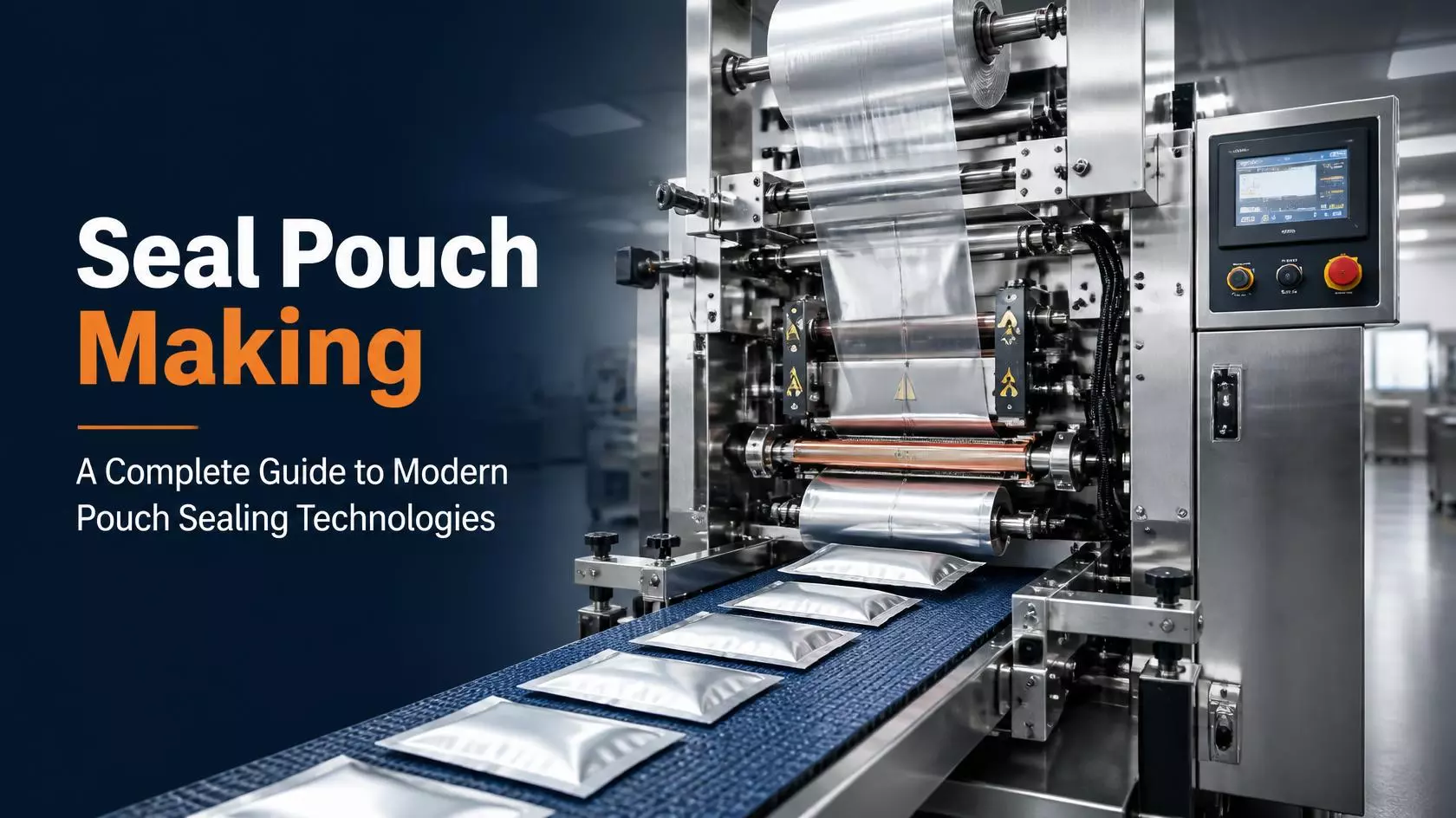
Seal Pouch Making: A Complete Guide to Modern Pouch Sealing Technologies
Pouch sealing plays an important role in flexible packaging. A properly formed seal helps maintain the structure of the package while supporting reliable handling, storage and transportation.
Modern seal pouch making technology combines controlled film feeding, forming, heating, pressure and cutting to produce consistent packaging at commercial scale.
Different pouch designs require different sealing configurations. Understanding these technologies can help manufacturers select suitable equipment and improve production quality.
What Is Seal Pouch Making?
Seal pouch making refers to the process of producing flexible pouches using controlled sealing and cutting operations.
Depending on the desired pouch format, manufacturers may use:
- Center sealing
- Three-side sealing
- Fin sealing
- Lap sealing
- Side sealing
- Specialized sealing configurations
The correct technology depends on the packaging material, pouch structure and intended application.
How Does Pouch Sealing Work?
Although machine designs differ, the basic process generally includes several stages.
Film Feeding
The packaging film is supplied from a roll and passed through controlled rollers.
Film Alignment
Alignment systems help maintain consistent material positioning.
Forming
The film is folded or arranged according to the required pouch design.
Heat Sealing
Heated sealing components apply controlled heat and pressure to join the film layers.
Cutting
The continuous pouch structure is cut into individual units.
Collection
Finished pouches are counted and collected for quality inspection.
Common Pouch Sealing Technologies
Center Seal
Center sealing creates a longitudinal seal around the centre or rear portion of the pouch.
A center seal pouch making machine is designed for this type of packaging structure.
Three-Side Seal
Three-side sealing creates seals along three edges of the pouch.
A three side seal pouch making machine is suitable for manufacturers producing flat pouch formats that require this construction.
Fin Seal
Fin sealing creates a characteristic fin-shaped longitudinal seal.
A Fin Seal Pouch maker can be used where this sealing configuration is appropriate for the packaging design.
Lap Seal
Lap sealing forms a longitudinal overlap between film sections.
A Lap Seal Pouch maker is designed around this sealing approach and can be suitable for specific packaging applications.
Factors Affecting Seal Quality
Several factors can influence the final seal.
Temperature
If sealing temperature is too low, the layers may not bond properly. Excessive heat can affect the film or create other quality problems.
Pressure
Consistent pressure helps create uniform contact between the material layers.
Machine Speed
Production speed affects the amount of time available for sealing. Machine settings should therefore be balanced with material characteristics.
Film Properties
Different materials and thicknesses can require different sealing conditions.
Cleanliness
Contaminants on sealing surfaces can affect seal consistency. Regular cleaning and maintenance are important.
Choosing the Right Sealing Technology
Manufacturers should start with the required pouch structure rather than choosing equipment solely by speed.
Consider:
- What pouch format is required?
- Which material will be used?
- What pouch dimensions are needed?
- What production volume is expected?
- What sealing strength is required?
- What level of automation is appropriate?
- What technical support is available?
A suitable plastic pouch making machine should match these requirements.
Improving Production Efficiency
Modern pouch production can be improved through:
- Automated film feeding
- Accurate temperature control
- Consistent material alignment
- Automatic counting
- Preventive maintenance
- Operator training
- Regular quality inspections
Manufacturers should also track material wastage and production downtime to identify areas for improvement.
Common Production Problems
Some common issues include:
Inconsistent Seals
Possible causes include incorrect temperature, pressure or material alignment.
Uneven Cutting
This can result from incorrect machine settings or material movement.
Material Wrinkles
Wrinkles may occur when film tension or alignment is not properly controlled.
Excessive Waste
Material waste can increase when machine settings are incorrect or defective pouches are produced.
Identifying the root cause rather than repeatedly adjusting random settings can lead to more effective solutions.
Conclusion
Modern seal pouch making technology provides manufacturers with multiple ways to produce flexible packaging efficiently. Center, three-side, fin and lap sealing technologies each offer different pouch structures and applications.
The best solution depends on the required pouch design, material, dimensions and production volume.
By understanding sealing principles and maintaining accurate machine settings, manufacturers can improve consistency and reduce production problems.