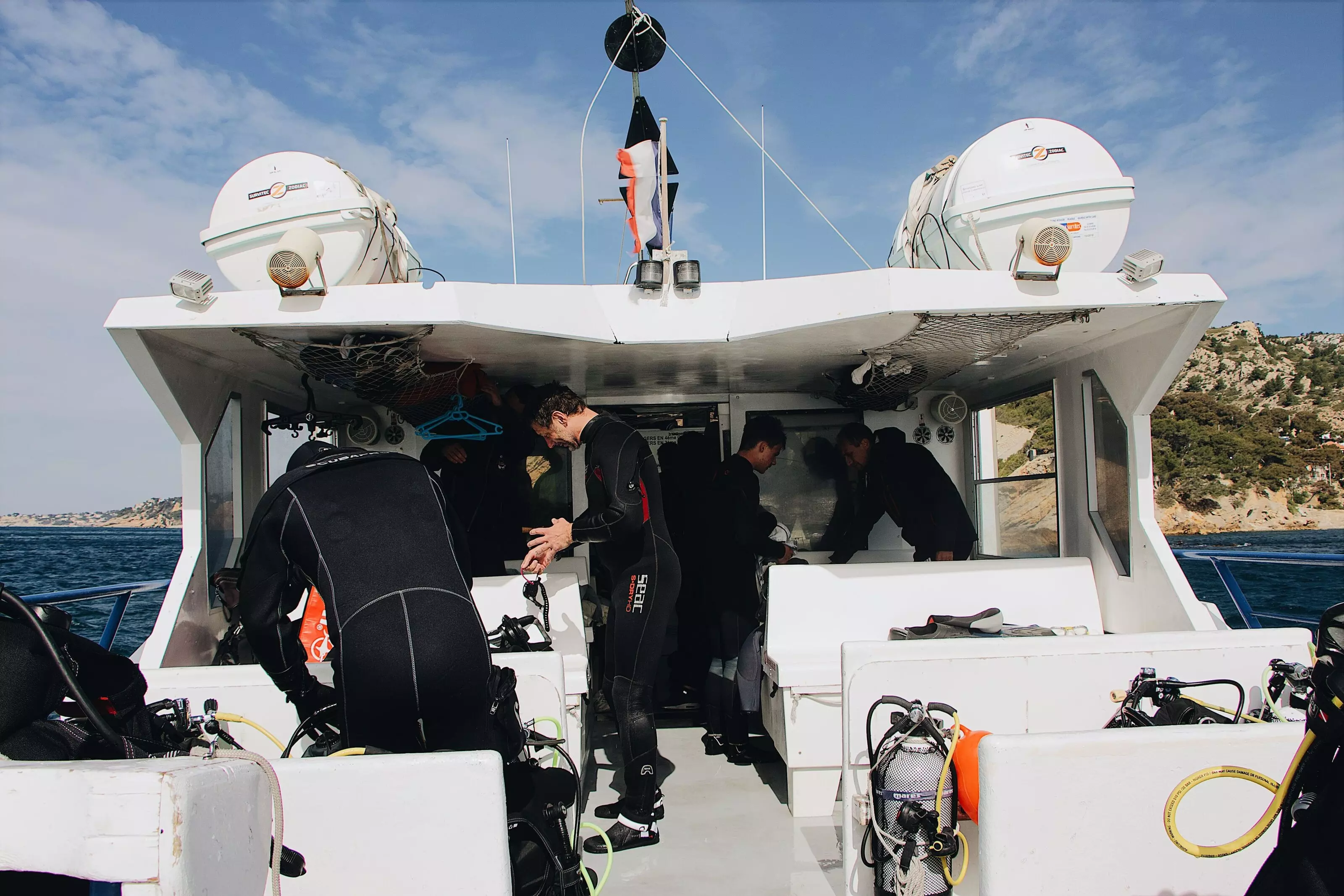
Scuba Diving the Adriatic Sea: Your Complete Guide to Underwater Paradise
With over 1,100 islands dotting its crystalline coastline and visibility often exceeding 100 feet, the Adriatic Sea offers some of Europe's most spectacular and underrated scuba diving, from shallow Roman amphora sites to WWII bomber wrecks at 230 feet.
Croatia has exploded as a mainstream tourism destination, yet most divers still overlook it in favour of the Red Sea or Caribbean, missing out on uncrowded dive sites, exceptional wreck diving, and a diving experience that costs a fraction of comparable destinations.
If you've been scrolling through dive trip forums trying to figure out whether Croatia is actually worth the transatlantic flight, the answer is yes.
Most guides either cover a single location in isolation or give you a vague "Croatia is beautiful" overview without speaking to what a US-based diver actually needs before booking.
Whether you're finalising your certification level or still sorting out clear vision underwater, this guide covers the top dive regions, famous wrecks, marine life, practical logistics, and a realistic budget breakdown so you can plan your Adriatic adventure with confidence.
If corrected vision is on your prep list, see the full range of prescription dive masks before you book.
Why Scuba Dive the Adriatic Sea
The Adriatic consistently delivers visibility between 30 and 40 metres (roughly 100 to 130 feet), rivalling the Red Sea and outperforming typical Caribbean conditions outside of the Cayman Islands.
That clarity comes from low runoff, low plankton density for most of the year, and the natural protection of Croatia's island chains.
Water temperatures follow a predictable seasonal curve. Summer months from June through September bring surface temperatures between 22 and 25°C (72 to 77°F), comfortable in a 3mm wetsuit.
By October the water cools to 18 to 20°C (64 to 68°F), and winter temperatures drop to 10 to 15°C (50 to 59°F), where a drysuit becomes the sensible choice.
Hundreds of islands and bays create naturally sheltered diving conditions that rarely see the surge and chop common elsewhere in the Mediterranean.
Croatia also has more than 100 documented wrecks spanning Roman-era merchant ships, Austro-Hungarian naval vessels from WWI, and American WWII aircraft.
The Adriatic's lower salinity and cooler temperatures preserve wooden structural elements far longer than tropical waters, meaning these wrecks retain extraordinary integrity.
Outside of peak July and August, most Croatian dive centres operate in groups of four to six, and you'll frequently find sites with little or no competing boat traffic.
Best Regions for Scuba Diving in the Adriatic
Northern Croatia: Istrian Peninsula
The Istrian Peninsula is the natural starting point for first-time Adriatic divers. It's the most accessible region from major European hub airports, the dive infrastructure is excellent, and the sites cover a wide range of skill levels.
Pula, Rovinj, and Vrsar are the main diving hubs, with Pula housing a hyperbaric chamber and a dense concentration of PADI 5-Star dive centres.
Standout sites include Banjole Cave, a spectacular cavern at 5 to 18 metres draped in vivid orange and red sponges, accessible to Open Water certified divers.
The Coriolanus Wreck, a British WWII anti-submarine ship resting at 18 to 27 metres, suits newer Advanced Open Water divers and rewards multiple visits. Cape Kamenjak Walls offers dramatic wall dives to 30 to 40 metres featuring gorgonian fans and strong fish activity.
Central Dalmatia: Kornati and Zadar Archipelago
Central Dalmatia offers the most diverse diving in Croatia. Terrain shifts from shallow reefs to sheer walls dropping beyond 60 metres, and national park status has kept the waters largely pristine. Zadar serves as the main access point, with Split providing additional ferry connections.
Cathedral Cave (Katedrala) is the region's signature site. Light beams pour through multiple openings in the cave ceiling, creating an otherworldly interior that rewards wide-angle photography at depths between 10 and 30 metres.
The connected cave system requires a guide. Kornati Walls extend to 60 metres and beyond along the outer islands, covered with gorgonians and sponges.
Central Dalmatia is also the preferred departure region for liveaboard diving, with 7-day itineraries out of Zadar or Split covering maximum dive territory efficiently.
Southern Islands: Vis and Lastovo
If wreck diving is your primary reason for visiting, the southern islands are where you need to be. Vis remained closed to foreign visitors until 1989 due to its Yugoslav military role, which explains why its diving is so undisturbed.
The island is reached by ferry from Split in approximately 2.5 hours or by high-speed catamaran in about one hour.
The B-17 Flying Fortress lies at 70 metres off Vis, requiring trimix certification and a specialist technical operator.
The B-24 Liberator rests at 52 metres, sitting at the edge of recreational limits and best treated as a technical dive. The Teti, a 72-metre Italian steamship at 22 to 35 metres, is the most accessible of Vis's major wrecks and suitable for Advanced Open Water divers.
Only a handful of operators on Vis specialise in technical aircraft wrecks, and peak season demand regularly exceeds availability, so plan months ahead.
Famous Adriatic Wrecks
Baron Gautsch
The Baron Gautsch is Croatia's most celebrated wreck dive. Built in 1908 as an Austro-Hungarian passenger and mail ship, it sank on 13 August 1914 after striking a defensive minefield, killing at least 150 of the more than 200 people aboard. The wreck lies off Rovinj with its bow at 28 metres and stern at 40 metres.
At 84.5 metres long, it rewards multiple dives exploring the bow, passenger decks, engine room, and stern, all heavily colonised with sponges, conger eels, and lobsters.
Advanced Open Water certification is required, all dives are guided, and a special permit is necessary. Book three to four weeks in advance during peak season. Expect to pay €45 to €60 per dive including guide fees and permits.
Accessible Wrecks for Advanced Divers
Beyond the Baron Gautsch, several ecellent wrecks are well within reach of Advanced Open Water divers:
- Teti, Vis (22 to 35 metres): A 72-metre Italian steamship with outstanding marine life
- Coriolanus, Istria (18 to 27 metres): A British WWII vessel ideal for first wreck dives in Croatian waters
- Giuseppe Dezza, Vis (22 to 35 metres): An Italian gunboat with an intact anti-aircraft gun
- Taranto, near Dubrovnik (20 to 46 metres): A coral-encrusted Italian supply ship
- Vassilios T, Vis (40 to 52 metres): Suits experienced advanced divers seeking penetration opportunities
All of these sites offer rewarding diving without requiring technical certifications.
Marine Life and Natural Dive Sites
Set realistic expectations before you arrive. The Adriatic is not a tropical reef destination. What you will find is a genuinely fascinating marine ecosystem that rewards patient, observant divers.
Octopus are abundant and curious, often hunting openly during the day. Cuttlefish appear regularly from late spring through autumn.
Conger eels inhabit almost every wreck and rocky overhang. Grouper have become notably more visible following protected area expansions. Scorpionfish blend into virtually every reef dive.
Nudibranchs are numerous and diverse, particularly in cooler months when visibility peaks. Seahorses inhabit seagrass beds in shallow bays.
The sponge life on wrecks and cave walls includes vivid orange, red, and yellow specimens that photograph exceptionally well. Large pelagics are rare, but the absence of reef predators means fish behave with notable calm around divers, making underwater photography especially rewarding.
For cave and wall diving, Banjole Cave in Istria (5 to 18 metres) is one of the most recommended dives in northern Croatia, combining natural light and colourful sponge growth for outstanding photography.
Cathedral Cave in Central Dalmatia (10 to 30 metres) offers one of the most dramatic visual experiences in Mediterranean diving.
Night diving in protected bays throughout Croatia is a highlight many first-time visitors underestimate. Octopus hunting, bioluminescent plankton in summer, and actively feeding conger eels make for memorable after-dark dives.
Planning Your Trip: Practical Guide for US Travellers
Best Time to Dive
September is the sweet spot for most US travellers. Water temperatures remain warm from summer heat buildup, visibility improves as peak tourist activity drops, dive centres are fully operational, and accommodation prices fall noticeably from August peaks.
The other seasons each offer their own trade-offs:
- July to August: Water temperatures of 23 to 25°C (73 to 77°F) and warm conditions, but visibility dips slightly to 15 to 25 metres and crowds peak
- May: Long days, uncrowded sites, and visibility of 25 to 35 metres, though you'll want a 7mm wetsuit for comfortable multi-dive days
- January to March: Best visibility of the year, often 35 to 40 metres, with very low crowds, but water temperatures drop to 10 to 15°C (50 to 59°F) and drysuit use is recommended
Getting There and Around
Split Airport (SPU) provides the best all-around access to Central Dalmatia and ferry connections to Vis and Lastovo.
Pula Airport (PUY) offers seasonal flights ideal if Istria is your primary focus. Zagreb Airport (ZAG) provides year-round connections to major European hubs and works well for multi-region itineraries.
Most US travellers connect through Frankfurt, Munich, Vienna, Amsterdam, or London, with total journey times of 13 to 18 hours from East Coast cities.
Regular Jadrolinija ferry service connects Split to Vis in approximately 2.5 hours. Advance booking for car ferries in July and August is essential.
Read: Best Destinations Covered in an East Europe Group Tour Package
Certification Requirements
Your certification level determines which sites you can access:
- Open Water: Shore dives, Banjole Cave, reef and wall dives to 18 metres, night diving in protected bays
- Advanced Open Water: Baron Gautsch, Teti, Coriolanus, Giuseppe Dezza, Taranto, Cathedral Cave, deep wall dives in Kornati
- Technical (Tec 50, Tec 65, Trimix): B-24 Liberator and B-17 Flying Fortress
Nitrox certification is recommended for any diver planning wreck-heavy diving, as it extends bottom time on deeper sites.
If your current certification is Open Water and you want access to the famous wrecks, several reputable dive centres in Istria and Split offer the Advanced Open Water course in two to three days, allowing you to qualify locally before heading to target sites.
Gear Considerations
Croatia's dive centres carry solid rental equipment, but a few items are worth bringing from home. Your own wetsuit ensures a proper fit for multi-dive days, particularly in shoulder season when a 5mm or 7mm suit is the right call.
A dive computer is essential for the deeper wreck profiles common across the Adriatic. If you rely on prescription lenses for clear vision, this is not the dA dive computer is essential for the deeper wreck profiles common across the Adriatic.
If you rely on prescription lenses for clear vision, this is not the destination to gamble on rental mask fit. A custom prescription dive mask from See the Sea RX.
A surface marker buoy (SMB) is mandatory at most Croatian dive centres and worth having your own. Dive torches are particularly useful for wreck penetration and cave diving, where sponge colours are most vivid under direct light.
Budget Overview
Boat dives in Croatia typically run €35 to €55 per dive depending on the operator and region, with wreck dives costing slightly more at €45 to €65 when permit and guide fees are included. Equipment rental averages €25 to €30 per day, and Nitrox fills cost €8 to €12 per cylinder.
Accommodation ranges from €50 to €70 per night for budget guesthouses to €90 to €130 per night for solid hotels or apartments, with Dubrovnik running noticeably higher than other regions. Meals average €25 to €40 per day at local restaurants.
For a 7-day trip covering 10 dives including accommodation, meals, and local transport, budget travellers should plan for approximately $1,800 to $2,000, mid-range travellers $2,200 to $2,800, and those preferring comfort or liveaboard options $3,500 to $5,000.
Flights from the US typically add $700 to $1,400 return. Overall, Adriatic diving represents significantly better value than comparable Mediterranean destinations.
Booking Dive Operators: What to Look For
Not all Croatian dive centres operate to the same standard, and selecting the right operator matters more here than in most destinations because of permit requirements and technical site access.
For recreational diving in Istria, look for PADI 5-Star or SSI Platinum centres in Pula, Rovinj, or Vrsar.
Several have English-speaking divemasters with extensive local knowledge and multi-day packages that offer meaningful discounts over single-dive pricing. For Baron Gautsch specifically, only a handful of operators hold the necessary permits.
Confirm this before booking and ask directly whether your guide will be the same person for both dives, as site familiarity matters on a wreck of that depth and complexity.
For Vis technical dives, the pool of qualified operators is small and the demand is real. Two operators on the island run regular B-17 and B-24 programmes with appropriate trimix support, and both require evidence of certification and logged dives before confirming bookings. If you're travelling in July or August, reaching out in April is not excessive.
Liveaboard operators covering the Kornati and southern islands typically run 7-day itineraries from Zadar or Split and provide a practical way to cover significant territory without daily logistics. These trips fill quickly, particularly those with technical diving support on board.
Combining Diving with Croatia's Above-Water Attractions
One practical advantage of Croatia as a dive destination is that non-diving travel companions have no shortage of compelling reasons to join the trip. The country's above-water draw is genuine enough to anchor a broader holiday without compromise.
Dubrovnik's Old Town is a UNESCO World Heritage Site and one of the most well-preserved medieval cities in Europe. It pairs naturally with diving out of nearby Cavtat, which offers accessible reef and wreck diving without the premium pricing of the city itself.
Hvar combines easy ferry access from Split with excellent dining, nightlife, and a well-established diving scene. The island's position makes it a practical base for day trips toward Vis or the Kornati islands.
Split itself rewards time spent outside the dive boat. Diocletian's Palace, built around 305 AD, remains an inhabited city block rather than a roped-off museum, and the surrounding Dalmatian coast gives divers arriving early or staying late more than enough to fill their surface intervals.
Plitvice Lakes National Park, roughly two hours inland from Zadar, is a UNESCO-listed waterfall system that reads as obligatory for first-time visitors to Croatia and fits naturally into a multi-region itinerary.
Istria's interior deserves attention beyond the dive centres of Pula and Rovinj. Truffle hunting in the Motovun forest, hilltop medieval towns, and some of the most underrated wine country in Europe make a strong case for extending any northern Croatia diving trip by a few days.
What to Expect on a Typical Dive Day
Understanding the daily rhythm at a Croatian dive centre helps avoid friction, particularly for US divers accustomed to resort-style dive operations in the Caribbean.
Most Croatian operators run two-dive morning boats departing between 8:00 and 9:00 AM, with a surface interval conducted aboard or on a nearby beach.
Afternoon boats typically run one dive departing around 14:00 or 15:00. Night dives are offered on request at most centres and are worth scheduling at least once during any week-long trip.
Briefings are conducted in English at centres catering to international divers and cover site layout, depth limits, entry and exit procedures, and any specific marine life or navigation points worth noting.
Guides typically lead in groups of four to six, and the pace is generally unhurried compared to high-volume resort operations. This works in your favour for photography and exploration.
Equipment setup is usually done by the diver with assistance available, and centres expect you to be comfortable with your own gear configuration.
Dive computers are used over dive tables universally, and most centres require evidence of a logged dive within the past year for deeper or permit-required sites. Bringing your logbook, even a digital version, avoids unnecessary friction at check-in.
Post-dive, Croatian coffee culture and the habit of stretching a meal over two hours provide a natural and highly functional surface interval. Eating well between dives is not a problem in Croatia.
Your Next Step Into the Adriatic
The Adriatic delivers world-class wreck diving, exceptional visibility, uncrowded sites, and remarkable value within one of Europe's most historically rich and visually striking coastlines.
Start by choosing your primary focus: beginner-friendly Istria, wreck-specialist Vis, or Central Dalmatia for the most diverse combination of terrain and skill levels.
Target September for the best balance of warm water, clear conditions, and full dive centre operations. For the Baron Gautsch, contact authorised operators three to four weeks ahead. For Vis technical dives, begin that process months out.
Make sure your gear is ready for the diving you're planning. If you rely on prescription lenses, ensure your custom prescription dive mask is fitted and tested before departure. The Adriatic rewards those who plan properly, and the dive sites here are good enough to justify doing it right.