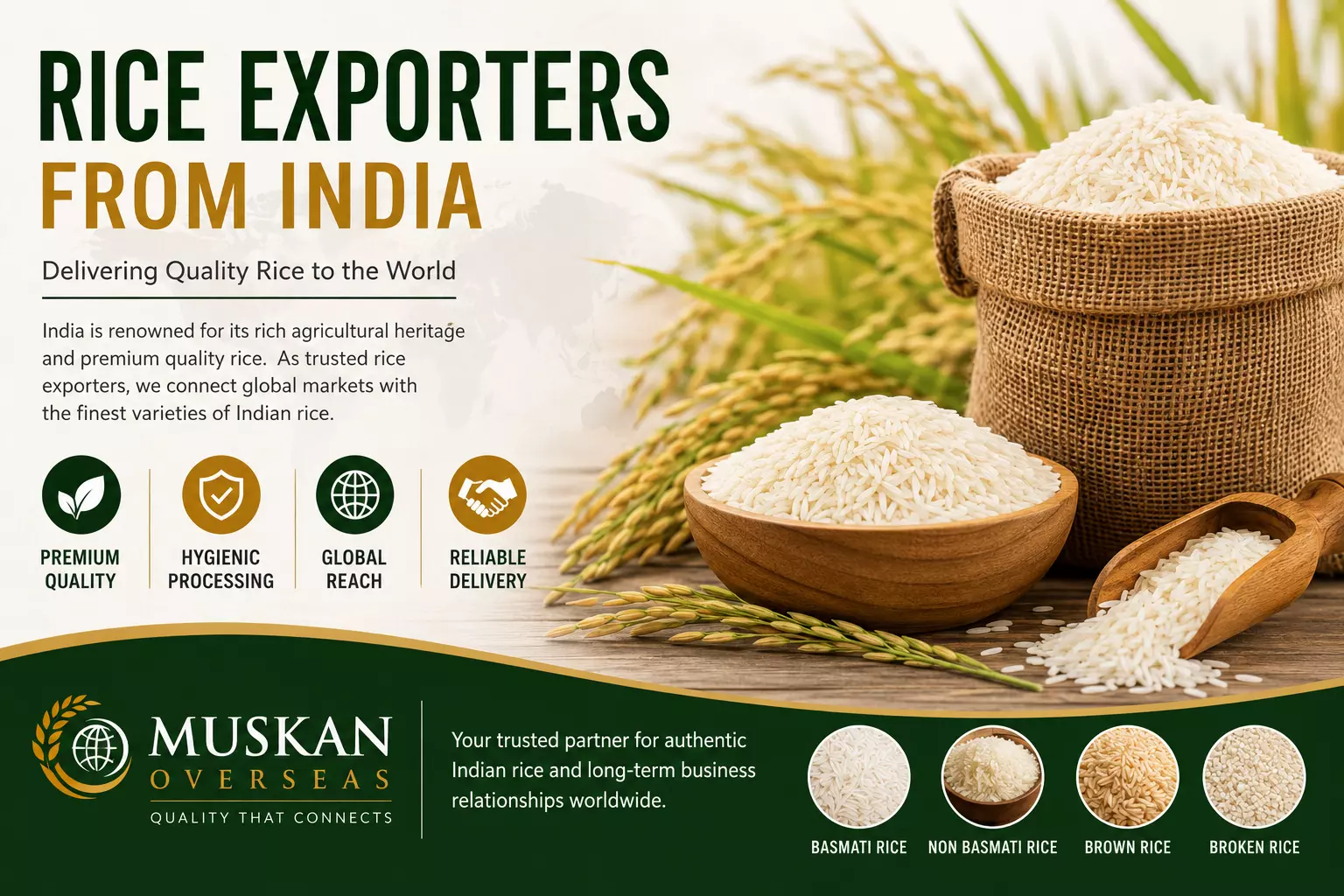
Rice Exporters from India: What Global Buyers Should Look For
India has long been one of the world's major rice-producing countries, supplying different varieties to buyers across the globe.
From aromatic basmati rice to widely consumed non-basmati varieties, Indian rice exporters serve supermarkets, wholesalers, restaurants, food manufacturers, and distributors in many international markets.
But choosing a rice exporter is not simply about finding the lowest price. A buyer also needs consistency, proper documentation, dependable packaging, and confidence that the rice arriving at the destination will match the agreed specifications.
Why Indian Rice Is Popular in International Markets
India offers a wide range of rice varieties, which makes it an important sourcing destination for overseas buyers. Basmati rice is particularly valued for its aroma, slender grains, and ability to elongate during cooking.
For example, a restaurant purchasing rice for biryani may prioritize grain length, aroma, and cooking performance. A wholesaler, on the other hand, may be more concerned with volume availability, packaging, pricing, and delivery schedules.
This is why experienced buyers generally evaluate the complete supply process rather than judging a supplier on one factor.
What Makes a Reliable Rice Exporter?
A dependable exporter should be able to answer practical questions before an order is confirmed.
Here are some important areas to check:
- Rice variety and exact specifications
- Grain length and appearance
- Moisture and broken grain percentage
- Processing and quality-control practices
- Packaging sizes and private-label options
- Availability for bulk orders
- Export documentation
- Shipping and delivery arrangements
- Product consistency between shipments
A good exporter will also communicate clearly when a buyer has specific requirements.
Read: Rice Export Company in India by Muskan Overseas
The Importance of Quality Consistency
Imagine a distributor receives one shipment of premium rice and sells it successfully to several retailers. The next shipment looks noticeably different after cooking. Even if the second consignment is technically within acceptable limits, the distributor may receive complaints from customers.
This illustrates an important point: consistency is often more valuable than a one-time excellent shipment.
Professional rice exporters therefore pay attention to sourcing, milling, grading, sorting, packaging, and quality checks throughout the supply chain.
Muskan Overseas: Serving International Rice Buyers
Muskan Overseas works with buyers looking for Indian rice for wholesale and international supply requirements. The company focuses on supplying rice varieties according to buyer specifications and supporting bulk export requirements.
For an overseas buyer, the conversation should ideally begin with clear product details. Instead of simply asking for a price, buyers can provide information such as:
- Preferred rice variety
- Required quantity
- Destination country or port
- Packaging preference
- Desired grain and quality specifications
- Private-label requirements, if applicable
Providing these details early can make quotations more accurate and reduce misunderstandings later.
A Practical Example for Importers
Suppose an importer wants to purchase 100 metric tons of basmati rice for a Middle Eastern market.
Rather than comparing only the quoted price per ton, the importer should compare:
- Product specifications
- Packaging and labeling
- Minimum order quantity
- Quality assurance process
- Shipping terms
- Documentation support
- Expected delivery timeline
- Previous export experience
A slightly higher quotation may ultimately provide better value if it reduces quality issues, delays, or additional handling costs.
Questions to Ask Before Placing an Order
Before choosing among rice exporters from India, buyers can ask:
- Can you provide product specifications?
- What packaging options are available?
- Can you handle bulk export orders?
- Is private labeling available?
- What quality checks are performed?
- Which export documents are provided?
- What are the available shipping terms?
- Can you provide samples before a bulk order?
Clear answers to these questions help establish expectations on both sides.
FAQs
Which rice varieties are commonly exported from India?
India exports several varieties, including basmati and non-basmati rice. Availability and specifications can vary depending on the supplier and destination market.
How should an international buyer select a rice exporter?
Look beyond price. Evaluate product quality, consistency, documentation, packaging, communication, order capacity, and delivery reliability.
Can rice exporters provide customized packaging?
Many exporters offer different packaging formats and may support customized or private-label packaging depending on order quantity and requirements.
Is sampling important before a bulk order?
Yes. A sample allows buyers to assess appearance, aroma, cooking performance, and other specifications before committing to a larger shipment.
Conclusion
Finding the right rice exporter from India is about building a dependable supply relationship, not simply completing a single transaction. Buyers should look for consistent quality, transparent communication, suitable packaging, reliable documentation, and the ability to meet agreed specifications.
For businesses sourcing Indian rice internationally, Muskan Overseas provides a practical option for discussing bulk requirements and export supply needs. A clear conversation about product specifications and delivery expectations is the best starting point for a successful long-term business relationship.