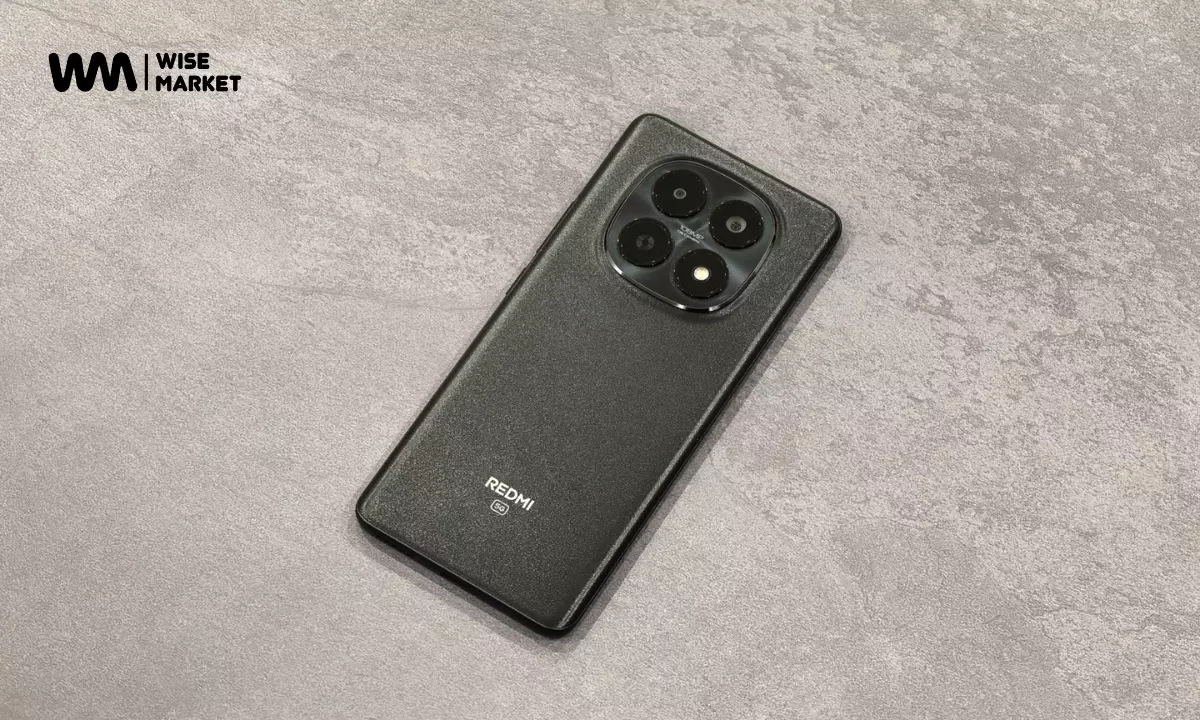
Redmi Note 15: Features, Performance, and Is It Worth Buying?
The Redmi Note series has built its reputation by offering useful features without pushing buyers towards flagship-level spending.
The Redmi Note 15 continues that approach with a large AMOLED screen, a high-resolution camera, a long-lasting battery and a slim body. Rather than focusing on one headline feature, it aims to deliver a balanced experience for everyday users.
At first glance, the phone looks more premium than many ordinary mid-range devices. Its curved front and back, symmetrical camera design and relatively slim profile give it a modern appearance.
Under the surface, however, it remains a practical 4G smartphone built mainly for social media, entertainment, photography and routine daily tasks.
For someone replacing an older Redmi, Samsung Galaxy A-series phone or another budget Android device, the Redmi Note 15 brings several noticeable upgrades.
The smoother AMOLED display, 108MP main camera, 6000mAh battery and improved protection make it an attractive option, although buyers should also understand its limitations before placing an order.
Redmi Note 15 Specifications
Specification
Details
Display
6.77-inch AMOLED, 2392 × 1080 resolution
Refresh Rate
Up to 120Hz
Peak Brightness
Up to 3200 nits
Processor
MediaTek Helio G100-Ultra
GPU
Mali-G57 MC2
RAM Options
6GB or 8GB
Storage Options
128GB, 256GB or 512GB
Expandable Storage
Up to 2TB through microSD
Rear Camera
108MP main camera and 2MP depth sensor
Front Camera
20MP
Battery
6000mAh
Charging
33W wired charging
Operating System
Xiaomi HyperOS 2
Protection
IP64 dust and splash resistance
Security
In-display fingerprint scanner and face unlock
Audio
Dual speakers with Dolby Atmos
Connectivity
4G, dual-band Wi-Fi, Bluetooth 5.3 and NFC in selected markets
Weight
Approximately 183.7g
Thickness
Approximately 7.94mm
These specifications refer to the global 4G model. Memory choices, colours, NFC support, charger availability and other package contents can differ by country or retailer.
A Slim and Modern Design
One of the first things buyers are likely to notice is the phone’s slim body. Despite carrying a large 6000mAh battery, it measures around 7.94mm in thickness and weighs approximately 183.7g. That is a sensible balance for a device with a 6.77-inch screen.
The curved edges should help it sit comfortably in the hand, while the balanced camera layout gives the rear panel a cleaner appearance. Available colours can vary by market, but the global lineup includes choices such as black, Glacier Blue, purple and Forest Green.
It is still a large smartphone, so one-handed use may not always be comfortable. People with smaller hands will probably need to use both hands while typing or reaching the upper part of the display. On the positive side, the slim profile stops it from feeling unnecessarily bulky.
Xiaomi has also used reinforced internal construction and high-durability display glass.
According to the company’s laboratory testing, the phone was designed to survive a face-down drop from up to 1.8 metres onto marble under controlled conditions. This does not make it unbreakable, but it provides some reassurance for everyday accidental drops.
AMOLED Display Makes a Real Difference
Smooth Scrolling and Strong Outdoor Visibility
The 6.77-inch AMOLED display is one of the strongest parts of the Redmi Note 15. It offers a resolution of 2392 × 1080 pixels and a refresh rate of up to 120Hz. Text appears sharp, colours look lively and animations feel smoother than they do on a traditional 60Hz screen.
The difference is particularly noticeable while scrolling through Instagram, reading web pages or moving between apps. A high refresh rate does not make the processor faster, but it helps the interface appear more responsive.
Xiaomi claims a peak brightness of up to 3200 nits in supported situations. Peak brightness is not maintained across the entire screen continuously, but the panel should still remain reasonably visible outdoors.
The display also supports a wide DCI-P3 colour range, 12-bit colour depth and high-frequency PWM dimming.
For someone who regularly watches YouTube, Netflix, cricket highlights or short videos, the AMOLED panel is a meaningful advantage.
Black areas appear deeper than they do on a standard LCD, while contrast is stronger. The dual speakers further improve the entertainment experience, especially when watching videos without headphones.
Everyday Performance of the Helio G100-Ultra
The Redmi Note 15 is powered by the MediaTek Helio G100-Ultra, a 6nm octa-core processor with clock speeds reaching up to 2.2GHz. It is paired with the Mali-G57 MC2 GPU.
This chipset is suitable for common activities such as WhatsApp, Facebook, TikTok, online shopping, banking apps, video streaming and web browsing. Switching between a few everyday applications should remain comfortable, particularly on the 8GB RAM version.
However, it is important to set realistic expectations. The Helio G100-Ultra is not a flagship gaming processor, and the standard Redmi Note 15 is a 4G device. It is designed for dependable everyday performance rather than demanding gaming or heavy video production.
Can It Handle Gaming?
Popular games such as PUBG Mobile, Call of Duty Mobile and Mobile Legends should be playable when the graphics settings are adjusted sensibly. Competitive players may prefer smooth or balanced graphics instead of selecting the highest available visual quality.
During a short gaming session, performance should be adequate for casual play. Longer sessions may produce some heat and occasional frame-rate changes, especially in graphically demanding titles.
Buyers primarily interested in gaming should compare the phone with 5G models using stronger Snapdragon or MediaTek Dimensity processors.
The phone can be configured with up to 8GB of physical RAM, while Xiaomi also promotes memory extension using internal storage.
Virtual memory may help keep basic applications open, but it is not a true replacement for physical RAM. Choosing an 8GB model is therefore more useful than relying heavily on memory extension.
Storage and Software Experience
Storage options include 128GB, 256GB and 512GB, depending on the market. The phone also supports expandable storage through a microSD card of up to 2TB, although the hybrid tray means users may have to choose between a second SIM and a memory card.
For regular users, 128GB can be enough when photos and videos are backed up online.
People who record a lot of video, download large games or keep offline movies should consider 256GB. Larger internal storage also gives the phone more breathing room as apps and system files grow over time.
The device runs Xiaomi HyperOS 2. Its interface includes extensive personalisation, multitasking tools and integration with Google services. Availability of individual software and AI features can vary by country and software version.
As with many Xiaomi phones, users may find some pre-installed applications they do not need. Removing unnecessary apps, disabling unwanted recommendations and reviewing notification permissions after setup can create a cleaner experience.
Read: Xiaomi Redmi Note 15 5G Creates a MasterPixel Shock in India
108MP Camera Performance
Good Results in Daylight
The main rear camera uses a 108MP sensor with a 1/1.67-inch sensor size and an f/1.7 aperture. It is supported by a basic 2MP depth sensor, while the front carries a 20MP selfie camera.
In good daylight, the main camera should capture detailed images with attractive colours. It is suitable for family photographs, food shots, outdoor scenes, product pictures and social-media content.
The high-resolution mode can preserve extra detail, although normal photo mode will usually be faster and produce smaller files.
Xiaomi also uses the sensor’s resolution to provide multiple crop-based focal lengths, including a claimed 3x optical-level zoom. This is not the same as having a dedicated telephoto camera. Still, it can be useful for portraits or framing a subject more closely when lighting is strong.
Low-Light Photography
At night, image quality will depend heavily on available light and how steadily the phone is held. Night mode can brighten darker areas, but moving subjects may still appear soft.
For better results, users should avoid digital zoom, clean the camera lens and give the phone an extra moment to complete the exposure.
The camera records rear video at up to 1080p and 60 frames per second. There is no 4K recording listed for the global model, which may disappoint buyers who regularly create high-resolution video.
The 20MP front camera should be sufficient for video calls, selfies and social-media stories. Good natural light will deliver the best results, while strong beauty filters can be reduced for a more realistic appearance.
Battery Life and Charging
Battery endurance is a major reason to consider this phone. Its 6000mAh battery is larger than the capacity found in many slim mid-range devices.
Xiaomi claims up to two days of battery life under its controlled usage tests, although actual endurance will depend on brightness, mobile signal, gaming, camera use and background applications.
A moderate user may be able to finish a long day with plenty of charge remaining. Even heavier users should find it more reliable than a phone with an ageing or smaller battery.
This is particularly useful in Pakistan, where long commutes, power interruptions or frequent mobile-data use can make battery life more important.
Charging is handled at up to 33W. It is not among the fastest charging systems in the market, but it is practical for a 6000mAh battery. Plugging the phone in while getting ready for work or eating breakfast should provide a useful amount of power.
The phone also supports wired reverse charging in selected versions, allowing it to supply power to compatible earbuds, watches or another phone through a cable. Charger availability can vary by region, and the global specifications state that an adapter may not always be included in the box.
Durability and Useful Extras
The Redmi Note 15 carries an IP64 rating. The first number indicates strong dust protection, while the second provides resistance against splashing water. It should cope better with rain, dust and small accidental spills than a phone without an official rating.
It should not be treated as waterproof. Swimming, showering or intentionally placing it underwater could still damage the device, and liquid damage may not be covered by the warranty.
Useful extras include an in-display fingerprint sensor, face unlock, an IR blaster, dual speakers, Dolby Atmos, dual-band Wi-Fi and Bluetooth 5.3. NFC is supported in certain markets, so Pakistani buyers should confirm its availability on the exact variant before purchasing.
The IR blaster is especially convenient because it can turn the phone into a remote control for compatible televisions, air conditioners and other home appliances.
Is the Redmi Note 15 Worth Buying?
The Redmi Note 15 is worth considering for users who prioritise display quality, battery life, a slim design and a high-resolution main camera.
It is particularly suitable for social media, video streaming, online classes, office communication and ordinary daily applications.
Its main compromises are also clear. The standard model lacks 5G connectivity, the Helio G100-Ultra is not intended for high-end gaming, there is no dedicated ultrawide camera and video recording is limited to Full HD.
Buyers expecting flagship photography or console-like gaming performance should consider a more powerful model.
Value will ultimately depend on its selling price in Pakistan. Since prices, warranties and included accessories can change between sellers, compare the complete package rather than focusing only
on the lowest advertised amount. Confirm PTA approval, RAM and storage capacity, official warranty, NFC support and charger availability before paying.
Conclusion
The Redmi Note 15 delivers a strong AMOLED display, dependable battery life, a capable daylight camera and useful everyday features in an attractive body. It is not built for demanding gamers, but it makes sense for buyers seeking a practical and balanced Android phone.
Pakistani customers can check Wise Market PK when comparing available Redmi Note 15 variants, warranty details and purchase options. Make sure the listed device is PTA approved and matches the storage configuration you need.
Frequently Asked Questions
Q: Is the Redmi Note 15 a 5G phone?
A: The standard global Redmi Note 15 discussed here is a 4G smartphone. Xiaomi also offers a separate Redmi Note 15 5G model with different hardware, so buyers should check the complete model name before ordering.
Q: Does the Redmi Note 15 have an AMOLED display?
A: Yes. It has a 6.77-inch FHD+ AMOLED display with a refresh rate of up to 120Hz. The screen also supports a wide colour range and high peak brightness.
Q: Is the Redmi Note 15 good for gaming?
A: It is suitable for casual and moderate gaming at sensible graphics settings. The Helio G100-Ultra can run popular mobile games, but serious gamers may prefer a device with a more powerful 5G chipset.
Q: How long does the Redmi Note 15 battery last?
A: Its 6000mAh battery should comfortably handle a full day for most users and may last longer with moderate use. Xiaomi advertises up to two days under controlled testing, but real battery life depends on individual usage.
Q: Is the Redmi Note 15 waterproof?
A: No. It has an IP64 rating for dust and splash resistance, but it is not designed for underwater use. Buyers should still keep it away from pools, showers and heavy water exposure.