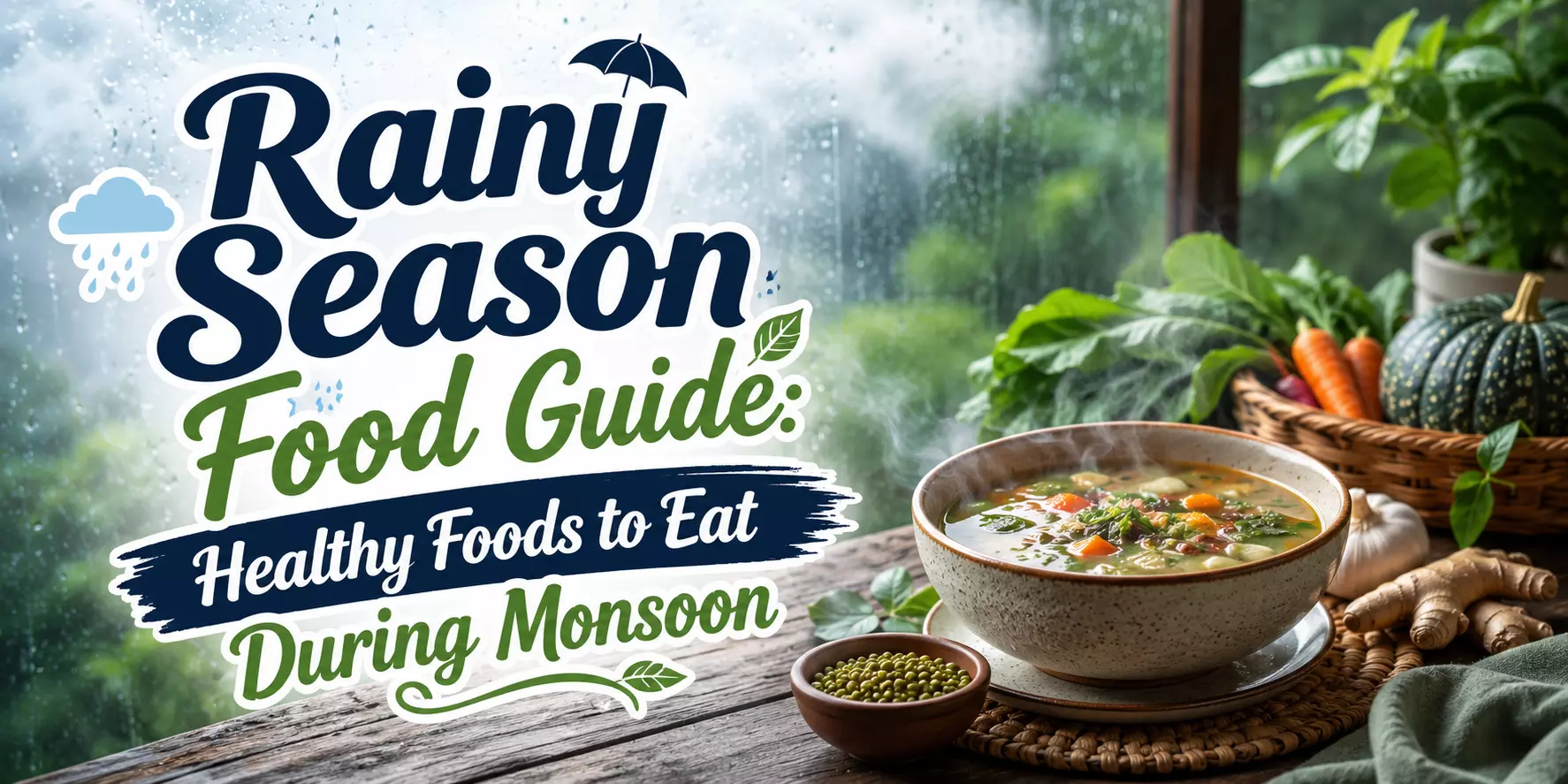
Rainy Season Food Guide: Healthy Foods to Eat During Monsoon
- The rainy season changes more than the weather.
- One day, it feels pleasant. The next day, everything feels damp, heavy, and a little uncomfortable. Many people notice changes in their appetite,e too. Digestion may feel slower. Cravings increase. Street food suddenly looks impossible to resist.
- Honestly, monsoon eating can be tricky.
- Foods that feel good in summer do not always feel right on rainy days. This is one reason seasonal eating has remained part of traditional food practices for generations.
- People often focus on umbrellas and raincoats during the monsoon.
- Food deserves some attention, too.
- Choosing the right rainy-season foods may help support digestion, energy levels, and overall well-being throughout the season.
Why Food Choices Matter During Monsoon
- Rainy weather creates conditions that can affect food quality and digestion.
- Humidity increases.
- Food spoils faster.
- Water contamination becomes more common.
- Digestive issues tend to appear more frequently during this time.
- This does not mean you need a completely different diet.
- Small adjustments usually help.
- Many traditional monsoon foods exist for a reason. They often focus on warmth, freshness, and easier digestion.
Warm Homemade Meals Often Work Best
Rainy weather naturally makes people crave warm food.
There is probably a reason for that.
Freshly prepared meals are often safer and easier on digestion than food that has been sitting out for hours.
Simple meals usually work well:
- Khichdi
- Dal and rice
- Vegetable soups
- Upma
- Idli
- Moong dal dishes
These foods feel comforting while still providing nourishment.
Sometimes the simplest meals are exactly what the body wants.
Seasonal Vegetables to Include During Monsoon
Seasonal produce often becomes the best choice during any season.
Monsoon is no different.
Some commonly enjoyed rainy season vegetables include:
- Bottle gourd
- Ridge gourd
- Bitter gourd
- Pumpkin
- Snake gourd
- Tinda
These vegetables are widely used in traditional cooking and can be included in curries, soups, and stir-fries.
Eating seasonal foods often means fresher ingredients and a better variety in the diet.
Ginger Deserves a Place in Monsoon Meals
Many households automatically use more ginger during rainy weather.
That habit did not appear by accident.
Ginger has been used traditionally in various cuisines for generations.
People commonly add it to:
- Tea
- Soups
- Curries
- Herbal drinks
A cup of warm ginger tea during a rainy afternoon feels comforting in a way that is difficult to explain.
Sometimes traditional food habits continue because they simply make sense.
Include Protein in Every Meal
Monsoon comfort food often becomes carb-heavy.
Pakoras.
Snacks.
Tea.
More snacks.
While there is nothing wrong with enjoying seasonal treats occasionally, protein should not disappear from meals.
Protein helps support:
- Satiety
- Muscle health
- Energy levels
- Recovery
Good protein sources include:
- Dal
- Lentils
- Paneer
- Eggs
- Fish
- Chicken
- Tofu
- Sprouts
Adding protein usually helps meals feel more balanced.
Don't Ignore Hydration
People often drink less water during rainy weather.
The weather feels cooler.
Thirst becomes less noticeable.
That does not mean hydration becomes less important.
Many people unknowingly reduce their water intake during the monsoon.
Simple ways to stay hydrated include:
- Drinking water regularly
- Consuming soups
- Having herbal drinks
- Including coconut water when appropriate
Hydration supports digestion, energy, and overall health.
It remains important throughout the year.
Fresh Fruits That Work Well During Monsoon
Fruits remain an important part of a balanced diet.
Seasonal choices often make the most sense.
Common monsoon fruits include:
- Pomegranate
- Pear
- Apple
- Jamun
- Plum
Fresh fruits provide:
- Fiber
- Vitamins
- Antioxidants
Washing fruits thoroughly before consumption becomes particularly important during the rainy season.
Why Traditional Monsoon Foods Still Matter
Many traditional food practices were developed through observation over generations.
Certain foods consistently appear during monsoon meals because they are practical.
Examples include:
- Khichdi
- Rasam
- Soups
- Steamed foods
- Light lentil dishes
These foods tend to be warm, fresh, and relatively easy to digest.
That combination works well during rainy weather.
Foods to Limit During Monsoon
Nobody likes long lists of restrictions.
Still, a few foods may deserve extra caution during the rainy season.
These include:
- Uncovered street food
- Stale leftovers
- Raw salads from questionable sources
- Excessively oily foods
- Foods stored improperly
The goal is not fear.
The goal is to reduce unnecessary digestive problems.
A little extra care goes a long way.
Fermented Foods Can Be Included Carefully
Fermented foods remain popular because they support dietary variety.
Examples include:
- Yogurt
- Buttermilk
- Idli
- Dosa
Some people tolerate these foods very well during the monsoon.
Others prefer smaller quantities.
Listening to your own digestive comfort usually works best.
Nutrition is rarely one-size-fits-all.
The Role of Spices During Monsoon
Traditional Indian cooking often includes spices that become especially popular during rainy weather.
Examples include:
- Ginger
- Turmeric
- Black pepper
- Cumin
- Coriander
These spices add flavour and make simple meals more enjoyable.
A bowl of warm soup with ginger and pepper often feels far more satisfying on a rainy evening than cold food.
Read: Top 10 Super Healthy Foods to Include in Your Diet
Building a Balanced Monsoon Plate
Healthy rainy season eating does not need complicated rules.
A simple balanced plate might include:
- A protein source
- Seasonal vegetables
- Whole grains
- Healthy fats
- Plenty of fluids
This approach usually supports better nutrition than chasing seasonal food trends.
Consistency still matters most.
Common Monsoon Eating Mistakes
Many people unknowingly make the same mistakes every year.
Relying Too Much on Fried Snacks
Rainy weather and fried food seem to go together.
Moderation helps.
Drinking Too Little Water
Cool weather often hides dehydration.
Skipping Protein
Comfort foods sometimes crowd out important nutrients.
Eating Food Stored Too Long
Fresh meals usually remain the safer choice during humid weather.
What Nutrition Experts Often Recommend
Many nutrition professionals encourage seasonal eating because it naturally promotes variety.
The Best Nutritionist in Mysore would typically focus on simple principles:
- Freshly prepared meals
- Balanced nutrition
- Seasonal produce
- Adequate hydration
- Consistent eating habits
Those habits remain useful regardless of the season.
Final Thoughts
- The rainy season is a good time to slow down and pay attention to food choices.
- Warm meals.
- Seasonal vegetables.
- Fresh fruits.
- Adequate protein.
- Enough water.
- Nothing here is complicated.
- That is probably why these habits continue to work year after year.
- Sometimes,s healthy eating is not about finding something new.
- It is about returning to simple habits that have always made sense.
FAQs
1. What is the best rainy season food for digestion?
Warm foods like khichdi, soups, dal, and lightly cooked vegetables are commonly preferred during the monsoon.
2. Which fruits are good during the rainy season?
Apples, pears, pomegranates, jamun, and plums are popular seasonal choices.
3. Why is hydration important during the monsoon?
People often drink less water during cooler weather, which may affect digestion and energy levels.
4. Should fried foods be avoided completely during the monsoon?
No, but moderation is usually a better approach than frequent consumption.
5. Why are seasonal foods recommended during rainy weather?
Seasonal foods are often fresher, widely available, and naturally suited to the time of year.