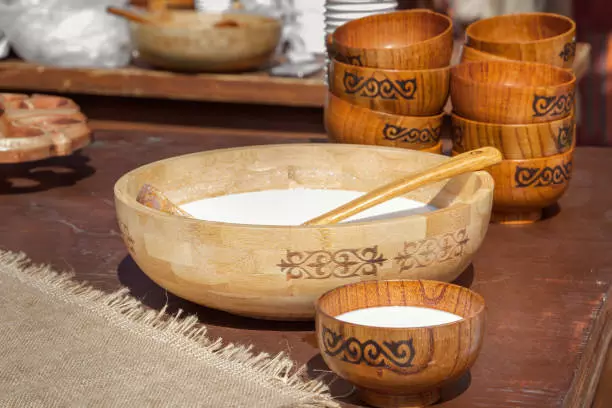
Qatar’s Camel Milk Industry Expands Through Premium Products and Dairy Innovation
Camel milk holds a distinctive position in Qatar’s food culture, where camel husbandry has historically been closely connected with the region’s environment, traditions, and rural economy.
Today, this traditional dairy product is increasingly being incorporated into modern food production, packaged beverages, specialty dairy products, and premium retail offerings.
According to the latest analysis from Vyansa Intelligence, the Qatar camel milk sector is projected to grow from USD 30 million in 2025 to USD 50 million by 2032, representing a CAGR of 7.57% from 2026 to 2032.
The projected expansion reflects growing interest in specialty dairy products, nutritional awareness, improved commercial production, and greater product diversification.
Traditional Consumption Creates a Strong Foundation
Camel milk has been consumed for generations across Qatar and other Gulf countries.
Camels are particularly well adapted to hot and dry environments, making camel dairy production historically important in regions where conventional livestock can face greater environmental challenges.
This cultural familiarity gives camel milk an advantage as producers modernize the category.
Consumers already familiar with its distinctive taste and traditional importance can provide a stable foundation for packaged and value-added products.
At the same time, modern presentation and wider retail availability can introduce camel milk to younger consumers and residents who may not have previously incorporated it into their diets.
Nutritional Characteristics Attract Consumers
Camel milk has attracted scientific and consumer interest because of its nutritional composition.
The Food and Agriculture Organization of the United Nations information on milk composition notes that camel milk has a composition broadly comparable to cow milk while containing notable amounts of vitamin C and other nutrients.
Research has also identified protein, fat, lactose, minerals, and vitamins as important components of camel milk. However, composition can vary according to breed, feed, geography, season, lactation stage, and management practices.
For commercial producers, maintaining consistency is therefore important. Standardized feeding, hygienic milking, controlled processing, and quality testing can help manufacturers deliver products with predictable characteristics.
Premium Positioning Creates Opportunities
Camel milk is often positioned as a specialty dairy product rather than simply competing with conventional cow milk on price.
This creates opportunities for premium products emphasizing quality, provenance, traditional heritage, and distinctive nutritional characteristics.
Premium chilled milk, flavored beverages, fermented products, yogurt, cheese, and frozen desserts can all provide opportunities for differentiation.
Packaging also plays an important role.
Attractive bottles, clear nutritional information, convenient serving sizes, and modern branding can help transform camel milk from a traditional product into a contemporary consumer offering.
Read: Revolutionizing the Dairy Industry: The Impact of Milk
Value-Added Products Broaden Demand
Fresh camel milk is highly perishable, which can limit distribution without reliable refrigeration. Processing the milk into longer-lasting products can expand its commercial reach.
Potential value-added categories include yogurt, cheese, fermented beverages, powdered milk, ice cream, flavored drinks, and other specialty dairy products.
These formats can create additional consumption occasions and allow producers to target different customer segments.
For example, fermented products can appeal to consumers interested in traditional dairy foods, while flavored beverages can make camel milk more approachable for consumers who are unfamiliar with its natural flavor.
Commercial Production Supports Consistency
The development of professional camel dairy farms can improve production reliability.
Commercial operations can use controlled feeding programs, veterinary care, modern milking equipment, hygiene procedures, and systematic quality monitoring.
These practices can help producers achieve more consistent milk volumes and quality, which becomes increasingly important as packaged products move through supermarkets and other organized retail channels.
Scaling production, however, requires careful management. Camel dairy operations need to balance productivity with animal health, welfare, feed availability, and the environmental conditions associated with Qatar’s climate.
Food Safety Remains Essential
Like other fresh dairy products, camel milk requires careful management throughout the production and distribution process. Raw milk can support microbial growth if it is not appropriately handled, cooled, processed, and stored.
Commercial producers therefore need effective hygiene systems from milking through packaging.
Appropriate processing and quality-control procedures can help reduce microbiological risks while maintaining the desired taste and nutritional characteristics of the product.
Food-safety compliance is particularly important as producers expand from direct or local sales toward larger retail and food-service networks.
Cold-Chain Infrastructure Supports Fresh Milk
Temperature management is an important consideration for fresh camel milk. Qatar’s hot climate makes reliable refrigeration particularly important during transportation, storage, and retail.
Modern dairy facilities can use refrigerated collection and processing systems, while retailers require appropriate chilled display equipment. A reliable cold chain can help maintain product quality and reduce spoilage.
Longer-shelf-life products can provide another route for expansion.
Through suitable processing and packaging technologies, manufacturers can reduce dependence on immediate consumption and potentially reach customers beyond the fresh-milk segment.
Retail Modernization Improves Accessibility
The availability of camel milk through supermarkets, hypermarkets, specialty food stores, cafés, restaurants, hotels, and online channels can broaden consumer access.
Modern retail also provides opportunities for producers to introduce different product tiers.
Everyday chilled milk can serve mainstream consumers, while premium or specialty products can target higher-value segments.
Online retail can further support direct consumer access, particularly for packaged products and multipacks that can be distributed through controlled logistics networks.
Hospitality and Tourism Provide Additional Opportunities
Qatar’s hospitality industry offers an
other avenue for camel milk products. Hotels, restaurants, cafés, and specialty food outlets can incorporate camel milk into beverages, desserts, breakfast menus, and traditional food experiences.
The product can also appeal to visitors seeking food and beverages connected with Qatari heritage.
This provides opportunities beyond household consumption. Restaurants and hotels can use camel milk as a distinctive ingredient, while premium packaged products can be positioned as culturally relevant food items.
Product Innovation Can Expand the Consumer Base
Innovation will be important for attracting consumers beyond the traditional camel milk audience. Manufacturers can experiment with flavor combinations, smaller serving sizes, functional positioning, and convenient packaging.
Blended beverages combining camel milk with fruit or other ingredients could provide a more approachable taste profile. Fermented dairy products can offer another way to introduce camel milk to consumers who may not prefer fresh milk.
However, product claims need to remain scientifically and regulatorily appropriate. Nutritional advantages should be communicated accurately rather than relying on unsupported health claims.
Research Supports Better Product Development
Scientific research continues to examine the composition and functional characteristics of camel milk.
The FAO AGRIS research on camel milk composition highlights differences in camel milk composition associated with factors including breed, feeding conditions, physiological status, and water availability.
Such research can help producers understand how agricultural and processing conditions influence final product characteristics.
Better scientific understanding can also support improvements in processing, preservation, quality control, and formulation. This may become increasingly important as camel milk moves into more sophisticated commercial applications.
Supply and Production Costs Remain Challenges
Despite its opportunities, the sector faces several structural challenges.
Camel dairy production is generally smaller in scale than conventional cow-milk production, which can affect production costs and economies of scale.
Feed, veterinary care, labor, animal management, milking equipment, refrigeration, processing, and packaging all contribute to the final cost of camel milk products.
Producers therefore need to balance premium positioning with affordability. Expanding production efficiency and developing higher-value processed products can help improve the economic sustainability of the sector.
Outlook for Qatar’s Camel Milk Sector
The Qatar camel milk sector is projected to increase from USD 30 million in 2025 to USD 50 million by 2032, registering a 7.57% CAGR during 2026–2032, according to the cited Vyansa Intelligence analysis.
The outlook reflects a combination of cultural familiarity and modern commercial development.
Fresh camel milk is expected to remain important, while processed dairy products can create additional opportunities through longer shelf life, greater convenience, and broader consumer appeal.
Future growth will likely depend on improvements in commercial camel farming, food safety, cold-chain infrastructure, product innovation, and organized retail distribution.
Premium positioning can also help producers communicate the distinctive heritage and characteristics of camel milk.
As Qatar continues to develop its food and agricultural industries, camel milk provides an opportunity to connect traditional livestock resources with modern dairy processing and consumer trends.
With growing interest in specialty foods and diversified dairy products, camel milk can gradually establish a broader role within Qatar’s contemporary food economy.