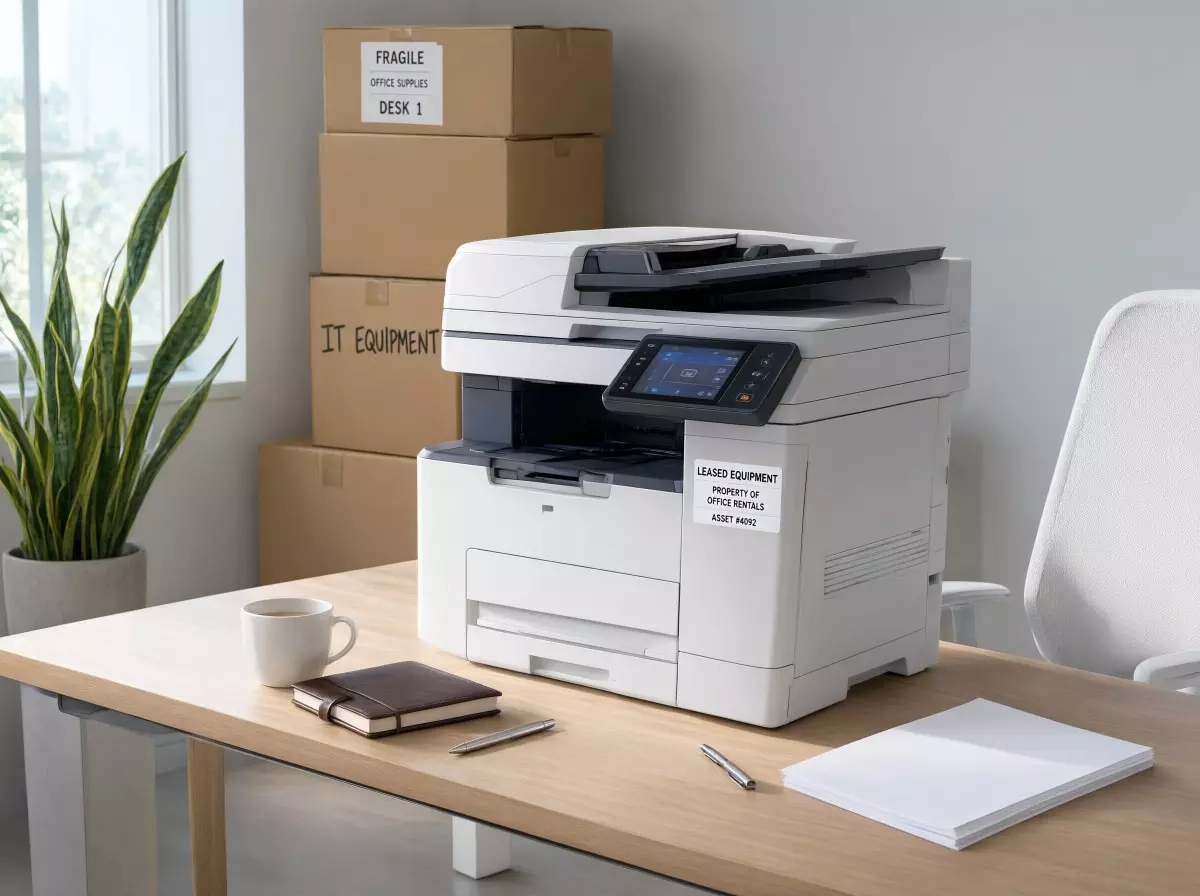
Printer Rental for Temporary Offices and New Businesses
A temporary site office, a project base, a short-term lease on a unit or a business in its first few months all share one problem: you need to print, scan and copy from the first week, but you cannot be sure how long you will be there or how much you will use the machine.
Buying equipment for a space you may leave in six months is hard to justify, and a long contract is just as awkward.
Printer rental can fit these situations, provided you choose the right kind of agreement and read the exit terms. This guide explains what is available, what it costs, how to avoid being locked in and how to plan for the unknowns.
Why temporary and new businesses have different needs
An established office can look at years of print data and choose a machine to match. A new business has none, and a temporary office may exist for only a few months. That changes what matters in an agreement.
- Uncertain volumes. A new business may print very little at first, then jump when it takes on staff or wins a contract. Estimating accurately is difficult, so flexibility is worth more than a lower price per page.
- Uncertain timescale. A temporary office might run for eight weeks or eighteen months. A fixed three- or five-year term could outlast the premises.
- Cash priorities. New businesses typically spend carefully until revenue is steady, so large upfront costs are unwelcome.
- Speed. You may need a machine installed and working within days, not weeks.
- Moves. Temporary premises and early-stage offices change location more often than established ones, so portability or the ability to end the agreement matters.
Rental options that suit short or uncertain needs
Several arrangements exist, and they trade price against flexibility.
- Short-term or rolling rental. The supplier provides a machine for a short fixed period or on a rolling monthly basis. This offers the most flexibility and often costs more per month, since the supplier has less time to recover the cost of the equipment. It suits projects, events, temporary sites and trial periods.
- Fixed-term rental with shorter terms. Some suppliers offer terms of 12 or 24 months, which may be a good middle ground for a new business that expects to stay but cannot predict volume.
- Standard long-term lease. Three to five years is common for offices, and the monthly price is usually lower. This tends to suit established businesses with stable needs, and it carries more risk for a business that may relocate or change quickly.
- Hire or rental from print and copier dealers. Some suppliers specialise in short-notice rentals for events and temporary premises, often including delivery and collection.
If you are unsure, favour flexibility in the early months, then move to a longer, cheaper agreement when your needs settle.
What it might cost
The figures below are illustrative only. Real prices depend on the supplier, model, term and volume.
Consider a new business of six people that prints 1,500 mono pages and 150 colour pages a month on a compact colour multifunction device.
Short rolling rental. £90 a month, with mono pages at 0.6p and colour at 6p, toner and servicing included. That is £90 plus £9 plus £9, a total of £108 a month. Over six months, £648.
Three-year fixed term. £60 a month, with mono at 0.5p and colour at 5p. That is £60 plus £7.50 plus £7.50, a total of £75 a month. Over three years, £2,700.
If the business stays three years, the fixed term is cheaper per month. If it leaves after six months and has to pay a large early termination charge, the saving can disappear.
For instance, if ending the three-year agreement early required paying 50 per cent of the remaining rentals, leaving after six months would mean paying about £1,000 on top of the £450 already spent, a total of £1,450 against the £648 for the rolling option. Which is better depends on how confident you are about your plans.
Buying instead: when it might make sense
Renting is not always the better choice. For a very small new business with light printing needs, a budget printer can be cheap to buy, and you keep it if you move.
A basic mono or colour multifunction device from a manufacturer such as Brother, HP, Canon or Epson may cost a few hundred pounds, and consumables for light use can be modest.
Buying may be the better option if:
- You print under about a hundred or two hundred pages a month
- You want no contract and no minimum charges
- You are confident the machine will be useful beyond the temporary office
- You do not need engineer support or on-site servicing
Renting tends to look better when you want service cover, need higher volumes, want to avoid a purchase or expect to change sites.
Practical points for a temporary office
Temporary premises bring particular practical considerations that are easy to overlook.
- Delivery and installation. Check how quickly the supplier can deliver and whether installation is included. Some offer next-day or within-the-week delivery, others take longer.
- Access and space. Confirm the machine will fit through doors, lifts and corridors, and that there is a suitable power supply and space around it.
- Network and Wi-Fi. A site office may have limited or temporary connectivity. Ask whether the supplier can set up the machine on your network or whether you need your own IT support. Some machines can connect directly to a laptop, which helps in a pinch.
- Security. A shared or temporary building may have less control over who has access. Consider whether secure release printing, a lockable room or a PIN is needed.
- Collection. Agree who will collect the machine at the end, when and at what cost, particularly if the site is remote or the final date is not fixed.
- Moves. If you might relocate during the agreement, ask whether the supplier will move the machine and whether there is a charge.
Practical points for a new business
A business in its first year has a different set of concerns.
- Estimating volume. Think about what you will really print: invoices, contracts, proposals, labels, delivery notes. Ask other businesses in your sector what they typically print, and avoid choosing a machine rated for far more than you need.
- Colour or mono. Colour pages cost much more, so consider whether you need colour regularly or only occasionally. A mono machine plus the occasional outsourced colour print may cost less.
- Features. A multifunction device with scanning is useful for digitising paperwork, but check whether you will use it before paying for extras.
- Growth. Ask whether you can swap to a larger machine mid-term if you outgrow the first one, and what that would cost.
- Credit and paperwork. Some suppliers ask for business details or a credit check before agreeing a lease, and new businesses without a trading history may be asked for a deposit, a director's guarantee or a shorter term. Requirements vary between suppliers, and you should check what will be asked of you before you commit.
Contract terms to examine
When your plans are uncertain, the contract terms matter more than the monthly price. Look closely at:
- Minimum term and exit costs. What does it cost to end early, and how is it calculated?
- Minimum monthly charges. Is there a minimum page volume or fee that you pay regardless of use?
- Rate increases. Can page charges rise during the term?
- Upgrade or downgrade rights. Can you change the machine, and at what cost?
- What is included. Toner, parts, labour, delivery and installation.
- Response times. How quickly will an engineer attend, especially at a temporary address?
- Relocation. Can the agreement transfer to a new address?
- Automatic renewal. How and when must notice be given?
- Personal guarantees. Some agreements for new businesses ask a director to guarantee payments, so read the terms with care.
Ask for the key answers in writing and keep them with the signed agreement. Reading how providers of Office printer rental Uk describe their packages can show you which terms are common and which questions are worth raising.
A simple decision guide
If you are deciding between options, these prompts may help:
- Fewer than six months in the premises, uncertain volumes. A short or rolling rental, or a modest purchase if print needs are light.
- Six to eighteen months, moderate volumes. A 12 or 24-month rental with an upgrade clause.
- Settled business, stable premises. A longer fixed term with fixed page rates may offer the lowest monthly cost.
- Rapid growth expected. Prioritise the right to upgrade and a modest minimum volume.
- Tight cash. Favour a rental with no upfront fees and monthly payments.
- Very low print needs. Consider buying a basic machine or using a print shop.
Comparing suppliers
Ask two or three suppliers for written quotes based on the same assumptions: volumes (even if estimated), the features you need and the period you expect to stay. Ask each one to state the exit costs clearly and to explain how they handle early termination or relocation.
A directory such as photocopierrental can help you draw up a shortlist of suppliers operating in this sector.
Before choosing, check each company's trading history, delivery times and service coverage in your area, since a quick, reliable installation matters more than usual when the office is only open for a short time.
Conclusion
Printer rental can suit temporary offices and new businesses because it avoids a large upfront purchase, can be arranged quickly and often includes servicing.
The main risk is committing to a term or minimum volume that no longer matches your situation, so flexibility, exit costs and minimum charges deserve more attention than the headline monthly fee.
Before you sign, work out how long you expect to use the premises, estimate your monthly pages as realistically as you can and ask suppliers for the exact cost of leaving early or changing machine.
If your plans are very uncertain, choose a short or rolling agreement and move to a longer, cheaper term once your needs have settled.