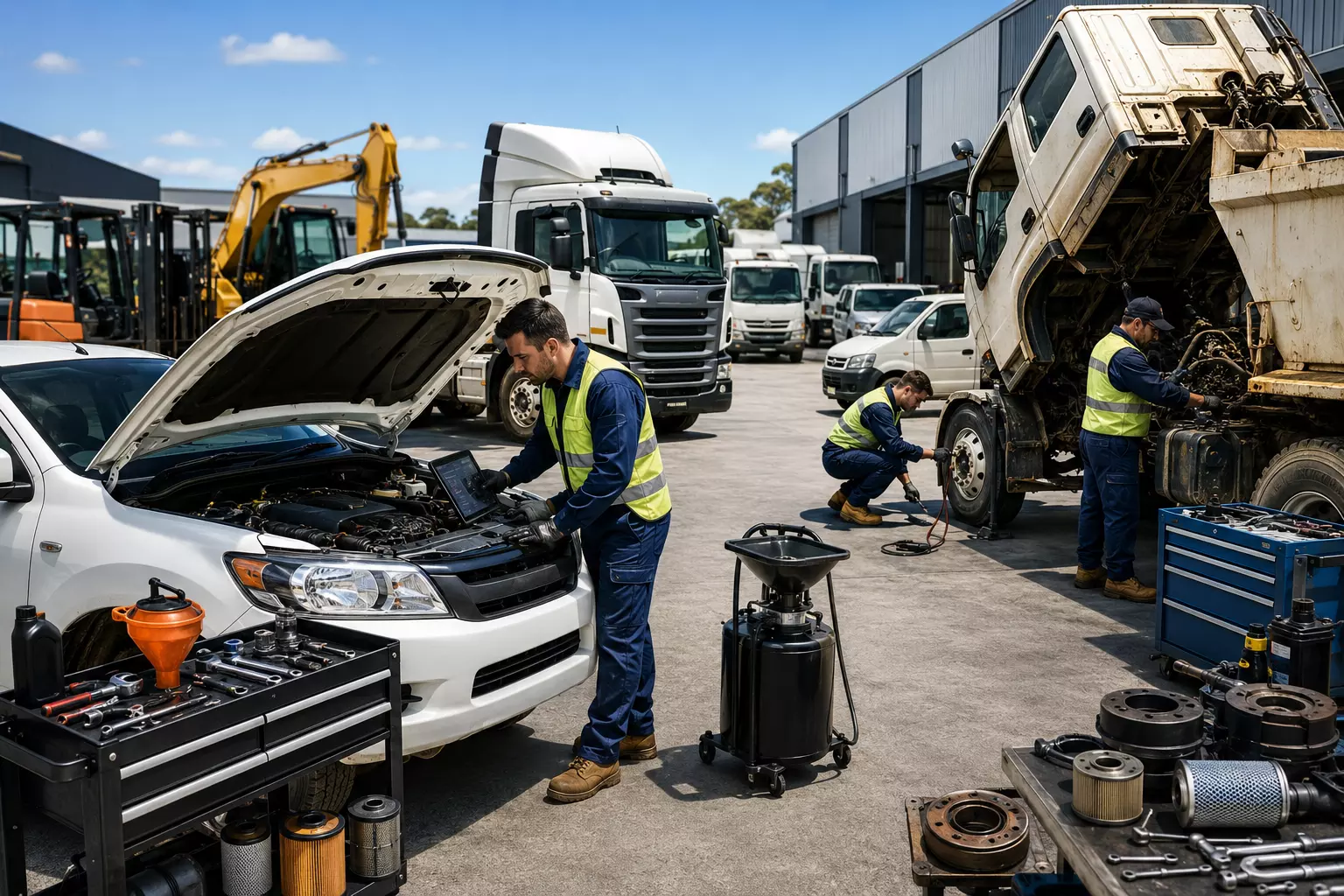
How Preventative Fleet Maintenance Saves Australian Businesses Thousands in Repair Costs
For Australian businesses that rely on commercial vehicles, every hour a truck, ute or service vehicle sits idle represents lost revenue.
Whether you're running a transport company, construction fleet, mining support operation or mobile trade business, vehicle downtime affects productivity, customer satisfaction and profitability.
Many fleet operators still adopt a reactive approach—repairing vehicles only when something breaks. While this may appear cheaper in the short term, emergency repairs almost always cost significantly more than planned maintenance.
Unexpected failures often result in towing costs, missed deliveries, overtime labour, replacement vehicle hire, customer delays and damaged business reputation.
Preventative fleet maintenance shifts the focus from fixing failures to preventing them altogether. By identifying wear before components fail, businesses reduce expensive breakdowns, improve reliability and keep their vehicles earning revenue instead of sitting in workshops.
Recent findings from the National Heavy Vehicle Regulator (NHVR) reinforce this approach. Australia's largest-ever National Roadworthiness Survey inspected more than 9,000 heavy vehicles, finding that brake defects remained the most common issue and highlighting the importance of routine inspections and daily vehicle checks. (NHVR)
What Is Preventative Fleet Maintenance?
Preventative maintenance is the scheduled servicing and inspection of vehicles before faults develop into major failures.
Rather than waiting until a vehicle breaks down, maintenance is planned according to:
- Kilometres travelled
- Engine operating hours
- Manufacturer service intervals
- Vehicle age
- Operating conditions
- Telematics and diagnostic data
Typical preventative maintenance includes:
- Engine oil and filter changes
- Transmission servicing
- Brake inspections
- Cooling system checks
- Suspension inspections
- Steering component inspections
- Battery testing
- Air conditioning servicing
- Tyre inspections and rotations
- Electrical system diagnostics
- Fluid replacement
- Safety inspections
This proactive approach significantly reduces the likelihood of expensive roadside failures.
Why Reactive Maintenance Costs More
Many businesses delay servicing because the vehicle appears to be operating normally.
Unfortunately, mechanical failures rarely happen without warning.
A worn wheel bearing, deteriorating hose or leaking seal may cost only a few hundred dollars to replace during scheduled servicing. Left unattended, however, it can damage surrounding components and result in thousands of dollars in repairs.
Reactive maintenance often creates additional costs such as:
- Emergency call-out fees
- Towing charges
- Lost driver hours
- Missed customer appointments
- Delayed projects
- Idle staff
- Replacement vehicle hire
- Higher insurance exposure
- Reduced resale value
The repair invoice is only one part of the total financial impact.
Preventing Costly Downtime
- For many Australian businesses, downtime is more expensive than the repair itself.
- A delivery truck waiting for repairs cannot complete scheduled jobs.
- A service technician without a vehicle cannot attend clients.
- A construction vehicle parked on-site can delay multiple trades.
- Fleet managers consistently identify unplanned downtime as one of their biggest operational challenges, with many recommending structured maintenance software, detailed repair tracking and proactive scheduling rather than relying solely on oil change reminders.
- Preventative servicing allows maintenance to be scheduled during quieter operating periods rather than disrupting business unexpectedly.
Extending Vehicle Life
Commercial vehicles represent significant capital investments.
Replacing heavy vehicles earlier than necessary places unnecessary pressure on business cash flow.
Routine maintenance helps:
- Reduce engine wear
- Protect transmissions
- Extend differential life
- Improve cooling efficiency
- Preserve braking performance
- Reduce corrosion
- Maintain suspension integrity
Vehicles that receive regular servicing commonly remain productive for considerably longer than poorly maintained fleets.
This delays replacement costs while improving overall return on investment.
Improving Fuel Efficiency
Fuel is one of the largest operating expenses for commercial fleets.
Poor maintenance increases fuel consumption through:
- Underinflated tyres
- Dirty air filters
- Incorrect wheel alignment
- Worn injectors
- Engine faults
- Low-quality lubricants
Small reductions in fuel efficiency quickly become significant across dozens of vehicles travelling thousands of kilometres every month.
Routine servicing helps engines operate closer to their intended efficiency.
Better Safety Means Lower Risk
Vehicle maintenance is also a safety issue.
Brake failures, steering defects, suspension problems and tyre issues can place drivers and other road users at risk.
The NHVR's 2024 National Roadworthiness Survey found brake defects remained the most common mechanical issue identified during inspections, reinforcing the importance of routine maintenance and daily checks.
Businesses that maintain safer vehicles may also experience:
- Fewer workplace incidents
- Reduced insurance claims
- Improved driver confidence
- Better compliance outcomes
- Lower legal exposure
Air Conditioning Isn't Just About Comfort
Many fleet owners overlook climate control systems until they stop working.
However, commercial vehicle air conditioning affects:
- Driver comfort
- Driver concentration
- Productivity
- Demisting performance
- Cabin air quality
Ignoring small refrigerant leaks or compressor issues often results in larger repairs later. Businesses looking for professional air conditioner repair for vehicles should address cooling system issues early as part of their preventative maintenance schedule rather than waiting for complete system failure.
The Value of Mobile Fleet Servicing
- Transporting vehicles to workshops consumes valuable time.
- Many Australian businesses now reduce downtime by arranging on-site servicing wherever practical.
- Using a qualified mobile mechanic perth can minimise vehicle travel, reduce disruption to operations and allow routine maintenance to be completed at depots, worksites or customer locations when appropriate.
- For fleets operating across multiple job sites, this flexibility often improves scheduling efficiency.
Common Fleet Maintenance Mistakes
Even experienced businesses occasionally make maintenance decisions that increase long-term costs.
Common mistakes include:
Delaying Minor Repairs
Small coolant leaks, worn belts or noisy bearings rarely fix themselves.
Minor faults frequently become major failures.
Ignoring Driver Reports
Drivers often notice unusual noises, vibrations or warning lights before serious damage occurs.
Encouraging prompt reporting helps mechanics intervene early.
Skipping Manufacturer Service Intervals
Modern diesel engines rely on precise maintenance schedules.
Delaying servicing can accelerate wear and increase repair costs.
Focusing Only on Oil Changes
Effective preventative maintenance involves comprehensive inspections—not simply replacing engine oil.
Poor Record Keeping
Without accurate service histories, fleets struggle to identify recurring failures or optimise maintenance intervals.
Read: Top 10 Criteria for Professional Vehicle Selection in
Practical Strategies to Reduce Fleet Repair Costs
Businesses can significantly reduce maintenance expenses by adopting structured processes.
Consider implementing:
- Daily pre-start inspections
- Digital maintenance records
- Scheduled servicing calendars
- Telematics monitoring
- Driver defect reporting systems
- Regular tyre pressure checks
- Battery health testing
- Brake inspections before long-distance work
- Cooling system servicing before summer
- Seasonal fleet inspections
Consistency delivers better results than reacting to emergencies.
Real-World Example
Imagine two plumbing companies operating identical fleets of ten diesel service vehicles.
Company A services every vehicle according to manufacturer recommendations.
Company B postpones servicing whenever workloads increase.
After three years:
- Company A experiences fewer breakdowns.
- Vehicles remain available for customer bookings.
- Fuel consumption stays consistent.
- Resale values remain stronger.
- Repair costs remain predictable.
Company B, meanwhile, faces repeated emergency repairs, cancelled appointments, expensive towing and multiple replacement vehicle hires.
Although Company B initially spent less on servicing, its total operating costs become substantially higher over time.
This scenario is common across transport, construction and trade industries.
Preventative Maintenance Is Becoming More Data-Driven
- Modern fleet management increasingly combines preventative servicing with telematics, diagnostic software and predictive maintenance.
- Industry discussions show many fleet managers now adjust maintenance intervals based on operating conditions rather than relying solely on kilometres travelled. They also monitor manufacturer service bulletins and component-specific maintenance schedules to reduce unexpected failures.
- Businesses that embrace these technologies gain better visibility into vehicle health and can prioritise repairs before they affect operations.
Conclusion
Preventative fleet maintenance is one of the smartest investments Australian businesses can make.
While scheduled servicing requires ongoing planning and expenditure, it almost always costs far less than emergency repairs, vehicle downtime and lost productivity.
Well-maintained fleets operate more efficiently, remain safer on Australian roads, consume less fuel and retain greater resale value. More importantly, they allow businesses to deliver reliable service to customers without the disruption of avoidable breakdowns.
In an increasingly competitive market, preventative maintenance is no longer simply a mechanical responsibility—it is a strategic business decision that protects profitability, supports compliance and keeps commercial operations moving.
Frequently Asked Questions
1. How often should commercial fleet vehicles be serviced?
Service intervals vary depending on the manufacturer, operating conditions, kilometres travelled and engine hours. Businesses should always follow manufacturer recommendations while considering harsher operating environments.
2. Does preventative maintenance really save money?
Yes. Preventative maintenance helps identify small issues before they become expensive repairs, reducing breakdowns, downtime and emergency repair costs.
3. What are the biggest causes of unexpected fleet breakdowns?
Brake problems, cooling system failures, battery issues, worn tyres, neglected fluid changes, electrical faults and ignored warning signs are among the most common causes.
4. Should fleet maintenance be based on kilometres or time?
The best approach combines both. Some vehicles reach kilometre limits quickly, while others require servicing based on elapsed time, engine hours or operating conditions.
5. What records should fleet managers keep?
Maintain detailed records of servicing dates, inspections, repairs, parts replaced, warranty work, fuel usage and vehicle defects. Accurate records help identify trends and support compliance.
6. Is mobile servicing suitable for commercial fleets?
For many businesses, on-site servicing reduces vehicle downtime and improves scheduling efficiency, particularly for fleets operating across multiple worksites.
7. What should drivers check before every trip?
Drivers should inspect tyres, lights, brakes, fluid leaks, warning lights, mirrors, windscreen condition and overall vehicle safety before commencing work each day, in line with good fleet management practices.