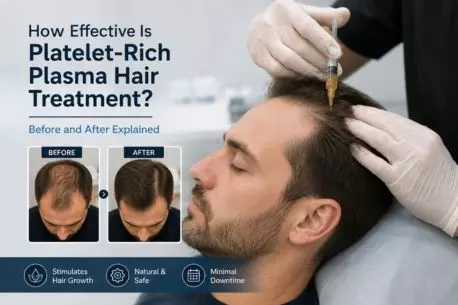
How Effective Is Platelet-Rich Plasma Hair Treatment? Before and After Explained
Hair thinning often creeps up on people unexpectedly. One day your parting appears slightly wider; the next, you notice more strands on your pillow than usual.
Soon, you find yourself searching for answers online at midnight. If this sounds familiar, you have likely encountered a treatment that consistently emerges in hair loss conversations.
Platelet-rich plasma hair treatment has become one of the most discussed options for those dealing with thinning hair. By using your own blood to stimulate hair follicles, it avoids synthetic chemicals and invasive surgery. But does it actually work, and what should you expect from real-world results? Let us examine the details.
What Is Platelet Rich Plasma Hair Treatment?
PRP therapy begins with a simple blood draw, similar to a routine test. The sample is spun in a centrifuge to separate the platelet-rich plasma from other blood components. This concentrated plasma is rich in growth factors that are essential for tissue repair and cell regeneration.
Once prepared, the plasma is injected directly into thinning areas of the scalp. The mechanism is straightforward: growth factors reactivate dormant hair follicles, enhance blood supply to the scalp, and encourage healthier, thicker hair growth over time.
Why It Has Gained So Much Attention
Unlike hair transplants, PRP involves no surgery, incisions, or lengthy recovery periods. Because it does not rely on external medications, it appeals to those seeking a more natural approach. Consequently, clinics report a growing demand for this treatment among both men and women experiencing early to moderate hair thinning.
Before and After Results: What Actually Changes
This is usually the first question anyone asks. Photos matter, but understanding the timeline behind those photos matters just as much.
The First Few Weeks
Immediately after a session, most people notice mild scalp sensitivity and slight redness, which fades within a day or two. Visible hair changes are not expected this early, since the treatment works at a cellular level first.
Three to Four Months In
This is typically when people begin noticing a difference. Shedding often reduces, and new, finer hairs start appearing along the hairline or thinning patches. Before and after comparisons at this stage usually show subtle but encouraging density improvement.
Six Months and Beyond
By this point, most patients see the most noticeable transformation. Hair appears thicker, fuller, and stronger in texture. Clinics generally recommend a series of three to six sessions spaced a month apart, followed by maintenance sessions every few months to sustain results.
Is PRP Effective? An Honest Assessment
PRP is not a miracle cure, and providers claiming instant results should be approached with caution. However, clinical studies and patient outcomes consistently demonstrate that PRP improves hair density and reduces shedding for a significant percentage of individuals, particularly those in the early stages of hair loss.
PRP treatment is most effective as part of a comprehensive hair restoration plan rather than a standalone solution for advanced baldness. When combined with other approaches, such as minoxidil or a hair transplant, results are typically more pronounced and long-lasting.
Who Is a Good Candidate
Ideal candidates include those with early to moderate pattern hair loss or thinning caused by stress, hormonal shifts, or postpartum changes. Individuals with completely bald patches may see limited benefits, as PRP stimulates existing follicles rather than creating new ones.
Individuals with certain blood disorders or those undergoing specific medical treatments may not be suitable candidates, which is why a proper consultation before starting is essential.
Factors That Influence Your Results
Not everyone experiences the same outcome, and several factors explain why.
The stage of hair loss plays a major role. Someone who starts treatment early, while follicles are still active, generally sees better results than someone with long standing baldness. Age and overall scalp health also matter, since younger, healthier scalps tend to respond more actively to growth factor stimulation.
Consistency is another major factor. Skipping sessions or stretching them too far apart can slow progress considerably. The skill and experience of the practitioner administering the treatment also affects outcomes, since correct injection depth and technique influence how well the plasma reaches the follicles.
This is why choosing an experienced provider, such as The Skin and Hair Clinic, is vital. A professional team will assess your scalp condition, hair loss pattern, and medical history to design a personalized treatment plan tailored to your specific needs.
Read: PRP Hair Treatment in Islamabad – Safe and Natural
Aftercare Tips for Better Results
What you do after each session matters almost as much as the treatment itself. Avoid washing your hair for at least a day after the procedure to let the scalp settle. Direct sun exposure and swimming pools should be avoided for a short period, since chlorine and UV rays can irritate the treated scalp.
Gentle scalp massage, once cleared by your practitioner, can help improve circulation. Maintaining a balanced diet rich in protein, iron, and vitamins supports the growth process from within, since hair follicles rely on proper nutrition to function well.
Avoid harsh chemical treatments, tight hairstyles, or excessive heat styling in the weeks following a session, as these can add unnecessary stress to hair that is still recovering and regenerating.
Ready to See Real Results for Yourself?
If thinning hair has impacted your confidence, professional guidance can help. The team at The Skin and Hair Clinic specializes in personalized PRP hair treatment plans. Book a consultation today to take the first step toward fuller, healthier hair with the support of experts who understand your scalp's requirements.
Frequently Asked Questions
How many PRP sessions are needed to see results?
Most patients require three to six initial sessions spaced approximately one month apart, followed by periodic maintenance to sustain long-term results.
Is PRP hair treatment painful?
A numbing cream is usually applied beforehand, so most people describe the discomfort as mild, similar to small pinpricks rather than actual pain.
Can PRP regrow hair completely on a bald scalp?
No. PRP works best on areas with thinning hair and active follicles. Completely bald areas with no follicle activity typically will not respond to this treatment.
How long do PRP results last?
Results can last several months to a few years, depending on individual factors, though most clinics recommend maintenance sessions every four to six months.
Is PRP safe since it uses my own blood?
Yes, since the plasma comes from your own blood, the risk of allergic reaction or rejection is extremely low compared to synthetic treatments.
Can PRP be combined with other hair loss treatments?
Yes, PRP is often paired with minoxidil, supplements, or hair transplant procedures for enhanced and longer lasting results.