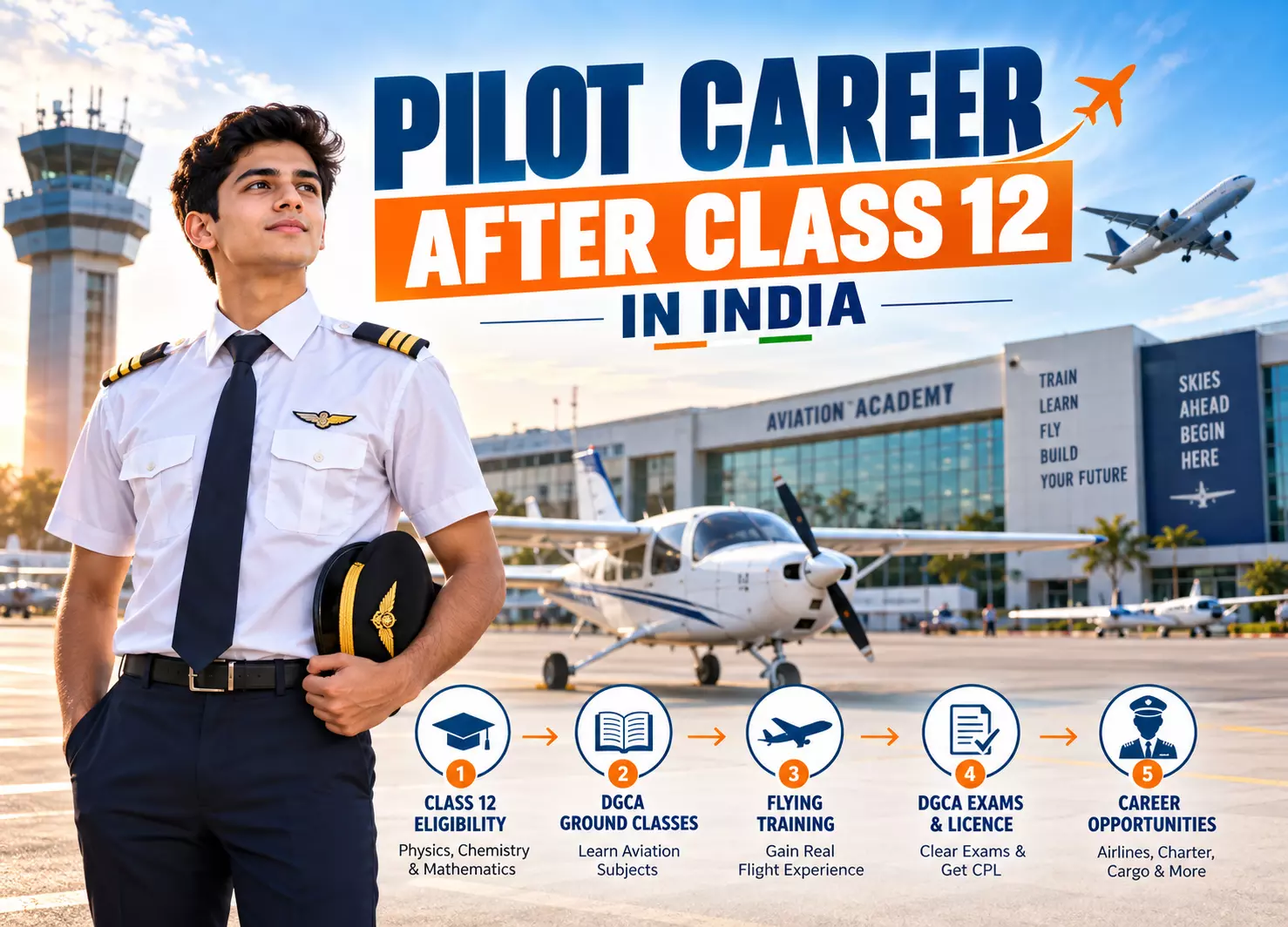
After Class 12: How to Start Your Journey Towards a Pilot Career in India
Choosing a career after Class 12 can be an important decision, especially for students who dream of working in aviation.
Becoming a pilot offers an opportunity to work in a professional environment that requires technical knowledge, discipline, and strong decision-making skills. However, the journey involves more than simply learning to fly an aircraft.
Students need to understand educational eligibility, medical fitness, aviation theory, practical flight training, licensing requirements, and the expenses involved. Starting with the right information can help aspiring pilots make better decisions and prepare for the different stages of training.
1. Understand the Requirements for Becoming a Pilot
Before beginning pilot training, students should research the current eligibility requirements for their intended licence. These may include educational qualifications, specified subjects, medical fitness, examinations, and practical training.
Students planning to become commercial pilots in India should consult the Directorate General of Civil Aviation (DGCA) for the latest licensing rules and procedures. Requirements can change, so it is important to rely on official information instead of assumptions or outdated advice.
Understanding these requirements early can help students create a realistic plan for their aviation education.
2. Build a Strong Academic Foundation
Aviation training involves technical concepts, calculations, weather conditions, navigation, and aviation regulations. A good academic foundation can make these subjects easier to understand.
Students should focus on developing their understanding of mathematics, physics, and English where relevant to their educational background and applicable eligibility requirements. Clear communication and logical thinking are useful skills throughout pilot training.
Regular revision, organised notes, and a consistent study routine can also help students prepare for theoretical examinations.
3. Check Your Medical Fitness Early
Medical fitness is an essential part of the professional pilot pathway. Applicants must meet the medical standards applicable to their intended licence and complete the required assessments through the recognised process.
It is sensible to understand the medical requirements before committing to major training expenses. Students should consult current DGCA guidance and an authorised aviation medical examiner to confirm which assessments and documents are required.
Avoid relying on general online advice to determine your medical eligibility. The appropriate professional assessment is the best way to understand your individual situation.
4. Learn About DGCA Ground Training
Ground training helps students develop the theoretical knowledge required for pilot licensing. Depending on the applicable syllabus, subjects may include air navigation, aviation meteorology, air regulations, and aircraft technical knowledge.
These subjects help students understand how aircraft operations work and why pilots must follow established procedures. A structured learning environment can make difficult concepts easier to understand and provide opportunities to ask questions.
When researching the Best Pilot Training Academy in India, review its teaching methods, course schedule, study resources, mock tests, and doubt-clearing support. Confirm whether the academy provides ground classes only or also offers other training arrangements.
Read: Pilot Training & Flight Operations: A Practical Guide to
5. Understand Practical Flight Training
Classroom learning is only one part of the pilot training journey. Students pursuing a Commercial Pilot Licence must also complete the applicable practical flight training requirements.
This training takes place through an appropriate Flying Training Organisation and helps students develop aircraft handling, communication, situational awareness, and procedural skills under qualified supervision.
Before selecting a flying school, check its current DGCA approval status and the relevant scope of approval. Ask about aircraft availability, instructor support, training schedules, expected costs, and how progress is monitored.
Understanding the difference between ground training and practical flying training helps students plan the complete process more accurately.
6. Compare Training Institutes Carefully
Selecting a training provider should involve more than comparing advertisements or choosing the lowest fee. Students should evaluate the course structure, instructor experience, learning resources, student support, and transparency of the information provided.
While comparing the Best Pilot Training Institutes in India, consider whether the programme matches your current stage of preparation and long-term career goals.
Before enrolling, ask questions such as:
- Which subjects and learning resources are included?
- What are the total course fees and possible additional charges?
- Are mock tests and individual doubt-clearing sessions available?
- What support is provided after course completion?
- Which parts of the pilot training journey must be arranged separately?
Clear answers can help you compare options fairly and avoid unexpected expenses.
7. Prepare a Budget Before Enrolling
Pilot training requires financial planning because the total cost can vary considerably depending on the training route, institution, location, and individual progress.
Your budget may need to cover ground classes, flying hours, medical assessments, examination fees, study materials, travel, accommodation, and other related expenses.
Request a written fee breakdown from each provider and check which services are included. It is also helpful to keep an allowance for unexpected expenses or delays.
Students and families should understand the complete financial commitment rather than relying on a single advertised course fee.
8. Develop Skills Beyond Academic Knowledge
Successful pilot training requires a combination of technical understanding and professional skills. Communication, teamwork, concentration, time management, and the ability to follow procedures are all valuable.
Students can begin developing these skills while preparing for their aviation career. Following a daily timetable, practising clear communication, reviewing mistakes, and learning to stay organised can build useful habits.
It is also important to remain open to feedback. Training involves continuous learning, and the ability to identify weaknesses and improve them can support long-term progress.
9. Set Realistic Career Expectations
Becoming a qualified pilot takes time, effort, and financial commitment. Completing a course or obtaining a licence does not automatically guarantee employment with an airline.
Career opportunities depend on several factors, including the applicable qualifications, medical fitness, experience, recruitment requirements, and performance in selection processes.
Students should research career pathways, follow official recruitment announcements, and understand the requirements of potential employers. Be cautious of any institute or agent promising guaranteed airline employment without clear, verifiable terms.
Conclusion
Starting a pilot career after Class 12 becomes easier to plan when students understand the major steps involved.
Educational eligibility, medical fitness, ground training, practical flying experience, licensing requirements, and financial preparation all deserve careful attention.
The right training provider should offer clear course information, suitable academic support, and transparent fees. Students should also verify current requirements through official DGCA sources before making important decisions.
With proper research, consistent preparation, and realistic expectations, aspiring pilots can take informed steps towards their aviation goals.