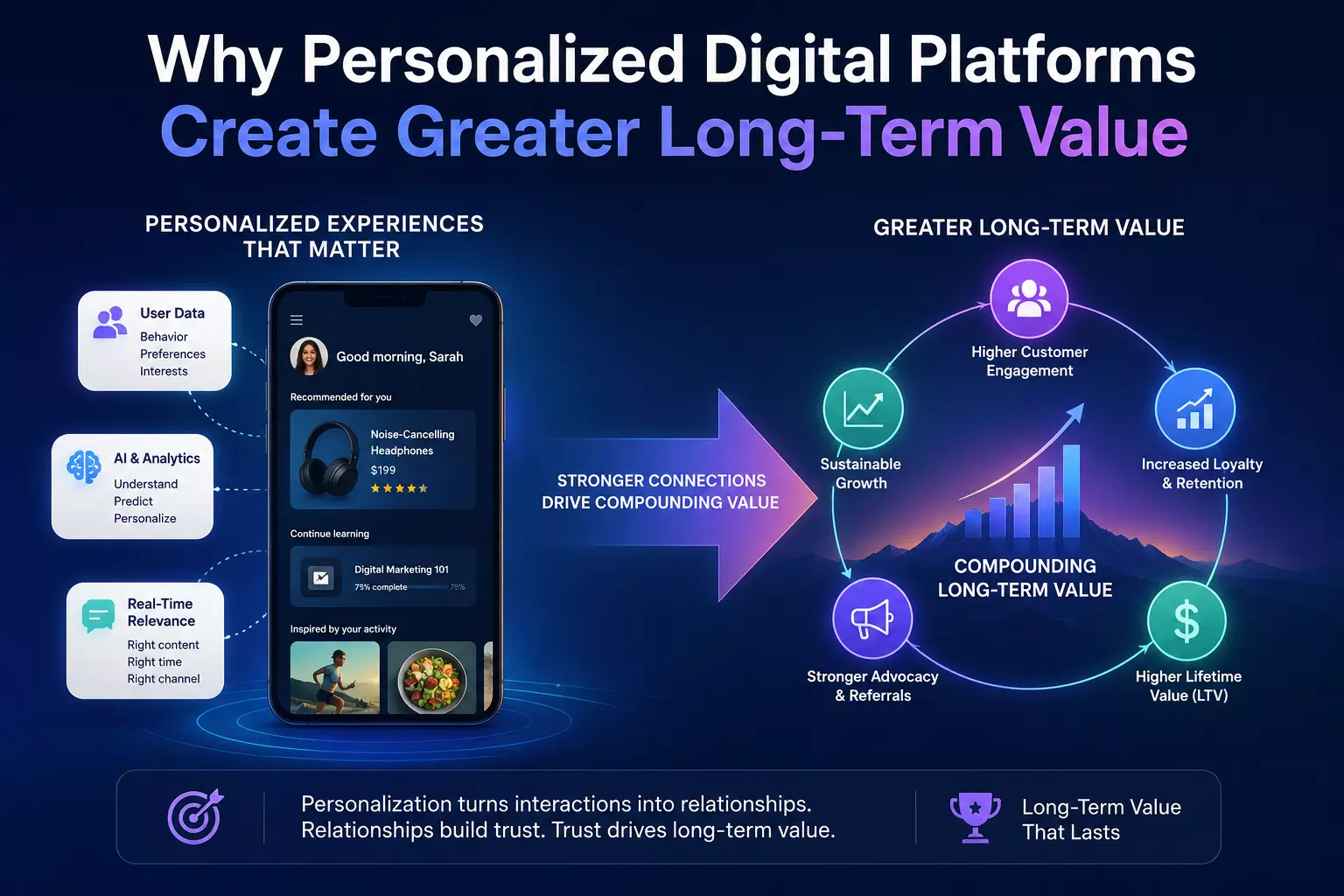
Why Personalized Digital Platforms Create Greater Long-Term Value
In today’s tough digital world, businesses must do more than exist online to stay relevant. Customers want smooth experiences. They want quick services. Personalized interactions are important, too. Digital solutions should meet their needs.
The rising demand has led many companies to shift from generic software. They are investing in digital platforms that match their business goals and workflows. These platforms also meet customer needs.
Personalized digital platforms fit a company’s unique needs. They’re different from one-size-fits-all solutions. They offer greater flexibility, greater scalability, improved security, and higher long-term returns. Industries are always changing.
Businesses that use customized digital solutions are often ready to adapt and innovate. This helps them stay competitive.
This article looks at why personalized digital platforms are valuable. It shows how they help businesses grow sustainably in a rapidly changing market.
Understanding Personalized Digital Platforms
A personalized digital platform is software made to fit a business's specific needs. It addresses both operational tasks and customer demands. These platforms can include mobile apps, web portals, and enterprise systems. They can also be tools for managing customers, eCommerce sites, or industry-specific software.
Personalized platforms fit into current workflows and goals. They help businesses without requiring them to adapt to standard software. This method builds a system that is both efficient and easy to use. It also fits well with the organization's goals.
Some common examples include:
- Customer-focused mobile applications
- Industry-specific management systems
- Tailored eCommerce platforms
- Business automation software
- Employee collaboration platforms
- Healthcare and financial services portals
These solutions focus on scalability, performance, and business growth. This makes them more valuable over time than standard software products.
The Limitations of Generic Software Solutions
Many businesses begin with ready-made software because it seems affordable and simple. However, professional custom app development solutions provide better flexibility, scalability, and long-term efficiency as business needs continue growing.
Lack of Flexibility
Generic platforms are made for everyone. So, they may not fit specific business needs or industry standards. Companies often need to change their operations to fit the software, not the other way around.
Limited Scalability
As businesses expand, their digital requirements become more complex. Standard software can struggle with high traffic, added features, or changing customer needs.
Integration Challenges
Many pre-built systems do not integrate smoothly with existing tools and technologies. This can lead to data silos, workflow inefficiencies, and reduced productivity.
Ongoing Subscription Costs
Ready-made solutions might look cheap at first. But ongoing licensing fees, limited features, and upgrade costs can add up over time.
Reduced Competitive Advantage
When many companies rely on the same generic software, it’s hard to stand out. This makes it tough to offer unique customer experiences and to compete effectively.
Businesses need to invest in personalized digital platforms to tackle these challenges. These platforms are tailored to meet their specific goals.
Key Reasons Personalized Digital Platforms Create Greater Long-Term Value
1. Better Alignment with Business Goals
Personalized digital platforms offer a major advantage. They align with a company’s specific goals and workflows.
Businesses should focus on features that help their operations. This way, they avoid spending on extras that they don't need. This makes a better workspace. Teams can work well. They use tools made for their needs.
A logistics company may need real-time tracking and automated route optimization. Meanwhile, a healthcare provider might need secure patient management features. Personalized platforms allow businesses to focus on what truly matters to their operations.
Benefits include:
- Improved workflow efficiency
- Fewer operational bottlenecks
- Faster task completion
- Better resource management
- Enhanced internal communication
This level of customization ultimately contributes to stronger long-term performance.
2. Enhanced User Experience
Customer experience plays a critical role in business success. Modern consumers expect digital platforms to be fast, intuitive, and personalized.
Customized digital platforms help businesses craft experiences for their target audience. You can enhance features, layouts, navigation, and functions. Watch what customers like and how they act.
Personalized user experiences can include:
- Simplified navigation
- Faster loading speeds
- Customized recommendations
- User-specific dashboards
- Mobile-friendly interfaces
- Seamless checkout or booking systems
When customers enjoy a smooth digital experience, they tend to stay loyal. They also engage more and are likely to recommend the business to others.
A good user experience boosts customer satisfaction. It also helps keep customers longer and improves profits over time.
3. Greater Scalability for Future Growth
Businesses evolve, and digital platforms must be able to expand in tandem with them.
Personalized digital solutions are designed with scalability as a primary consideration. Developers can add features and integrate new technologies as business needs change.
This flexibility is especially important for companies planning long-term expansion.
Scalable platforms support:
- Increased customer traffic
- Multi-location operations
- Additional product or service offerings
- Integration with emerging technologies
- Expansion into new markets
Businesses can improve their current platforms. They don’t need to replace old systems every few years. This saves time and money in the long run.
4. Improved Data Security and Compliance
Cybersecurity has become a major concern for businesses across all industries. Generic platforms are common targets for cyberattacks because their structures are widely known.
Custom digital platforms can include advanced security features for specific business requirements. Companies can implement stronger authentication systems, encrypted data storage, and customized access controls.
This is particularly important for industries that handle sensitive information, such as:
- Healthcare
- Finance
- Legal services
- eCommerce
- Education
Customized platforms meet industry rules and security standards. This helps reduce legal risks and data breaches.
A secure digital space builds customer trust. It protects your brand’s reputation and drives long-term value.
5. Better Integration with Existing Systems
Most businesses use many tools and software systems to manage different operations. Poor integration between these systems can create inefficiencies and communication gaps.
Personalized digital platforms can be designed to integrate smoothly with:
- CRM systems
- Payment gateways
- ERP software
- Marketing automation tools
- Analytics platforms
- Cloud services
This creates a centralized ecosystem where data flows efficiently between departments and processes.
Benefits of strong integration include:
- Reduced manual work
- Improved data accuracy
- Faster decision-making
- Better operational visibility
- Enhanced productivity
Efficient system integration helps businesses operate more effectively and reduces long-term operational complexity.
6. Stronger Competitive Advantage
In highly competitive industries, businesses need unique digital experiences to stand out.
Personalized platforms let companies provide unique features and services. Competitors using standard software can't match these offerings. This differentiation can significantly improve customer engagement and brand recognition.
For example, businesses can introduce:
- Custom loyalty programs
- AI-driven personalization
- Industry-specific features
- Advanced analytics dashboards
- Interactive customer tools
These special skills build better customer relationships and boost market position over time.
Innovative companies often gain a strong, lasting edge over their competitors.
7. Long-Term Cost Efficiency
Personalized digital platforms may have higher upfront costs. However, they often provide better financial value over time.
Businesses skip ongoing licensing fees with third-party solutions. They also gain full control over future upgrades and changes.
Additionally, customized systems reduce inefficiencies that drain productivity and increase operational costs.
Long-term financial advantages include:
- Reduced dependency on many software subscriptions
- Fewer maintenance issues
- Better employee productivity
- Fewer workflow disruptions
- Reduced need for software replacement
A personalized platform can offer much higher returns over time than its development cost.
Industries Benefiting from Personalized Digital Platforms
More industries are using custom digital solutions. This helps boost efficiency and enhance customer experience.
Healthcare
Healthcare providers use personalized platforms for:
- Patient management
- Appointment scheduling
- Telemedicine services
- Secure medical records
These systems improve patient care and operational efficiency.
Read: Top 10 Custom Web Application Development Companies
Retail and eCommerce
Retail businesses rely on tailored platforms for:
- Personalized shopping experiences
- Inventory management
- Customer loyalty programs
- Omnichannel integration
This helps improve customer engagement and sales performance.
Finance
Financial institutions enjoy:
- Secure digital banking systems
- Fraud detection tools
- Investment management platforms
- Automated financial reporting
These features improve security and customer trust.
Education
Educational organizations use personalized platforms for:
- Online learning systems
- Student management
- Virtual classrooms
- Performance tracking
These tools foster engaging learning environments while streamlining administrative workflows.
Important Factors to Consider Before Development
Before investing in a personalized digital platform, businesses should carefully check several factors.
Define Clear Objectives
Knowing business goals makes sure the platform has the right features and functions.
Focus on User Experience
The platform should focus on ease of use, accessibility, and customer satisfaction.
Plan for Scalability
Businesses should plan for future growth.
Choose the Right Technology Partner
Experienced developers are key to creating secure, scalable, and high-performing digital solutions.
Focus on Security
Strong cybersecurity measures should be integrated from the beginning of the project.
Careful planning helps maximize the long-term value of the platform investment.
The Future of Personalized Digital Platforms
As digital innovation evolves, personalized digital platforms will become essential. Forward-thinking companies will rely on them.
New tech like AI, machine learning, cloud computing, and automation creates new chances. They create fresh opportunities for businesses. enabling companies to offer smarter and more personalized experiences.
Future digital platforms are expected to offer:
- Advanced AI-driven personalization
- Predictive analytics
- Enhanced automation
- Real-time customer insights
- Improved cross-platform experiences
Flexible digital solutions help businesses prepare for future tech changes.
The Conclusion
Customized digital platforms offer businesses far more than short-term convenience. They create lasting value by improving efficiency, enhancing customer experience, increasing scalability, and boosting security. These improvements support long-term growth.
Generic software offers quick fixes. However, it often lacks the flexibility and customization needed for lasting business success. Custom digital platforms help businesses adapt to market changes. They also help companies stand out from competitors. Additionally, these platforms allow for better control over the company's digital environment.
As industries go digital, businesses offering personalized tech solutions will have an advantage. They’ll drive innovation, build customer loyalty, and boost long-term profits. Choosing a tailored platform is no longer a tech decision. It’s a strategic investment in the company’s future.