Payment Processing Solutions: Powering Global Commerce to USD 214B by 2033
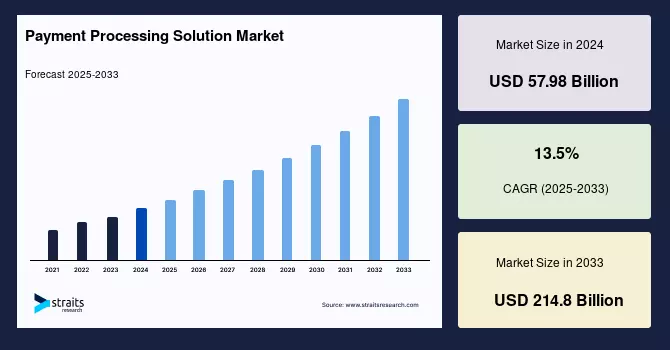
Delve into the payment processing solution market—from USD 58B in 2024 to USD 215B by 2033 at 13.5% CAGR—driven by digital transactions, mobile commerce, and hospitality growth.
Introduction
In today’s digital-first world, smooth and secure payment processing is no longer a convenience—it's a necessity. Payment processing solutions verify, authorize, and settle transactions between merchants, customers, and financial institutions.
Whether it’s debit cards, e-wallets, or POS systems, these services ensure money flows across the digital economy. As contactless payments, e-commerce, and mobile adoption explode, payment processing stands at the heart of commerce globally.
Market at a Glance
- 2024 Market Size: USD 57.98 billion
- 2025 Forecast: USD 63.46 billion
- 2033 Projection: USD 214.8 billion
- CAGR (2025–2033): 13.5%
In less than a decade, the market is projected to nearly quadruple—highlighting its central role in enabling commerce worldwide.
Key Market Drivers
Demand for Instant, Frictionless Payments
Today’s consumers expect payments to be swift and seamless. NFC, mobile wallets, and one-click checkouts from platforms like Apple Pay and Google Pay are eliminating transaction friction and fueling service adoption.
Rising Internet Penetration and SME E-commerce
As more SMEs go digital—especially in emerging economies—there’s growing need for integrated payment systems to support digital storefronts and mobile sales, propelling broader market growth.
Mobile & Real-Time Processing Trends
Mobile POS, contactless payments, and real-time settlement technologies are revolutionizing how payments are made and processed, offering consumers speed and reliability.
Market Restraints
Cybersecurity Risks and Fraud
As digital transactions increase, so do fraud attempts and cyberattacks. Retailers and providers alike must invest in fraud detection, tokenization, and secure infrastructure—failing which customer trust can erode.
Emerging Opportunities
Innovation Through API and Fintech Integration
Fintech platforms offer modular, scalable APIs that enable businesses of all sizes to implement digital payments—streamlining setup and driving accessibility.
Hospitality & Mobile Commerce Expansion
With travel, hotel, and food delivery industries growing, demand for mobile-driven, on-the-go payment options is rising—expanding the scope for underlying payment systems.
REQUEST SAMPLE: https://straitsresearch.com/report/payment-processing-solution-market/request-sample
Regional Landscape
- North America: Largest market in 2024, driven by tech innovation, early fintech adoption, and strong infrastructure.
- Asia-Pacific: Fastest-growing region—fueled by booming mobile economies, rising e-wallet use, and large-scale digital adoption.
- Europe: Growth underpinned by strong digital retail trends and cross-border commerce.
- LAMEA: Steady expansion as digital wallets and fintech solutions reach more consumers and merchants.
Segment Insights
SegmentLeading CategoryInsightPayment MethodCredit CardsCore for online and POS transactionsFastest-GrowingE-WalletsGrowing popularity with mobile-first consumersApplicationHospitality ServicesRapid adoption in hotels, dining, and food deliveryFuture RegionEurope (Cross-border)Cross-border shopping driving adoption
Use Case Examples
- Hospitality: Mobile check-ins, contactless payments, and POS systems streamline guest experiences and speed up service.
- SMEs: Fintech solutions facilitate card payments, invoicing, and reporting—enabling small businesses to scale.
- Retailers: Unified payment platforms simplify in-store and online sales, inventory binding, and loyalty tracking.
REQUEST SAMPLE: https://straitsresearch.com/report/payment-processing-solution-market/request-sample
Future Outlook
The Payment Processing Solution Market is poised to soar from USD 57.98 billion in 2024 to USD 214.8 billion by 2033, driven by a steady CAGR of 13.5%. With the rise of mobile commerce, fintech innovation, and evolving consumer expectations, payment systems are becoming not just functional—but foundational to commerce innovation.