Partnership Tax Return vs Individual Tax Return: What’s the Difference?
Running a business with one or more partners can make tax time more complicated than it first appears.
One of the most common areas of confusion is understanding the difference between the tax return lodged for the partnership and the individual tax return lodged by each partner.
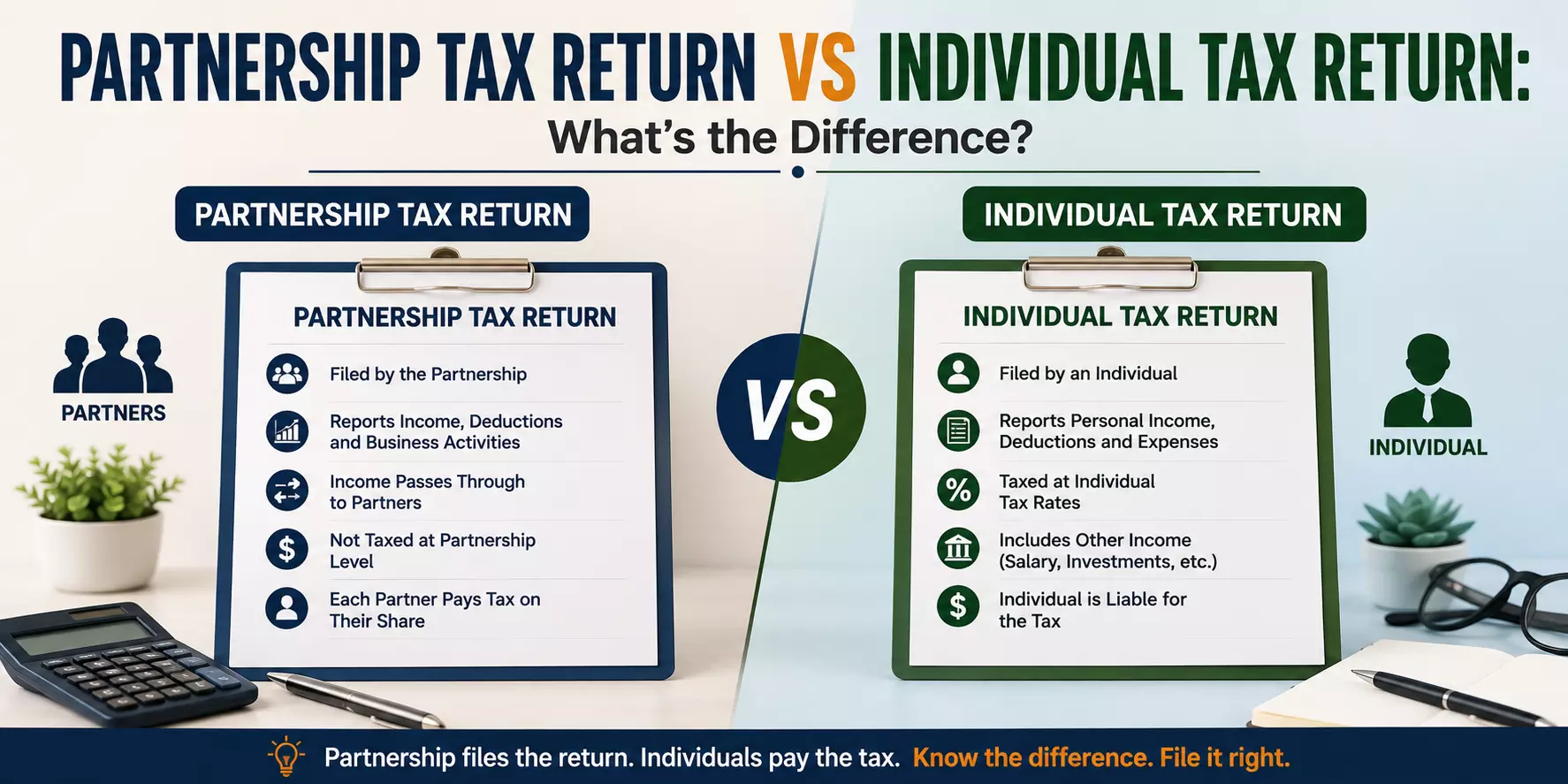
Although these returns are connected, they serve different purposes. A partnership generally reports its business income, expenses and profit or loss, while each partner reports their share of the partnership's net income or loss in their own tax return.
The partnership itself is generally not taxed as a separate taxable entity.
Understanding how the two returns work together can help business owners prepare the right records and avoid reporting the same income incorrectly.
What Is a Partnership for Tax Purposes?
In Australia, a partnership is generally an association of two or more people carrying on a business together or receiving income jointly from a business activity.
Unlike a company, a partnership generally does not pay income tax on its taxable income as a separate entity.
Instead, the partnership calculates its net income or loss and distributes the relevant shares to the partners according to the partnership arrangement and applicable tax rules. Each partner then includes their share in their own tax return.
For example, imagine two people operate a small consulting business. After allowable business expenses, the partnership has a net income of $100,000. If the partners are entitled to an equal share, each partner would generally include $50,000 of partnership income in their own tax affairs.
The actual tax outcome can vary depending on the partnership agreement, income sources, deductions and individual circumstances.
What Is a Partnership Tax Return?
A partnership tax return is used to report the financial and tax information of the partnership for the relevant income year.
It can include information such as:
- Business income
- Allowable business expenses
- Cost of sales
- Depreciation and other relevant deductions
- Net partnership income or loss
- Each partner's share of the partnership result
- Certain other tax-related information required by the return
The purpose is to establish the partnership's net tax position and the amount attributable to each partner.
Importantly, lodging this return does not mean the partnership itself pays income tax in the same way a company does. Instead, the partners generally pay tax on their respective shares through their own tax returns.
What Is an Individual Tax Return?
An individual tax return covers a person's overall taxable income and deductions for the financial year.
For someone who is a partner in a business, the return may contain several types of income. This could include salary and wages, investment income, rental income and the person's share of partnership income.
The individual return is therefore broader than the partnership return because it deals with the individual's complete tax position rather than only the business partnership.
A partner may also have personal deductions or other tax matters that have nothing to do with the partnership.
Read: Top 10 Banks in India: Best Financial Institutions for 2025
The Biggest Difference Between the Two
The simplest way to understand the distinction is:
The partnership return deals with the partnership's business activities, while each individual return deals with the personal tax position of each partner.
This distinction matters because business expenses should not simply be entered again as personal deductions without considering the applicable tax rules.
The partnership first determines its business result. The relevant share is then taken into account by each partner in their individual tax return.
How Partnership Income Reaches Individual Returns
Suppose a partnership earns $150,000 after allowable business expenses and the partners are entitled to 60% and 40% of the result.
The partnership return records the overall result. The partners would then generally account for their respective shares in their individual tax returns.
The $150,000 is not simply treated as the taxable income of both partners. Instead, the relevant portion is attributed to each partner.
If the partnership makes a loss, the treatment can also depend on the circumstances. Certain rules, including the non-commercial loss provisions, may affect whether and when an individual partner can use a partnership loss against other income.
What About Business Deductions?
Business expenses are generally considered when calculating the partnership's net income or loss. This can include legitimate expenses incurred in carrying on the partnership's business.
However, not every expense connected with a partner is automatically a partnership deduction. Some expenses may relate specifically to an individual partner and need to be considered separately.
This is one reason accurate bookkeeping and clear records are important throughout the financial year.
Partners should also avoid assuming that money withdrawn from the business automatically represents taxable income.
The tax treatment generally depends on the partnership's net result and each partner's entitlement rather than simply the amount of cash transferred to a personal bank account.
Do Partners Still Need Their Own Tax Returns?
Yes. Lodging a partnership return does not replace the individual tax returns of the partners.
Each partner generally needs to report their share of the partnership's net income or loss in their own tax return, along with their other assessable income and relevant deductions.
This means a partnership business can involve multiple tax-return obligations: one return for the partnership and separate individual returns for the partners.
Common Mistakes to Avoid
Several mistakes can make partnership tax reporting more complicated than necessary.
Reporting Withdrawals Instead of the Partnership Share
Partners sometimes assume that the amount they transferred from the business account to their personal account is the amount they need to declare. That is not necessarily the case. The partnership's tax result and the partner's entitlement are important.
Claiming the Same Expense Twice
An expense already accounted for in the partnership's business calculations should not automatically be claimed again personally.
Ignoring the Partnership Agreement
Profit-sharing arrangements should be properly documented. Changes to a partnership's composition or agreement can also have tax consequences.
Mixing Business and Personal Expenses
Using the same accounts for personal and business spending can make it harder to identify legitimate business expenses and maintain reliable records.
Leaving Tax Preparation Until the Last Minute
Partnership tax reporting can require financial statements, bookkeeping records, expense information and details for all partners. Preparing these documents early can reduce errors and delays.
When Should You Get Professional Help?
Partnership taxation can become more complex when there are changing partners, business losses, capital gains, overseas income, significant assets or unusual profit-sharing arrangements.
Working with a tax agent Perth business owners trust can be useful when you need help coordinating the partnership's financial information with each partner's personal tax obligations.
Professional assistance can also help identify record-keeping requirements and ensure the partnership and individual returns tell a consistent story.
Partnership and Individual Returns Work Together
A partnership return and an individual return are not competing alternatives. They are two connected parts of the tax reporting process.
The partnership return establishes the business's financial and tax result, while each partner's individual return incorporates their share alongside their other personal tax information.
Getting this distinction right can make tax time considerably easier. Keep the partnership's accounts organised, maintain supporting records and make sure each partner understands what information needs to flow into their personal return.
If you are unsure about your obligations, getting advice before lodging can be far easier than correcting an incorrectly prepared return later.
This article provides general information only and should not be treated as personal tax advice. Australian tax outcomes can vary depending on individual circumstances, partnership arrangements and current tax law.