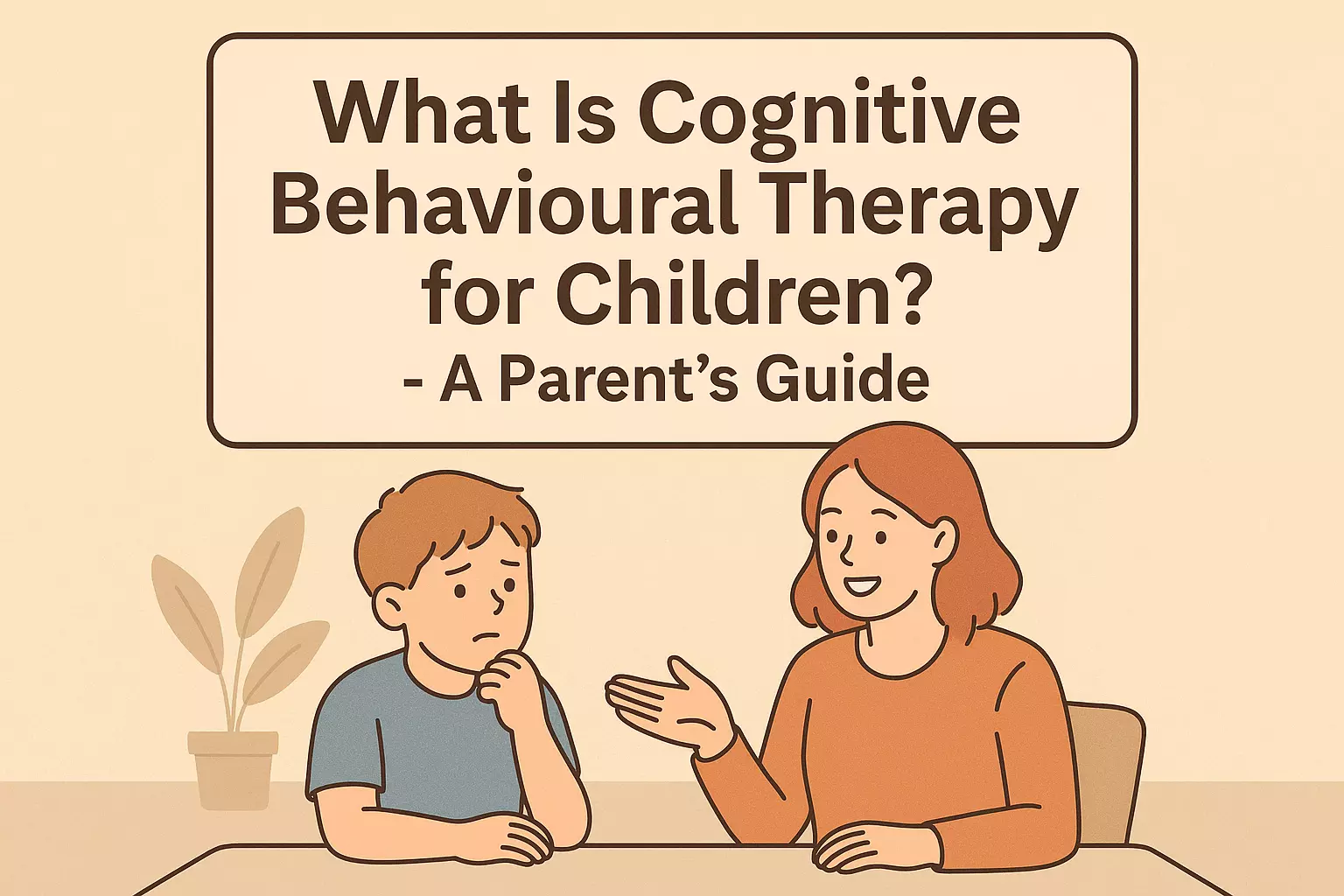
Parent-Child Communication: How to Improve It with CBT
Do you ever feel like you and your child are speaking different languages? Misunderstandings, emotional outbursts, and communication breakdowns can leave both parents and children feeling frustrated and unheard.
You're not alone, and it doesn't have to stay this way. Cognitive Behavioral Therapy (CBT) offers practical, evidence-based tools that can transform how you and your child relate to one another.
What Is CBT and How Can It Help Families?
Cognitive Behavioral Therapy (CBT) is a structured, goal-oriented form of therapy that helps people understand the connection between their thoughts, feelings, and behaviors.
At its core, CBT operates on a simple but powerful idea: our thoughts influence our feelings, which in turn drive our actions.
For families, CBT provides a framework to identify and change unhelpful patterns. When applied to parent-child communication, it helps both generations recognize negative thought patterns (like "My child never listens to me") and replace them with more constructive approaches.
Studies show that when parents understand CBT principles and reinforce them at home, children are more likely to practice and internalize new coping skills.
Why Communication Breaks Down: Common Family Patterns
Before we explore solutions, it's helpful to understand what goes wrong. Cognitive Behavioral Family Therapy (CBFT) targets negative thoughts, behaviors, and communication patterns to change dysfunctional relationship dynamics.
The "Mind-Reading" Trap
One of the most common communication barriers in families is a cognitive distortion known as mind-reading. This happens when family members assume they know exactly what others are thinking—and usually assume the worst.
"It feels like my daughter hates me," a mother might confide, while her teenager is actually gushing about how much she loves her mom.
Mind-reading robs families of curiosity. Instead of asking open-ended questions, we act on assumptions that often aren't true. This can lead to defensiveness, shutdowns, and deep feelings of alienation—especially in teenagers who feel misunderstood.
Read: Foundations of the Future - The Early Learning Centre
Practical CBT Techniques to Improve Parent-Child Communication
The good news is that CBT offers concrete strategies to break negative cycles and build stronger connections. Here are some of the most effective techniques you can start using today.
1. Educate Yourself on CBT Basics
Parents don't need to become therapists, but understanding the CBT model can help you reinforce it at home. At its simplest, explain it this way: "CBT helps us understand how our thoughts, feelings, and behaviors are connected. When we change unhelpful thoughts or behaviors, we can improve how we feel and cope."
Use simple metaphors to make it relatable. For example, you might tell your child, "Thoughts are like glasses that color how we see the world. Sometimes we need to clean our glasses to see clearly."
2. Replace Mind-Reading with Curious Questions
The antidote to mind-reading is simple but transformative: ask sincere, open-ended questions instead of making assumptions. For example:
Instead of This
Try This
"You're angry at me again."
"I'm noticing you seem quiet. How are you feeling right now?"
"You never want to spend time with us."
"I miss our time together. What would be fun for us to do this weekend?"
When you catch yourself making an assumption, reframe it as a question. This opens the door to genuine dialogue rather than shutting it down with blame.
3. Model CBT Skills for Your Child
Children learn best by example. When parents model CBT strategies, kids absorb them naturally. Try thinking out loud when you're working through a challenging thought:
"I just had the thought, 'I'm a terrible parent,' but I'm going to challenge that. Maybe I'm just having a hard day, and that doesn't mean I'm failing."
By demonstrating how to identify and challenge negative thoughts, you teach your child to do the same. This builds emotional intelligence and self-compassion.
4. Praise Effort, Not Just Results
Positive reinforcement is a cornerstone of CBT. One of the most impactful shifts you can make is to praise your child's effort and the use of coping skills, rather than just outcomes.
Instead of This
Try This
"Good job, you didn't feel anxious!"
"I love how you used your coping skills when you felt anxious!"
"You got an A—great work!"
"I'm so proud of the effort you put into studying for that test."
This approach teaches children that their effort and strategies matter, which builds resilience and a growth mindset.
5. Respond to Challenges with Empathy and Encouragement
It's natural for parents to want to protect their children from distress. However, sometimes this can unintentionally reinforce avoidance—which can make anxiety worse. Coach your child to face challenges with support, rather than avoiding them.
Instead of This
Try This
"It's okay, you don't have to go to the birthday party if it makes you nervous."
"I know this feels scary. What small step could we take to make it easier?"
This response validates the feeling while encouraging healthy coping and problem-solving.
How Professional CBT Can Support Your Family
While parents can implement many of these strategies at home, working with a trained therapist can accelerate progress and provide expert guidance.
Parent-child CBT approaches involve both individual and joint sessions, helping families build a safe and supportive environment.
A key principle in these therapies is balancing parental involvement so that the child still feels a sense of independence in their therapeutic journey.
Therapists may use strategies like:
- Brief check-ins at the beginning or end of sessions.
- Parent-only sessions to discuss reinforcing skills at home.
- Homework assignments that parents and children can work on together.
If you're navigating more complex challenges—such as trauma, anxiety disorders, or behavioral issues—a licensed online psychologist can provide professional support tailored to your family's unique needs. Evidence shows that involving parents in treatment can significantly improve a child's progress.
Step-by-Step: Starting the Conversation
If communication has broken down, starting a new conversation can feel daunting. Here's a simple, CBT-inspired approach to begin the shift:
- Set the Stage: Choose a calm moment when neither of you is stressed or distracted. Say, "I'd like to talk about how we communicate. I want to understand you better."
- Use "I" Statements: Avoid blame. Instead of "You always ignore me," try, "I feel sad when I try to talk to you and you're on your phone. Can we talk about that?"
- Listen to Understand: Resist the urge to interrupt or problem-solve. Validate their feelings, even if you disagree. "I hear that you feel like I'm always criticizing you. Thank you for telling me that."
- Reflect and Adjust: After the conversation, reflect on what went well and what could improve. Ask yourself: "What assumption did I make? What could I have asked instead?"
Conclusion: Communication Is a Skill You Can Build
Improving parent-child communication isn't about being perfect—it's about being willing to learn and grow together.
By applying CBT principles like challenging assumptions, modeling healthy thinking, and praising effort, you can build a stronger, more trusting relationship with your child. Remember, even small changes can create ripples of positive impact.
If you find that communication challenges are overwhelming or deeply ingrained, don't hesitate to seek professional help. Speaking with a licensed therapist is a meaningful first step—and it's easier to get started than you might think.
For more insights, you can explore understanding how CBT works for depression and anxiety, which provides additional context on the therapeutic process.
Disclaimer:
This content is for informational purposes only and is not a substitute for professional psychological or medical advice. If you or your child are experiencing significant distress, please consult a licensed mental health professional.