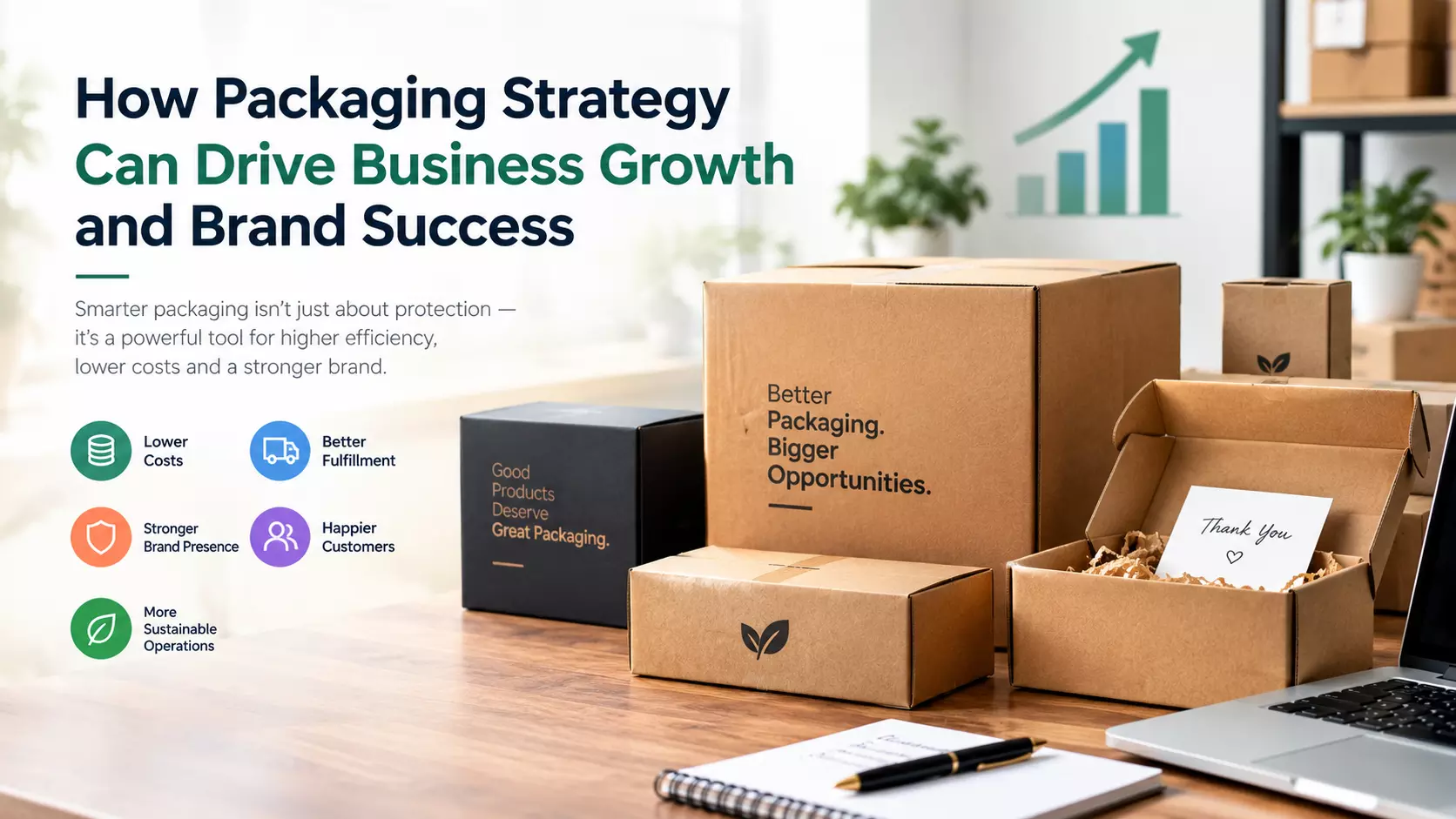
How Packaging Strategy Can Drive Business Growth and Brand Success
Packaging is easy to overlook when a business is focused on products, sales, and marketing. It can seem like just another operating expense that needs to be managed in the background.
In reality, packaging can affect almost every stage of the customer and fulfillment journey. The type of packaging a business chooses can influence shipping costs, product safety, storage space, order processing, customer satisfaction, and the way people perceive the brand.
For e-commerce stores, wholesalers, and retail businesses, treating packaging as part of the overall business strategy can create advantages that go far beyond simply getting a product from one place to another.
How Packaging Impacts Business Performance
Product protection is usually the first thing businesses think about when choosing packaging, and for good reason.
A damaged product can quickly turn into a refund, replacement, complaint, or negative review. Those problems cost more than the value of the packaging itself.
They also take time to resolve and can affect the customer's confidence in the business. For many businesses, corrugated cardboard boxes offer a useful combination of strength, manageable weight, and practicality for shipping products through different stages of the supply chain.
Still, choosing a box should not come down to finding something that simply fits the product. A package can be handled several times before it reaches its final destination.
It may sit in a warehouse, move through a distribution center, travel in a delivery vehicle, and be handled by different people along the way.
Businesses need to think about those conditions when deciding how much protection their products actually need. Spending a little more time getting the packaging right can prevent much bigger problems later.
Use Packaging to Control Shipping Costs
Shipping is one area where packaging choices can have a noticeable effect on a company's expenses. It is common for businesses to use a box that is larger than necessary because it is easier to find or gives them extra room for protective material.
The problem is that all that unused space adds up. A larger package can require more cardboard, more filler, more storage space, and potentially higher shipping charges.
This is why right-sizing deserves more attention. The idea is simple: use packaging that gives the product enough room to stay protected without leaving a large amount of unnecessary space around it.
When businesses get this balance right, they may also be able to reduce the amount of void fill they use in each order. Over hundreds or thousands of shipments, even small improvements can make a meaningful difference.
It is also worth looking at the full cost rather than just the price paid for each box. Packaging expenses can include storage, packing labor, protective materials, shipping, and the cost of replacing products that arrive damaged.
Looking at all of these factors together gives a business a much clearer picture of whether its current packaging approach is actually cost-effective.
Turn Packaging Into a Branding Opportunity
Packaging is not only there to protect what is inside. It is also one of the few physical brand touchpoints that customers experience after placing an online order.
A customer may spend several days interacting with a website and seeing advertisements, but the package is what finally arrives at their door. That makes it an important part of the overall brand experience.
A business does not necessarily need complicated packaging to make an impression. A recognizable logo, consistent colors, clear messaging, and a well-organized presentation can be enough to make an order feel more connected to the brand.
When these details match the company's website and other marketing materials, customers start to see a more consistent identity across the business.
This can be particularly useful for smaller brands. They may not have the advertising budgets of larger competitors, but thoughtful packaging gives them another opportunity to show customers that they care about how their products are presented.
A package that looks considered and professional can make a business feel more established without turning the delivery into an unnecessarily expensive production.
Choose Packaging Based on the Product
Every product has different packaging requirements, so using the same approach for everything is rarely practical.
A clothing brand, for example, may have very different needs from a company shipping electronics, cosmetics, glass products, or other fragile merchandise. The right packaging depends on what is being shipped, how it is handled, and where it needs to go.
Businesses should consider factors such as product weight, dimensions, fragility, shipping distance, storage conditions, and the amount of handling an order is likely to experience.
Choosing packaging without considering these details can create problems in either direction. A package may be unnecessarily expensive and oversized, or it may not provide enough protection for the product inside.
Order volume matters too. If a particular product is sold and shipped every day, having a dedicated box size may make sense because it can speed up fulfillment and simplify inventory.
Businesses with a larger and more varied product range may instead find it easier to keep a smaller selection of versatile packaging sizes. Looking at actual sales and shipping data can help determine which approach makes the most sense.
Improve Warehouse and Fulfillment Efficiency
The packaging process starts well before an order reaches the customer. It also has an effect on what happens inside the warehouse.
Boxes take up space, employees need time to assemble and pack them, and packaging materials need to be stored and replenished. When order volumes grow, small inefficiencies in these areas can become much more noticeable.
Packaging that can be stored efficiently and assembled quickly can make the fulfillment process easier for employees.
This matters even more for businesses processing a large number of orders every day. Saving a small amount of time on each package can eventually translate into significant labor savings.
It is also a good idea to review packaging inventory from time to time. Businesses change as they grow, and the packaging that worked when the company was smaller may not be the best fit anymore.
Products may change size, certain items may become more popular, or the company may start shipping to new markets.
A regular review can help businesses remove packaging sizes they rarely use and focus their inventory on what actually moves through the warehouse.
A simple packaging audit can uncover issues that are easy to miss during day-to-day operations. It might reveal too many box sizes, unnecessary filler, excess inventory, or steps in the packing process that take longer than they should.
Read: Custom Design Packaging: A Strategic Advantage for Modern
Consider Sustainability Without Sacrificing Protection
Sustainability has become another factor businesses need to consider when making packaging decisions. Customers are paying more attention to how products are packaged, but reducing waste can also make practical business sense.
Using the right-sized package, avoiding unnecessary filler, and choosing recyclable materials where appropriate can help reduce the amount of material used in everyday operations.
Corrugated packaging is commonly used for shipping because it provides useful structural protection while also fitting into established recycling systems. But sustainability should not mean removing packaging simply to use less material.
If a product arrives damaged because it was not properly protected, the environmental and financial cost of replacing it can outweigh the material that was saved.
A better approach is to find the right balance. Businesses can look for ways to eliminate unnecessary material while still giving products the protection they need. In many cases, smarter packaging design can reduce waste and improve efficiency at the same time.
Connect Packaging With the Customer Experience
Customers might not think about packaging every time they receive an order, but they certainly notice when something goes wrong.
A damaged product, excessive packaging, difficult opening process, or poorly packed order can leave a negative impression even when the product itself is good.
On the other hand, a package that arrives safely, looks clean, and feels appropriate for the product can reinforce a customer's sense that they made the right purchase.
For an online business, where customers cannot physically interact with a product before buying it, the delivery experience becomes an important part of building trust.
Packaging can also support repeat business. It cannot create customer loyalty on its own, but it can contribute to the overall experience alongside product quality, customer service, website experience, and delivery performance. When all of these elements work together, the customer has more reasons to come back.
Review Packaging as the Business Grows
A packaging strategy should not remain unchanged forever. What works for a small business shipping a few dozen orders each week may become inefficient once that business is processing hundreds or thousands of orders.
As order volume increases, companies may be able to purchase packaging in larger quantities, standardize frequently used sizes, improve their packing stations, and negotiate better shipping arrangements.
They may also discover that certain products deserve specialized packaging while others can comfortably use a standard format.
This is why packaging should be reviewed as the business develops. Changes in sales volume, product lines, shipping destinations, and customer expectations can all affect what the company actually needs.
Regularly looking at these factors makes it easier to spot unnecessary expenses before they become part of the normal operating budget.
Make Packaging Part of the Business Strategy
The best packaging decisions usually start with a simple question: what is the business trying to achieve? A company trying to lower costs may need to focus on box sizes, material usage, storage, and shipping.
A brand trying to build stronger customer relationships may put more attention into presentation and consistency. An e-commerce business trying to scale may need to prioritize product protection and faster fulfillment.
When packaging is viewed this way, it becomes more than something that gets added to an order at the end of the process. It becomes part of the way a business operates and presents itself.
The right packaging can help prevent damage, control unnecessary expenses, simplify fulfillment, and create a more consistent brand experience.
As competition continues to increase across e-commerce and retail, businesses have to pay attention to small details that can influence the customer experience.
For product-focused brands, even decisions around chocolate packaging can affect how products are protected, presented, and ultimately perceived by the buyer.
A smarter packaging strategy does not always mean spending more money. Often, it means taking a closer look at what the business is already doing, finding where materials or time are being wasted, and making practical changes.
When packaging is designed around the product, the customer, and the way the business actually operates, it can become a useful part of long-term growth rather than just another expense on the balance sheet