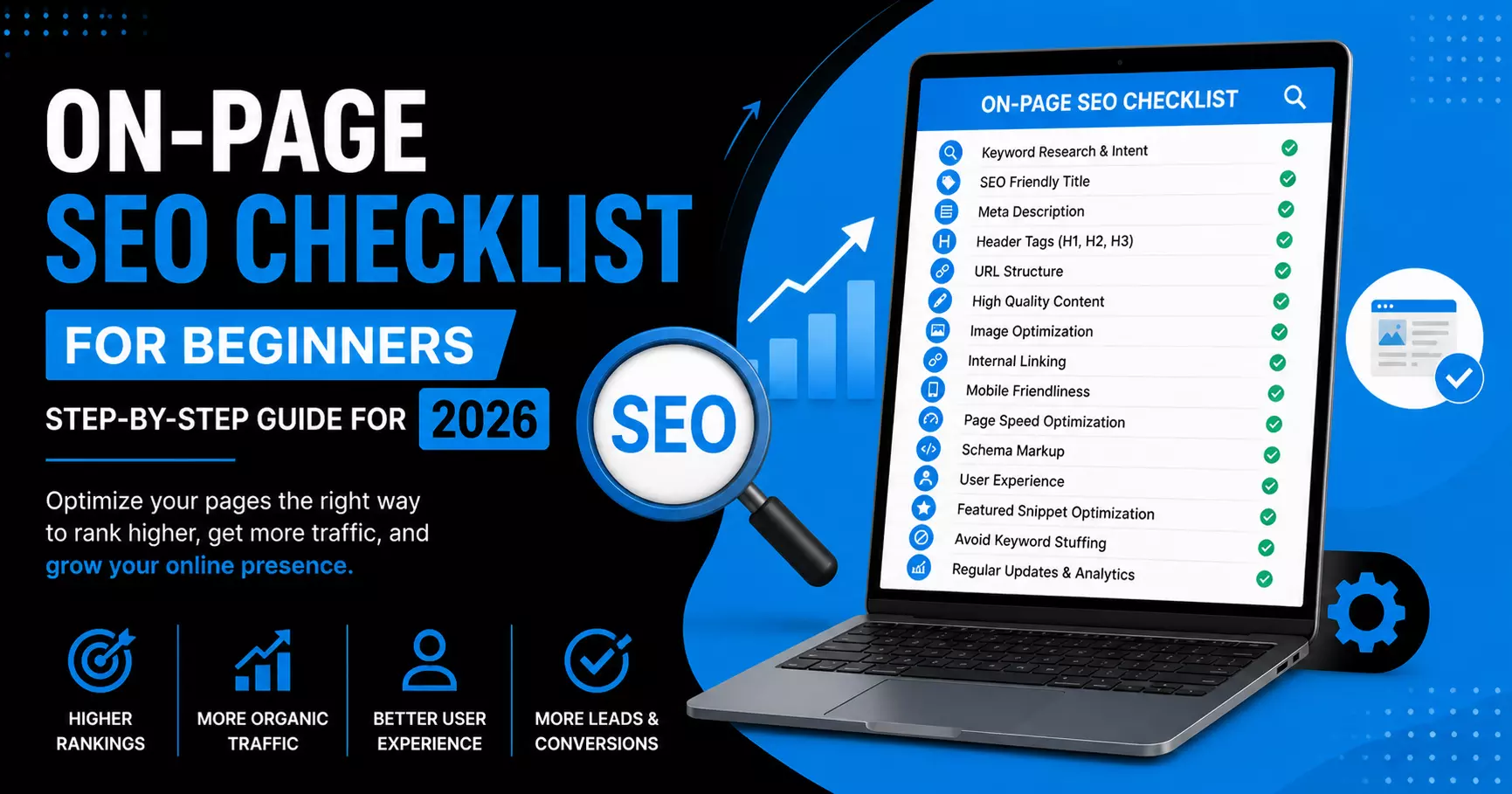
On-Page SEO Checklist for Beginners (Step-by-Step Guide for 2026)
Search engine optimization continues to evolve every year, and in 2026, businesses can no longer rely on outdated SEO techniques to rank on Google.
Modern SEO focuses on user experience, search intent, content quality, website performance, and technical optimization.
Among all SEO strategies, on-page SEO remains one of the most important factors for improving search engine rankings and increasing organic traffic.
On-page SEO refers to the process of optimizing individual web pages so they rank higher in search engines and attract relevant visitors.
It includes optimizing content, titles, headings, keywords, URLs, images, internal links, and technical elements that influence website visibility.
For beginners, understanding on-page SEO can feel overwhelming because there are many ranking factors involved. However, following a structured SEO checklist makes the optimization process easier and more effective.
This step-by-step on-page SEO checklist for 2026 will help beginners understand the most important SEO practices needed to improve rankings, boost traffic, and create search-engine-friendly content.
H1: On-Page SEO Checklist for Beginners (Step-by-Step Guide for 2026)
H2: Understand Search Intent Before Targeting Keywords
One of the biggest changes in modern SEO is the importance of search intent. Google no longer ranks pages simply because they contain keywords. Search engines now prioritize content that best matches user intent and provides valuable information.
Before optimizing any page, understand what users are searching for and why they are searching for it. Some users want information, while others are looking to make purchases or compare services.
H3: Choose Keywords Based on User Intent
Keyword research should focus on relevance and intent instead of search volume alone. Long-tail keywords often perform better because they target more specific search queries and attract qualified traffic.
H2: Optimize Your Page Title Properly
The page title is one of the most important on-page SEO elements because it tells both users and search engines what the page is about.
An optimized SEO title improves click-through rates and helps search engines understand content relevance.
H3: Place Primary Keywords Naturally
Include your primary keyword near the beginning of the title while keeping it readable and engaging. Avoid keyword stuffing because it negatively affects user experience and rankings.
H2: Write SEO-Friendly Meta Descriptions
Meta descriptions do not directly impact rankings, but they strongly influence click-through rates from search engine results pages.
A compelling meta description encourages users to visit your website by clearly explaining the page’s value.
H3: Focus on User Engagement
Use action-oriented language and naturally include target keywords within your meta description. Well-written descriptions improve visibility and engagement.
H2: Use Proper Heading Structure
Headings help organize content for both users and search engines. A clear heading structure improves readability and SEO performance.
Your page should contain one H1 heading followed by multiple H2 and H3 headings based on content hierarchy.
H3: Include Keywords in Headings
Using relevant keywords naturally within headings improves topical relevance and helps search engines understand your content better.
H2: Create High-Quality Content
Content quality remains one of Google’s strongest ranking factors in 2026. Thin or low-value content struggles to rank, even with strong technical SEO.
Search engines reward informative, original, and user-focused content that provides clear answers and valuable insights.
H3: Focus on Topical Authority
Create comprehensive content that fully covers the topic instead of producing short articles with limited value. Topical authority improves long-term SEO performance.
H2: Optimize URL Structure
SEO-friendly URLs improve readability and search engine understanding. Short and descriptive URLs perform better than long, complicated ones.
A clean URL structure also improves user trust and sharing opportunities.
H3: Use Keywords in URLs
Include your target keyword naturally within the URL while avoiding unnecessary words, numbers, or symbols.
H2: Improve Internal Linking
Internal linking helps search engines discover website pages and understand content relationships. It also improves user navigation and engagement.
Strong internal linking distributes authority across your website and supports better indexing.
H3: Link Relevant Pages Strategically
Use descriptive anchor text and connect related content naturally. Internal links should improve the user journey instead of appearing forced.
H2: Optimize Images for SEO
Images improve user engagement and content quality, but unoptimized images can slow down your website and harm SEO performance.
Image optimization improves loading speed and accessibility while helping search engines understand visual content.
H3: Use Alt Text Correctly
Add descriptive alt text that explains the image while naturally including relevant keywords where appropriate.
H2: Improve Website Loading Speed
Page speed is a major ranking factor because users expect fast-loading websites across all devices.
Slow websites increase bounce rates and negatively affect user experience and conversions.
H3: Optimize Technical Performance
Compress images, reduce unnecessary scripts, enable browser caching, and use reliable hosting to improve website speed.
H2: Make Your Website Mobile-Friendly
Google uses mobile-first indexing, meaning the mobile version of your website is prioritized for rankings.
A responsive and mobile-friendly website improves user experience and SEO performance across devices.
H3: Focus on Mobile Usability
Ensure text is readable, buttons are easy to tap, and layouts adapt properly to different screen sizes.
H2: Use Schema Markup
Schema markup helps search engines understand your content more clearly and can improve search result visibility through rich snippets.
Rich snippets increase click-through rates by displaying additional information directly within search results.
H3: Add Structured Data Properly
Use schema for articles, FAQs, products, reviews, and business information where relevant to improve search visibility.
H2: Optimize for Featured Snippets
Featured snippets appear at the top of search results and can drive significant organic traffic.
Google often selects concise and well-structured answers for snippet positions.
H3: Answer Questions Clearly
Use concise explanations and structured formatting to improve your chances of appearing in featured snippets.
H2: Focus on User Experience Signals
Google increasingly evaluates user behavior signals such as bounce rate, engagement time, and navigation quality.
A positive user experience supports stronger rankings and higher conversions.
H3: Improve Readability
Use short paragraphs, clear formatting, and easy-to-understand language to improve readability and engagement.
H2: Avoid Keyword Stuffing
Keyword stuffing is an outdated SEO tactic that harms readability and search engine trust.
Modern SEO focuses on natural keyword integration and contextual relevance instead of excessive repetition.
H3: Use Semantic Keywords
Include related keywords, synonyms, and topic variations naturally throughout your content to improve topical relevance.
H2: Regularly Update Content
SEO is not a one-time process. Search trends, algorithms, and user expectations constantly change.
Updating older content improves freshness, accuracy, and long-term ranking performance.
H3: Refresh Outdated Information
Update statistics, examples, screenshots, and SEO practices regularly to maintain relevance and authority.
Read: Best SEO Services in Mumbai: Your Complete Guide
H2: Track SEO Performance
Monitoring SEO performance helps businesses understand what works and where improvements are needed.
Use tools like Google Analytics and Google Search Console to track rankings, traffic, click-through rates, and indexing issues.
H3: Analyze User Behavior
Study bounce rates, session duration, and conversion metrics to improve both SEO performance and user experience.
H2: Build Long-Term SEO Consistency
Successful SEO requires patience and consistency. Rankings rarely improve overnight because search engines evaluate long-term quality and trust signals.
Businesses that consistently publish valuable content and follow SEO best practices achieve stronger long-term results.
H3: Focus on Sustainable SEO
Avoid shortcuts and black-hat techniques that violate search engine guidelines. Ethical SEO strategies create sustainable growth and long-term visibility.
Conclusion
On-page SEO remains one of the most powerful ways to improve search rankings, increase organic traffic, and create better user experiences in 2026.
From keyword optimization and content quality to technical improvements and mobile usability, every element of on-page SEO contributes to stronger website performance.
Beginners who follow a structured SEO checklist can build a strong foundation for long-term digital growth.
By understanding search intent, creating high-quality content, optimizing technical elements, and improving user experience, businesses can achieve better rankings and higher engagement across search engines.
SEO success does not happen instantly, but consistent optimization and continuous improvement help websites build authority, visibility, and sustainable online growth over time.