Omnichannel Chatbots Explained: A Smarter Approach to Customer Support
- Customer support doesn’t look the same anymore. Not even close.
- There was a time when help meant dialing a number, waiting through hold music, and repeating the same issue to three different people. Email came in later, then live chat. Each step felt like progress, but something was still missing—continuity. Conversations didn’t carry forward. Context got lost.
- That’s where omnichannel chatbots quietly changed the game.
What “Omnichannel” Really Means (In Practice)
- The word sounds technical, but the idea is simple. A customer starts a conversation on one platform and continues it somewhere else without starting over.
- Say someone messages a brand on WhatsApp during lunch break, then later switches to the website chat in the evening. The chatbot remembers. Same issue, same context, no repetition.
- It feels small. It’s not.
- Because from a customer’s side, that’s the difference between “this company gets me” and “why do I have to explain again?”
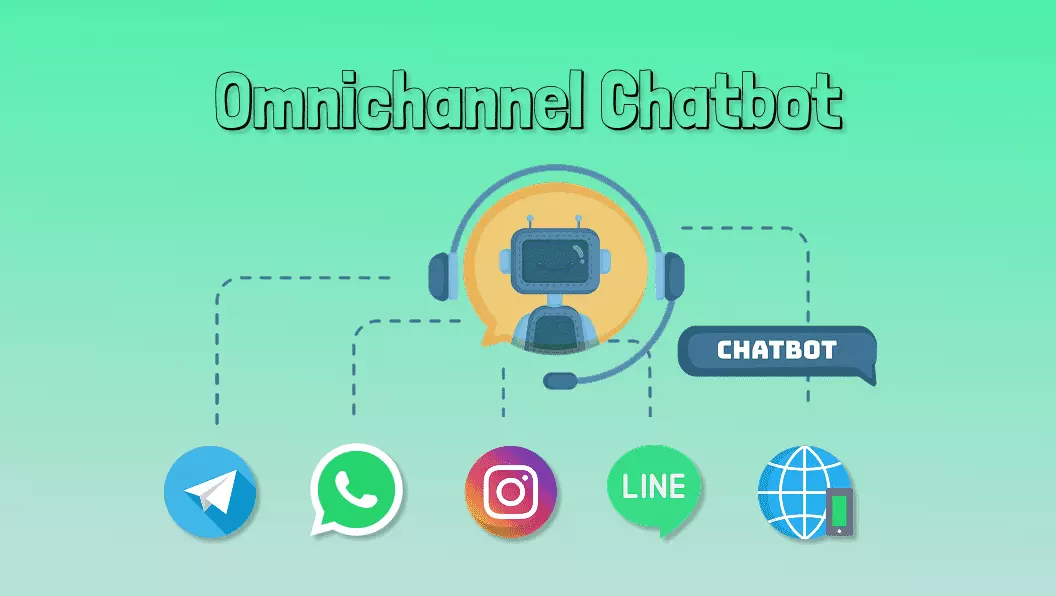
- Omnichannel chatbots connect platforms like WhatsApp, websites, apps, social media, and even email into one flowing system. One conversation thread, just moving across channels.
Why Businesses Are Leaning Into This Shift
- Support teams don’t just deal with volume—they deal with chaos. Messages come from everywhere. Different formats, different expectations, different urgency levels.
- Handling that manually? It breaks fast.
- Chatbots step in to bring structure. They answer repetitive questions instantly. Order status, password reset, delivery timelines—things that don’t need human thinking every single time.
- And there’s a number that often surprises people: according to IBM, chatbots can handle up to 80% of routine customer queries. That’s not small efficiency. That’s operational breathing room.
- It frees up human agents to deal with situations that actually need judgment—complaints, escalations, emotional conversations.
Not Just Automation—It’s Continuity
- A basic chatbot responds. An omnichannel chatbot remembers.
- That memory part changes everything.
- When a customer reaches out again, the system already knows past interactions, preferences, even tone patterns in some cases. So instead of robotic replies, the experience feels connected.
- It’s closer to how real conversations work.
- You don’t forget what someone told you five minutes ago. Customers expect the same from brands now.
Speed Matters More Than Ever
- People don’t wait anymore. That’s just reality.
- If a reply takes too long, they move on. Sometimes to a competitor. Sometimes they just drop off completely.
- Omnichannel chatbots respond instantly. Not “fast enough.” Instantly.
- Midnight query? Answered. Weekend issue? Handled.
- There’s no concept of working hours in digital support anymore. And businesses that still operate that way feel outdated very quickly.
Consistency Across Every Touchpoint
- Here’s something that often gets ignored.
- Different support agents often give slightly different answers. Not wrong answers, just… different. That inconsistency builds doubt.
- Chatbots fix that.
- They pull from a central knowledge base, so responses stay aligned no matter where the conversation happens. Website, app, messaging platform—it doesn’t matter.
- The brand voice stays intact. The information stays accurate.
- Customers notice that consistency, even if they don’t consciously think about it.
Personalization Without Extra Effort
- Personalization used to mean effort. Manual tracking. CRM updates. Notes.
- Now it’s built in.
- Omnichannel chatbots track behavior—what users ask, what they click, how often they return. Using that, they tailor responses.
- Not in a flashy way. Just small touches.
- “Your last order was delayed—want an update?”
- That kind of message doesn’t feel automated. It feels attentive.
- And customers respond to that. Engagement goes up. So does trust.
The Human + Bot Balance
- There’s a common fear—chatbots replacing humans.
- That’s not really what’s happening.
- What’s happening is filtering.
- Bots handle the first layer. The repetitive, predictable stuff. When something complex comes up, the conversation moves to a human agent, along with all the context.
- No need for the customer to start from zero again.
- That handoff—when done right—feels smooth. Almost invisible.
- And honestly, that’s where the real value sits. Not in replacing humans, but in making their time count more.
Where It Gets Interesting: Data
- Every interaction leaves behind something useful.
- Questions asked. Time taken. Drop-off points. Common complaints.
- Omnichannel systems gather all of this in one place. Not scattered across platforms.
- That gives businesses a clearer picture of what customers actually need—not what they assume.
- Patterns start to show.
- Maybe a product page confuses people. Maybe delivery updates aren’t clear enough. Maybe one issue keeps repeating every week.
- Fixing those things reduces support load naturally.
- So the chatbot isn’t just a support tool. It becomes a feedback engine.
Read: Top Benefits of Choosing Professional AI Chatbot Development
It’s Not Just for Big Companies
- There’s a perception that this kind of setup is only for large enterprises.
- Not true anymore.
- Smaller businesses are adopting omnichannel chatbots because customers expect the same level of service everywhere. Whether it’s a startup or a large brand, the expectation doesn’t change.
- And the tools have become more accessible. Integration is simpler than it used to be.
- Even a small team can manage support across multiple platforms without feeling overwhelmed.
A Quiet Shift in Customer Expectations
- Here’s the thing—customers don’t talk about “omnichannel systems.”
- They just expect things to work.
- They expect replies to be quick. Conversations to carry forward. Information to be accurate. Support to feel… easy.
- When that doesn’t happen, frustration shows up immediately.
- When it does happen, nobody praises it. It just feels normal.
- That’s how you know the shift is real.
So, What’s Actually Changing?
- Support is no longer a separate function. It’s part of the experience.
- Omnichannel chatbots are pushing businesses toward that idea—where every interaction, no matter the platform, feels connected.
- And once customers get used to that level of ease, there’s no going back.
- They won’t say it out loud.
- But they’ll expect it every time.