Oil Free Air Compressors: A Smart Choice for Clean Industrial Air
Clean compressed air plays an important role in industries where product quality, equipment reliability, and contamination control matter.
From food processing and pharmaceutical production to electronics manufacturing, many businesses need compressed air that meets specific cleanliness requirements.
Oil Free Air Compressors are designed for these applications by compressing air without introducing lubricating oil into the compression chamber.
Selecting the right compressor involves understanding your air demand, operating pressure, working environment, and required air quality. With the right equipment and air treatment system, businesses can improve reliability and support consistent production.
What Are Oil-Free Air Compressors?
Oil-free air compressors are machines designed to compress air without using oil inside the compression chamber. Special components, materials, and engineering designs help the compressor operate without conventional oil lubrication in the compression process.
These compressors are useful when oil contamination must be carefully controlled. However, oil-free compression does not automatically mean that the air is completely free of every contaminant.
Atmospheric air may contain dust, moisture, and other particles, so suitable filtration and drying equipment may still be necessary.
Air Care Equipment offers compressed air solutions for different industrial requirements, helping businesses evaluate equipment according to their applications.
How Do Oil Free Air Compressors Work?
The working principle depends on the compressor design. The machine draws atmospheric air through an inlet and compresses it using a suitable compression mechanism.
During compression, the design avoids using oil in the compression chamber. The compressed air then moves through the system to an air receiver, air treatment equipment, and distribution lines.
A properly designed system may include:
- An oil-free compressor
- An air receiver tank
- Air filters
- A compressed air dryer
- Condensate drains
- Distribution piping and pressure controls
The correct combination depends on the required air purity, pressure, airflow, and operating conditions.
Different Types of Air Compressors
Understanding the types of air compressors can help businesses select suitable equipment for their operations. Different compressor technologies offer different benefits.
1. Oil-Free Reciprocating Air Compressor
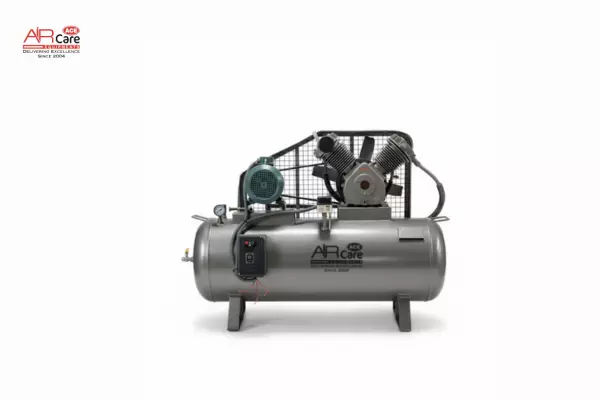
A Reciprocating Air Compressor uses a piston moving inside a cylinder to compress air. Oil-free versions are designed to operate without oil lubrication in the compression chamber.
These compressors can be suitable for smaller industrial applications, laboratories, workshops, and processes that require specific air quality and intermittent compressed air supply.
2. Oil-Free Screw Compressor
A screw compressor uses rotating screw elements to compress air. Oil-free screw compressors are designed for applications that require a continuous supply of compressed air while controlling oil contamination.
They may be suitable for manufacturing facilities, food processing operations, pharmaceuticals, and other industrial environments where air purity is important.
3. Other Compressor Technologies
Other compressor technologies, including centrifugal designs, may be appropriate for specialised applications with high airflow requirements. The correct choice depends on the size of the operation, pressure requirements, energy use, and required air quality.
Key Benefits of Oil Free Air Compressors
Reduced Risk of Oil Contamination
The main advantage is reduced risk of oil entering the compressed air stream from the compression chamber. This can be important when air is used in sensitive production processes.
Support for Sensitive Applications
Oil-free compressors can be considered for food processing, pharmaceutical production, electronics manufacturing, medical applications, and laboratories. The compressor and treatment system must meet the specific requirements of the application.
Cleaner Compressed Air System
When combined with suitable filtration and moisture control, oil-free technology can support the production of cleaner compressed air.
Potentially Lower Oil-Related Service Requirements
Since oil is not used in the compression chamber, certain oil-related maintenance activities associated with lubricated compression are avoided. However, filters, seals, cooling systems, and other components still require regular servicing.
Reliable Industrial Performance
Selecting a compressor with the right capacity and duty rating helps support stable operation and reduces the risk of problems caused by undersized or unsuitable equipment.
Why Is an Air Receiver Tank Important?
An Air Receiver Tank stores compressed air and helps balance the difference between compressor output and changing air demand. It acts as a buffer between the compressor and the equipment using compressed air.
A properly selected receiver tank can help:
- Supply air during short periods of higher demand.
- Reduce frequent compressor starting and stopping where the control system permits.
- Support more stable system pressure.
- Provide a location for condensate to collect before drainage.
- Improve the operation of the overall compressed air system.
Receiver capacity should be determined by compressor output, pressure requirements, demand fluctuations, and system design. The tank must also meet applicable pressure-vessel safety requirements.
The Role of a Compressed Air Dryer
Moisture is naturally present in atmospheric air. When air is compressed and subsequently cools, some of this moisture can condense inside the system.
A Compressed Air Dryer removes moisture to help protect pipelines, valves, pneumatic tools, and production equipment.
Two common options are:
Refrigerated air dryer: Cools compressed air so that moisture condenses and can be separated. It is commonly used for general industrial applications.
Desiccant air dryer: Uses a moisture-absorbing material to achieve a lower pressure dew point. It is suitable for applications requiring very dry compressed air.
The choice depends on the required dew point, environmental conditions, airflow, and application. Filters and appropriate condensate drains may also be needed to support air quality.
Applications of Oil Free Air Compressors
Oil-free compressors are used in a range of industries where compressed air quality is important.
- Food and beverage: Supports selected processing and packaging applications where oil contamination must be controlled.
- Pharmaceuticals: Helps meet specific compressed air purity requirements in manufacturing environments.
- Electronics: Provides compressed air for processes involving sensitive components.
- Medical and laboratory applications: Supports equipment and processes requiring defined air-quality standards.
- Manufacturing: Serves pneumatic equipment and production processes that require oil-free compressed air.
Each application should be assessed individually to determine the required air purity and appropriate treatment equipment.
How to Choose the Right Oil-Free Compressor
Before purchasing a compressor, review the following factors.
Airflow and Pressure
Calculate the air consumption of connected equipment and determine the required working pressure. Choose a compressor that can meet demand under actual operating conditions.
Required Air Purity
Identify the air-quality standard or purity level required by the application. A suitable compressor may need to be combined with filters and a dryer to achieve the desired result.
Operating Hours
Consider whether the compressor will run continuously or intermittently. Operating patterns influence the appropriate compressor type and capacity.
Energy Consumption
Compare power requirements, pressure drop, servicing needs, and expected operating hours. Energy consumption can significantly affect the total cost of ownership.
Complete System Design
Consider the compressor, receiver tank, dryer, filtration, piping, and drains as one system. Proper sizing and installation can help avoid pressure losses, excess energy use, and moisture-related issues.
Maintenance Tips for Better Performance
Oil-free compressors still need regular inspection and servicing. Follow the manufacturer's instructions and recommended maintenance intervals.
- Clean or replace inlet filters when required.
- Monitor operating temperature and pressure.
- Inspect seals, valves, and other wear components.
- Check for unusual noise or vibration.
- Inspect the receiver tank and condensate drains.
- Check dryer performance and filter condition.
- Repair compressed air leaks.
- Keep ventilation openings clear.
- Maintain accurate service records.
Routine maintenance can help identify problems early and support reliable operation.
Why Choose Air Care Equipment?
Air Care Equipment provides compressed air solutions for businesses with different industrial needs. Selecting suitable equipment requires an understanding of the application, required airflow, working pressure, air quality, and operating conditions.
Whether a facility needs oil-free compression, a reciprocating compressor, an air receiver tank, or a compressed air dryer, evaluating the complete system can help improve performance and reliability.
Conclusion
Oil Free Air Compressors are an effective option for industries that need to minimise oil contamination in compressed air. They are used across food processing, pharmaceuticals, electronics, laboratories, and other applications with specific air-quality requirements.
Choosing among different types of air compressors, selecting an appropriate Air Receiver Tank, and installing a suitable Compressed Air Dryer can help create a reliable and efficient system.
A Reciprocating Air Compressor may also be appropriate for selected applications depending on pressure, capacity, and operating needs.
Air Care Equipment can help businesses assess their requirements and identify suitable compressed air equipment for their operations.