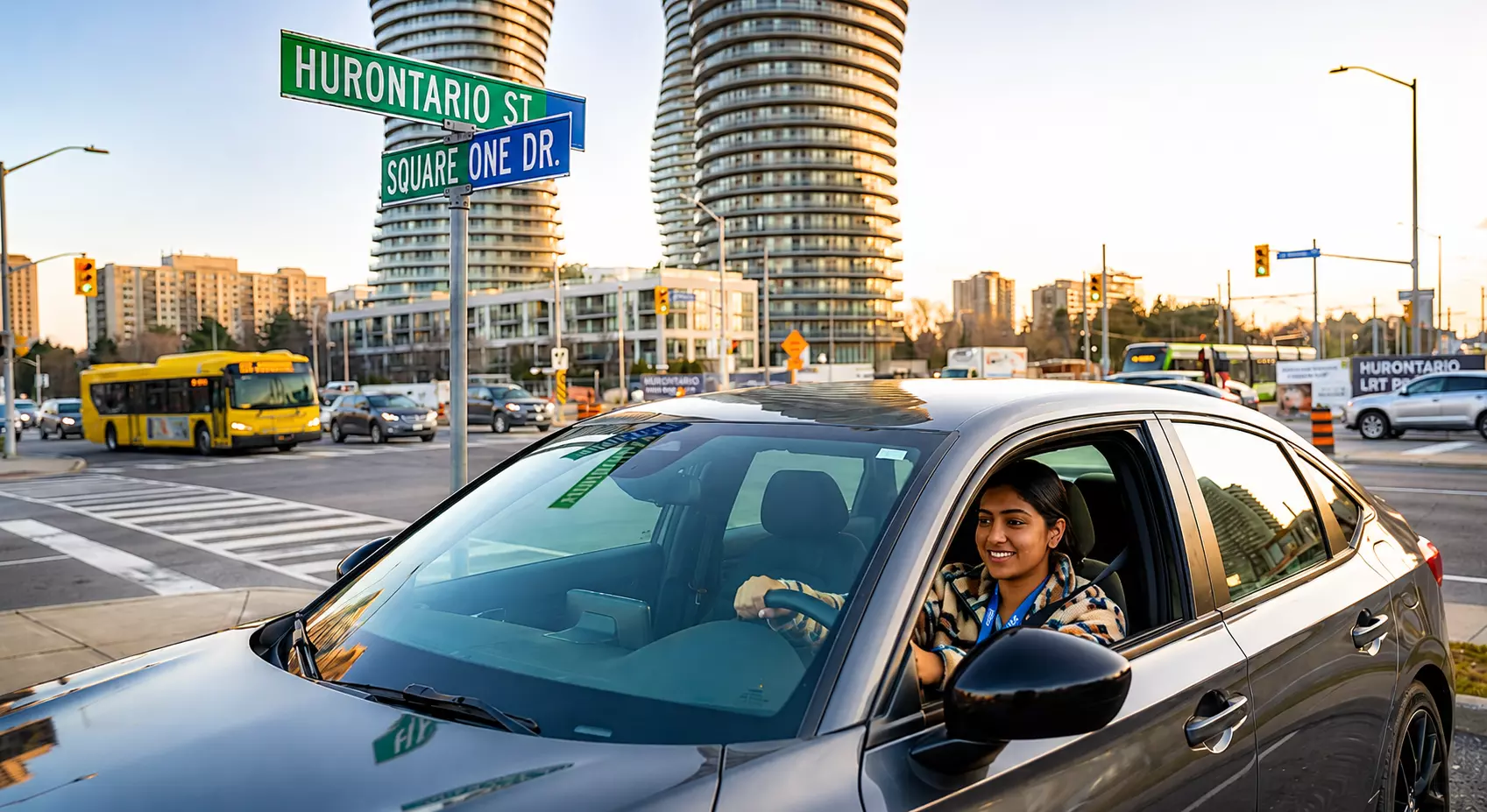
Navigating the Shift: How to Master Mississauga’s Most Challenging Driving Zones
Learning to drive in Mississauga is a massive milestone, but it also comes with a unique set of challenges. Unlike smaller towns, Mississauga is a dynamic blend of high-density suburban neighborhoods, rapid transit construction corridors, and some of the busiest multi-lane highways in North America.
For a new driver preparing for their G2 or full G road test, mastering local traffic patterns is about more than just passing an exam—it’s about developing the defensive driving instincts required to stay safe on Peel Region roads.
Whether you are a teen getting behind the wheel for the first time or a newcomer adapting to Ontario's winter weather and traffic laws, here is how to tackle Mississauga’s top driving pressure points safely.
1. The Hurontario Corridor and Rapid Transit Zones
With the ongoing development of transit infrastructure along Hurontario Street, navigating this central artery requires intense focus. Construction zones introduce sudden lane shifts, hidden signage, and unexpected pedestrian detours.
- The Hazard: Constant construction debris, temporary lane narrowing, and sudden stops by commercial vehicles or transit buses.
- The Skill: Advanced Scanning. Professional driving instructors teach you to look 12 to 15 seconds ahead (about one to two blocks) rather than just staring at the bumper of the car in front of you. This gives you the critical buffer time needed to anticipate a lane closure and execute a smooth, early lane change.
2. Highway Merging: The 403, 401, and the QEW Interchange
Mississauga is intersected by major structural highways. For many rookie drivers, transitioning from a 50 km/h city street to a 100 km/h streaming highway environment induces heavy driving anxiety.
- The Hazard: Hesitating on the slip ramp or attempting to merge into fast-moving highway traffic at 70 or 80 km/h, forcing trailing vehicles to slam on their brakes.
- The Skill: Commitment to the Acceleration Lane. The ramp is designed specifically for matching speeds. A quality Beginner Driver Education (BDE) program teaches you how to check your mirrors and blind spots early while actively accelerating to match the flow of highway traffic before reaching the merge point.
Read: Choice for driving school in toronto That Makes Learning
3. Suburban Commuter Hubs: Square One and Central Transit Stations
The areas surrounding Square One Shopping Centre and the major GO Transit stations are hotspot zones for high-volume pedestrian traffic, distracted shoppers, and aggressive commuter merges.
- The Hazard: Pedestrians stepping out from between parked cars, multi-lane roundabouts, and vehicles suddenly cutting across lanes to grab an exit.
- The Skill: Pedestrian Eye Contact & Cover Braking. When driving through dense commercial parking lots or transit hubs, "covering the brake" (hovering your foot over the brake pedal without pressing it) shaves critical milliseconds off your reaction time if a pedestrian or vehicle suddenly crosses your path.
Pro Tip: Passing Your Test at the Mississauga Longside DriveTest Centre
If you are taking your road test at the local Mississauga DriveTest location (on Longside Drive), remember that examiners are hyper-focused on your blind-spot checks (shoulder checks) and your speed management when transitioning back onto local streets like Maritz Drive or Derry Road. Missing a single shoulder check during a turn or lane change is one of the most common reasons drivers fail on their first try.
The Ultimate Formula for Driving Confidence
The fast-paced nature of Mississauga traffic means that basic vehicle control isn’t enough. True road safety relies on defensive driving techniques like threshold braking (to handle sudden stops on slippery winter roads) and head-on collision avoidance manoeuvres.
Investing in an MTO-approved driving program by Driving School in Mississauga gives you the structured in-class theory and customised, 1-on-1 in-car training necessary to turn driving anxiety into calm, sharp road awareness.
Don't just learn how to pass a test—learn how to handle the real-world road conditions of the Greater Toronto Area safely.