Namche Bazaar to Island Peak Route Guide
The route from Namche Bazaar to Island Peak leads climbers from one of the busiest mountain centers in the Khumbu into a relatively isolated glacial valley and on to the summit of a 6,189-meter mountain in the Himalaya.
This route is significant because elevation climbs continually in this section after Namche. In a typical itinerary, the route travels along to reach Island Peak Base Camp through Tengboche, Pangboche, Dingboche, and Chhukung.
Travelers experience a proliferation of flora and fauna, breathtaking mountain vistas, significant Sherpa settlements, and visiting increasingly challenging at high altitude.
Namche Bazaar Acclimatization
Namche Bazaar is a critical stop for acclimatising before heading toward Island Peak. Usually a further night is spent here to help the body adjust to the increased altitudes.
Climbers often embark on a brief trek toward some of the neighboring set off points before coming back to sample Namche‘s comforts once more. It is not about strenuous effort but about deliberate and limited exposure.
Likewise, the town is an ideal opportunity to inspect clothing, trekking gear, provisions and other essentials before moving deeper into the Khumbu.
Namche to Tengboche
Starting above Namche, the trail follows a gradual and very scenic trail above the Himalayan valleys that surround climbing approaches. If the weather permits, climbers can enjoy breathtaking views of Everest, Ama Dablam and Lhotse.
Thereafter, the trail drops down to join the Dudh Koshi before repeated climb through forest to reach the destination at Tengboche.
While some part of the trail are quite comfortable, altitude and repeated uphill sections make it necessary to take the pace slowly. It is also a major stop over in preparation for the challengin climb.
Tengboche to Pangboche
As we left Tengboche the trail soon drops down through the forest before heading further toward Pangboche which provides a visible variation in the terrain as the path changes in gradient and into more open countryside.
Pangboche is an example of one of the traditional settlements en route and is a very good indication of the way of life for those living within the high Himalaya.
As a stopping point the village is very useful before the trail heads toward Dingboche and the growing ruggedness of the Imja Valley.
Pangboche to Dingboche
Leaving Pangboche, climbers make their way toward Dingboche whilst slowly ascending higher.
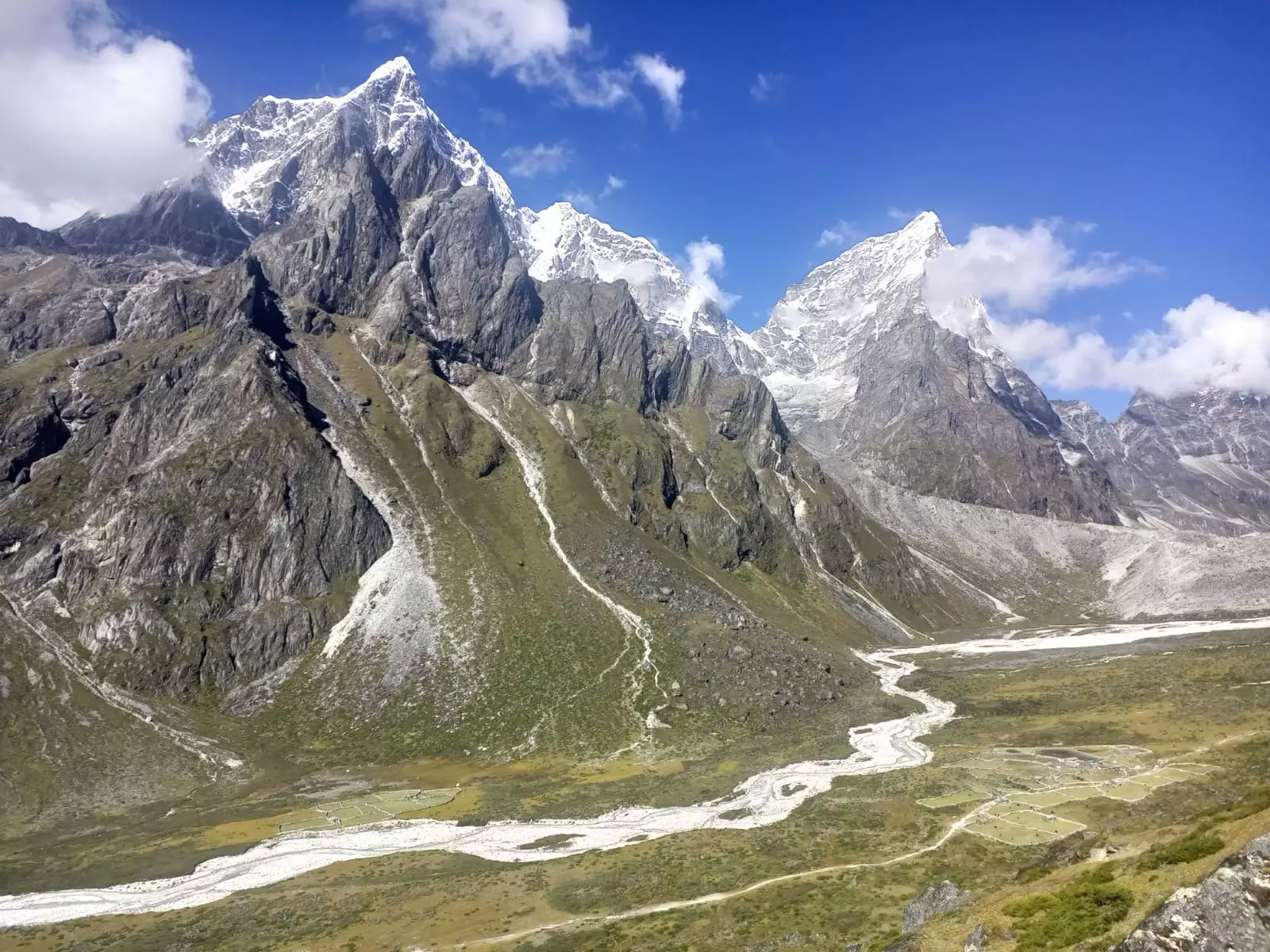
These trails run through more alpine terrain with snow less frequent and more visible rocky slopes. Ama Dablam continues to stand majestically in the backdrop of the valley with the surrounding giants of the Himalayan ranges.
Often used as a significant stop to acclimatize on the Namche Bazaar to Island Peak route, climbers frequently remain in Dingboche until further indicates given the high altitude.
Read: Gateway to the Peaks: 5 Beginner Pass Treks That Open
Acclimatization in Dingboche
An acclimatisation day in Dingboche can help climbers adapt to the increased altitude faster.
Trekking for a day (not overworked) in the direction of a ridge or scenic point, for example, will give more time at altitude without overly tiring the team or risking exhaustion at altitude when it is time to Summiter up. Remember it is not necessary to turn the acclimatization day into a 12 hour trek.
Rest, drink, eat and watch out for symptoms of altitude sickness. Remember, good acclimation can make the later stages of the expedition much more comfortable.
Dingboche to Chhukung
The trail from Dingboche to Chhukung takes the climber through the Imja Valley and in closer proximity to Island Peak.
The approach is flanked by stunning Himalayan summits and a barren, alpine environment. Approaching Chhukung, Island Peak becomes much more visible, providing clearer understanding of the challenge to come.
Chhukung provides useful acclimatisation and preparation as it is the last village before Base Camp. Equipment can be checked and climbers can rest before entering the remote peaks.
Chhukung to Island Peak Base Camp
This stage from Chhukung to Island Peak Base Camp represents the changeover from trekking to expedition mountaineering.
The route is more rugged and involves entering the mountain through stunning high altitude country. It is much less populated and there are few services compared with the lower Khumbu.
At Base Camp, climbers will erect base tents, oversee the organization of the mountaineering equipment and get ready for the more demanding ‘parts’ of the route. This might include crampon techniques, ice axe arrest, fixed ropes and glacier travel depending upon the program.
Base Camp and Technical Preparation
Island Peak Base Camp is not just the sleeping place, it‘s also the base for the summit attempt and an important place for technical practice.
Team members should get used to their machines, either crampons or axes. Guides could make clear the climbing route, the safety measures and judge the team members’ capacity to decide how high we should go.
Climbing time depends on weather and mountain situation. So the flexible thought is very much necessary, as the mountain condition might change quickly.
Island Peak Summit Route
Beyond Base Camp, the climb becomes much more technical. The climbers climb on steep terrain and on snow, ice, glacier parts or fixed ropes, depending on weather conditions.
The summit attempt will normally proceed in the early morning so the climbers can take advantage of enough time to climb and descend.
The climbers should take more care and listen to the guide and save their energy because of the thin atmosphere. They will lead to the summit ridge before arriving at the summit which is 6, 189 meters.
Descent Toward Namche Bazaar
Once back from the summit, climbers then go back down toward lower elevations, often via Chhukung and Dingboche, then to Pangboche, Tengboche, and Namche.
The route back down is one of the best feelings possible it offers a bit of an escape from the altitude, but the fatigue of summit day makes walking difficult. As the route continues downward, plant life becomes greener and the trail less unfamiliar.
Climbers often look forward to returning to Namche, where they can relax in a so-called “two-star” mountain town away from the technical demands of the summit.
Route Difficulty and Preparation
The path from Namche Bazaar to Island Peak shows an increasing difficulty, due to the increase in height and the change of the terrain.
The trekking places generally do not need any high level technique to pass through the mountain, but the higher parts of the mountain need technical condition.
The ideal pre-trek training should focus on general endurance, uphill walking, and transporting a middle weight of load; climbers should be aware that altitude can affect tremendously human body, thus prearranged acclimatization plan, experienced Leaders with experienced Sherpas, the proper equipment, and general flexibility are key components of a responsible Island Peak expedition.
Conclusion
The approach from Namche Bazaar to Island Peak is a progressive traverse from the relatively developed trekking scene of Namche into the backcountry of the high Himalayan valley of the Imja.
The traverse through Tengboche, Pangboche, Dingboche, and Chhukung allows acclimatization and elevation gain for climbers while also displaying the broad and stunning attributes of the Khumbu.
The technical challenges of the approach increase the closer climbers get to Base Camp until climbers start the summit attempt on Island Peak. For most climbers, pacing, acclimatization, preparation, and decision-making are keys to a successful expeditions.