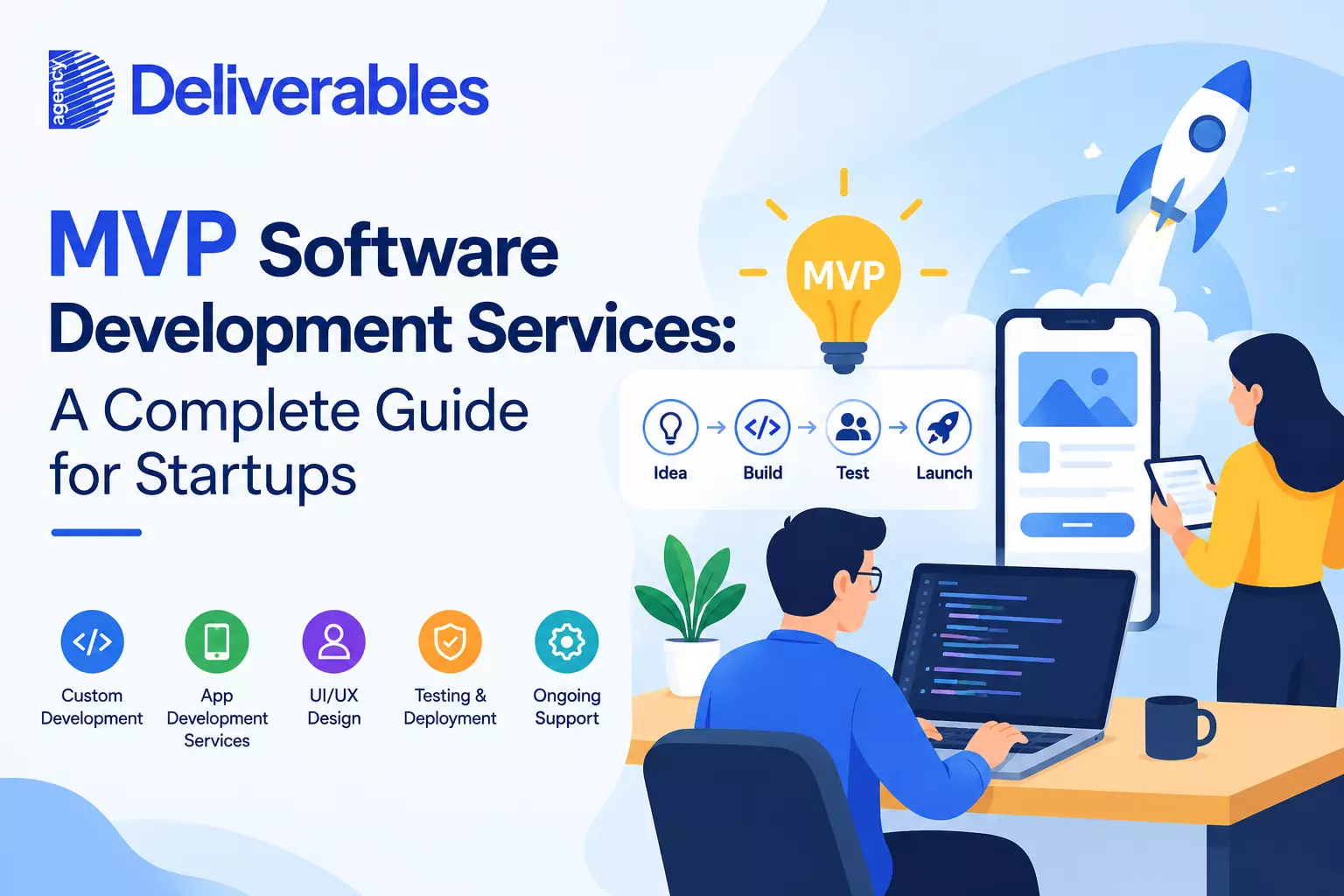
MVP Software Development Services: A Complete Guide for Startups
Starting a new software product is exciting, but turning an idea into a working product can be challenging. Startups often have limited budgets, tight deadlines, and many uncertainties about what customers actually want.
This is where MVP Software Development Services can make a real difference.
A Minimum Viable Product, commonly called an MVP, is a basic version of a software product that includes the most important features needed to solve a specific customer problem.
Instead of spending months building a complete product, startups can launch a practical first version, collect feedback, and improve it based on real user behavior.
For businesses planning a mobile or web product, working with an experienced development team can also connect MVP development with professional app development services, UI/UX design, testing, deployment, and future product improvements.
What Is an MVP?
An MVP is the first usable version of a digital product. It is not an unfinished product or a product with poor quality. The goal is to build only the features that are necessary to test the main business idea.
For example, imagine a startup wants to create a food delivery application. A complete platform could include restaurant management, customer accounts, online payments, delivery tracking, offers, reviews, loyalty programs, and many other features.
An MVP may begin with only restaurant listings, food ordering, basic payment functionality, and order tracking. Once customers start using the application, the business can understand which features are useful and which improvements should come next.
This approach allows startups to learn before making a large investment.
Why Do Startups Need MVP Software Development Services?
Building software from scratch requires more than coding. A successful product needs proper planning, design, development, testing, deployment, and ongoing support.
Professional MVP Software Development Services help startups manage these stages with a clear development strategy.
One of the biggest advantages is that startups can validate their idea before investing heavily in a complete product. If users respond positively, the product can be expanded.
If the original idea needs changes, the business can make those changes without rebuilding a large and expensive system.
This reduces unnecessary development costs and gives founders a better understanding of their target market.
Key Benefits of MVP Development
1. Faster Time to Market
A traditional software project can take a long time when every possible feature is included from the beginning. MVP development takes a different approach.
The development team identifies the core purpose of the product and focuses on the features required for the first launch. This helps businesses introduce their product to users sooner.
Getting an early version into the market also means that startups can start learning from real customers instead of relying only on assumptions.
2. Lower Initial Investment
Startups need to manage their budgets carefully. Investing a large amount of money before knowing whether customers will use the product can create unnecessary financial risk.
An MVP requires a smaller initial scope. Businesses can invest in essential functionality first and gradually add advanced features after gaining market feedback.
This makes the development process more practical for early-stage companies.
3. Real User Feedback
Market research can provide useful information, but actual product usage can reveal much more.
Once an MVP is launched, users can interact with the product and share their experiences. Their feedback can show which features are valuable, where they face difficulties, and what they expect from future versions.
This information helps businesses make decisions based on real usage rather than assumptions.
4. Easier Product Improvements
MVP development supports an iterative approach. Instead of treating development as a single project that ends after launch, businesses can continue improving the product.
New features can be introduced based on customer needs, business goals, and market changes.
This is especially useful for startups because their product requirements may change as they learn more about their audience.
Read: AI Powered MVP Development Services for Startups
What Does the MVP Development Process Include?
A professional MVP project usually follows several important stages.
Idea and Requirement Analysis
The first step is understanding the business idea. The development team discusses the target audience, business objectives, customer problems, and expected product functionality.
At this stage, it is important to separate essential features from features that can be added later.
Feature Prioritization
Not every feature needs to be included in the first release.
The team creates a feature list and prioritizes functionality based on its importance to the product's main purpose. This helps maintain a focused MVP scope.
For example, a marketplace MVP may need user registration, product listings, search, cart functionality, and checkout. Advanced recommendation systems or loyalty programs may be considered for a later version.
UI/UX Design
A simple MVP still needs a good user experience.
Designers create wireframes and interfaces that make the product easy to understand and navigate. The objective is not to add unnecessary visual elements but to create a clear experience for the target users.
Good UI/UX can also help the development team identify usability issues before coding begins.
Development
Once the scope and design are finalized, developers start building the MVP.
Depending on the product requirements, the project may involve web development, mobile development, backend development, APIs, databases, or third-party integrations.
For mobile products, businesses may combine MVP development with specialized app development services to create applications for Android, iOS, or both.
Testing
Testing is an important part of MVP development. Launching quickly should never mean ignoring product quality.
Developers and testers check the application for functional problems, usability issues, performance concerns, and compatibility problems.
The objective is to make sure the MVP provides a stable experience for early users.
Launch and Feedback
After testing, the MVP is deployed for the intended audience.
The startup can then monitor user behavior, collect feedback, review performance, and identify areas that need improvement.
This information becomes the foundation for future product versions.
MVP vs. Full Product Development
- An MVP and a complete product have different purposes.
- A full product may contain a large number of features designed to serve different user requirements. An MVP focuses on proving the core idea with a smaller and more manageable feature set.
- This does not mean an MVP should be rushed or poorly developed. It should still be reliable, usable, and capable of delivering its main purpose.
- The difference is primarily in scope.
- For startups, beginning with an MVP can provide an opportunity to understand the market before committing resources to a much larger product.
How Much Does MVP Development Cost?
There is no fixed price for MVP development because every project has different requirements.
The overall cost can depend on factors such as:
- Number and complexity of features
- Web, mobile, or cross-platform development
- UI/UX requirements
- Backend and database architecture
- Third-party API integrations
- Payment gateway integration
- Development team location and experience
- Testing requirements
- Post-launch maintenance
A simple MVP with a limited number of features may require considerably less investment than a complex platform involving multiple user roles, integrations, and advanced functionality.
The best approach is to define the product requirements first and then estimate the development effort.
How to Choose the Right MVP Development Partner
Choosing a development company is an important decision because the development partner can influence the quality, timeline, and scalability of the product.
Before selecting a company, startups should consider its experience with similar projects. Looking at previous work can provide an idea of the team's technical capabilities and development approach.
Communication is another important factor. A good development partner should be able to explain technical decisions clearly and provide regular updates throughout the project.
It is also useful to ask about the complete development process, including planning, design, testing, deployment, and post-launch support.
Instead of choosing a company only because it offers the lowest price, startups should consider the overall value, technical expertise, communication, and long-term support.
When Should You Build an MVP?
An MVP can be a good choice when you have a clear business idea but are not completely certain about market demand.
It is particularly useful when:
- You want to test a new product idea.
- You need customer feedback before full development.
- Your initial development budget is limited.
- You want to enter the market quickly.
- You need to demonstrate the concept to investors.
- You expect the product to evolve based on user feedback.
However, not every project should be reduced to the smallest possible version. Products involving strict regulations, complex technology, or critical security requirements may need more extensive planning and development before launch.
How MVP Development Supports Long-Term Growth
One common misunderstanding is that an MVP is only useful during the early stage of a startup.
In reality, a well-planned MVP can become the foundation for a larger product.
Developers can create the initial architecture with future growth in mind. As the user base increases, businesses can introduce additional features, improve performance, strengthen security, and expand to new platforms.
For example, a startup might initially launch a basic mobile application and later add AI-powered functionality, analytics, subscription features, advanced dashboards, or third-party integrations.
Professional MVP Software Development Services can help businesses establish this foundation while keeping the initial development focused.
Final Thoughts
Building a new digital product does not always require developing every feature from day one.
For many startups, an MVP provides a more practical way to transform an idea into a working product, test it with real users, and make informed decisions about future development.
With the right strategy, MVP Software Development Services can help businesses reduce initial risks, reach the market faster, collect valuable feedback, and create a foundation for future growth.
Whether the goal is to build a mobile application, SaaS platform, marketplace, or custom business solution, starting with the right MVP scope can make the development journey more focused and manageable.
As the product gains users and the business becomes more confident about its direction, additional app development services and advanced features can be introduced to support long-term growth.