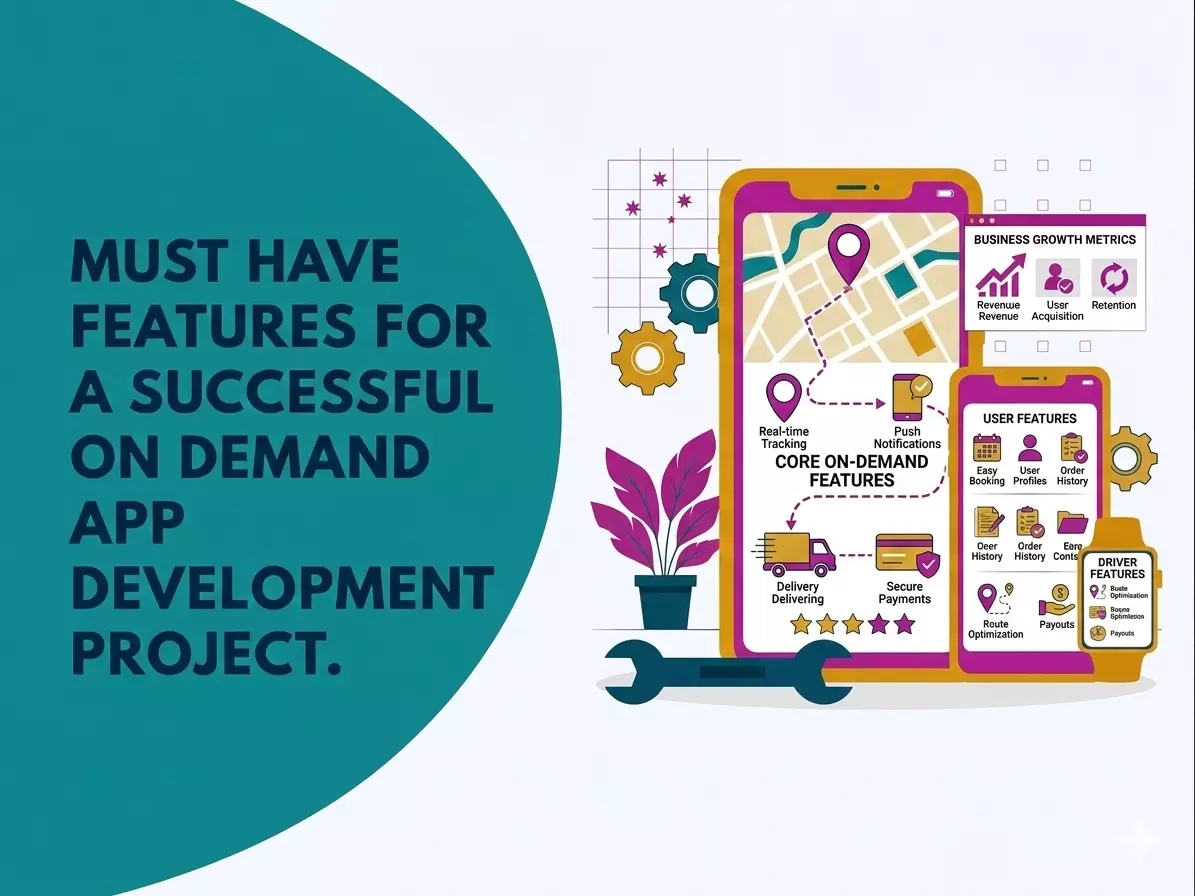
Must Have Features for a Successful On Demand App Development Project
On demand applications have transformed the way businesses deliver products and services to customers.
From transportation and food delivery to healthcare and home services, users now expect instant access to services through mobile and digital platforms.
Because of this growing demand, many organizations partner with an on demand application development company to build scalable platforms that allow them to provide faster and more convenient services while improving operational efficiency.
However, building a successful on demand platform requires more than just launching a mobile application. A well designed solution must include features that support seamless communication between users, service providers, and administrators.
These features ensure smooth service delivery, secure transactions, and a reliable user experience. Understanding the most important features can help businesses develop scalable and efficient on demand applications that meet modern customer expectations.
User Friendly Registration and Profile Management
A simple and convenient user registration system is one of the most important features in an on demand application. Users should be able to create accounts quickly using options such as email, phone number, or social media login.
A smooth onboarding process encourages more users to sign up and start using the platform without frustration or delays.
Profile management features also allow users to update personal details, manage payment methods, view order history, and save preferences.
This information helps the platform deliver personalized experiences and improve user engagement. A well designed profile system also makes it easier for businesses to maintain accurate user data and build long term relationships with their customers.
Real Time Service Booking
Real time booking functionality is a core feature of every on demand platform. It allows customers to request services instantly and connect with available providers in their location.
This feature is commonly used in industries such as taxi services, food delivery, home maintenance, and healthcare consultations.
Through real time booking, users can select the service they need, choose their preferred time, and confirm their request within seconds. The platform then connects them with nearby service providers who can fulfill the request.
This feature improves service efficiency and ensures customers receive quick responses, which is essential for maintaining a positive user experience.
GPS Tracking and Location Based Services
Location tracking is another critical feature that improves the overall functionality of on demand applications. GPS integration allows businesses to provide accurate location based services, enabling users to track service providers in real time.
For example, customers using a taxi or delivery service can see the exact location of the driver or courier on a map. This improves transparency and builds trust between the platform and its users.
Location services also help businesses optimize routes, reduce delivery time, and improve operational efficiency. By integrating reliable location tracking technology, on demand applications can deliver more accurate and dependable services.
Secure Payment Integration
Payment processing is a vital part of any on demand app development project. Users expect convenient and secure payment options that allow them to complete transactions without complications.
Integrating multiple payment methods such as credit cards, digital wallets, online banking, and mobile payments makes the platform more accessible to a wider audience.
Security is also a major priority when handling financial transactions. Payment systems should use encryption technologies and secure gateways to protect user data.
A reliable payment infrastructure ensures that transactions are processed smoothly and helps businesses maintain customer trust while preventing fraud or security issues.
Push Notifications and Alerts
Push notifications play an important role in improving communication between the platform and its users. These notifications keep users informed about booking confirmations, service updates, promotional offers, and payment reminders.
For example, when a user books a service, the application can send notifications about the service provider's arrival time or order status.
Businesses can also use notifications to promote special offers or updates that encourage users to return to the platform. When used effectively, push notifications help improve engagement and keep users connected with the application.
Read: Top 10 Custom Web Application Development Companies
Rating and Review System
A rating and review system helps maintain quality and transparency within the platform. Customers can provide feedback about their experience with service providers, allowing businesses to monitor performance and maintain service standards.
Positive reviews build trust and encourage new users to try the service, while constructive feedback helps identify areas for improvement.
Service providers also benefit from ratings because higher scores can increase their visibility and credibility within the platform.
To make the review system effective and user friendly, businesses should also focus on providing a strong ui ux design solution that ensures users can easily leave feedback and navigate the platform without confusion.
Admin Dashboard and Analytics
An advanced admin panel is essential for managing and monitoring an on demand platform. Administrators need access to tools that allow them to oversee operations, manage users, track transactions, and analyze performance data.
Analytics features provide valuable insights into user behavior, service demand, and operational performance. This information helps businesses make better strategic decisions and improve their services over time.
A well designed admin dashboard allows companies to control platform activities efficiently while maintaining smooth operations and ensuring the platform continues to grow with increasing user demand.
Conclusion
Developing a successful on demand application requires careful planning and the integration of essential features that support efficient service delivery.
From user friendly registration systems to secure payment gateways and real time tracking capabilities, each feature plays a crucial role in creating a seamless digital experience for both customers and service providers.
Businesses that invest in the right features can build scalable platforms that meet the growing demand for instant services.
By focusing on usability, security, and operational efficiency, companies can develop applications that attract users and support long term growth.
Many organizations are now exploring mobile & web app development services for on-demand solution to create integrated platforms that provide seamless access to services across multiple devices and digital environments.