MTBF Prediction & Calculations: A Practical Guide to Reliability
1. What is MTBF?
MTBF stands for Mean Time Between Failures. It’s a reliability metric used to estimate the average time between system or component breakdowns during normal operation. This calculation assumes that failures are random and repairs are performed quickly enough to restore operation without significant delay.
Simply put, MTBF helps predict how long a product will last before it fails—crucial information for manufacturers, engineers, and maintenance teams.
2. Why MTBF Matters
Understanding MTBF Prediction offers several advantages, especially when designing, testing, or purchasing equipment. Here’s why it’s valuable:
- Predicts maintenance needs
- Reduces downtime
- Improves customer satisfaction
- Supports warranty and service planning
- Guides product improvements
For industries like aerospace, medical devices, manufacturing, and electronics, MTBF is not just helpful—it’s mission-critical.
3. Common Use Cases of MTBF
Here are typical scenarios where MTBF is applied:
- Electronics manufacturing: To forecast failure rates in consumer electronics.
- Aerospace & defense: To ensure reliability in mission-critical systems.
- Industrial automation: To reduce downtime in factory systems.
- IT infrastructure: To plan for data center maintenance and upgrades.
In all these use cases, MTBF is used to inform decisions about product design, testing cycles, and service intervals.
4. How to Calculate MTBF
The basic MTBF formula is:
- MTBF = Total Operating Time / Number of Failures
Example:
If a product runs for 10,000 hours and fails 5 times, the MTBF would be:
- MTBF = 10,000 hours / 5 = 2,000 hours
This means that, on average, the product operates 2,000 hours before a failure.
Important Notes:
- MTBF assumes repairable systems (for non-repairable, use MTTF—Mean Time to Failure).
- Data should be based on real-world testing or field performance.
- Failures must be random, not due to a known design flaw.
6. Real-World Example
Let’s say a company sells industrial air purifiers and wants to determine how reliable they are over time.
- They track 100 units over a 6-month period.
- Each unit operates 24/7 for 4,320 hours (180 days x 24).
- Total operating time = 100 x 4,320 = 432,000 hours.
- During this time, 36 units fail.
MTBF = 432,000 / 36 = 12,000 hours
The result tells the engineering and customer support teams that each unit is expected to last about 12,000 hours before it needs servicing or replacement.
7. Limitations of MTBF
While MTBF is incredibly useful, it’s not perfect. Some key limitations:
- Does not predict exact failure time—only a statistical average.
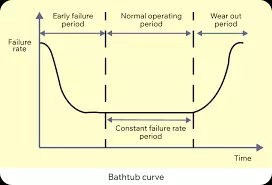
- Not applicable during early “infant mortality” or wear-out phases.
- Can be skewed by poor data quality or outliers.
- May be misinterpreted as guaranteed performance.
For example, an MTBF of 10,000 hours doesn’t mean your product will last that long—it means on average, based on historical data, failures occur every 10,000 hours.
8. Improving Product Reliability Through MTBF
MTBF isn’t just a number—it’s a starting point for improvements. Here’s how to act on it:
a) Design Improvements
High MTBF signals robust design. Analyze failure trends to improve components with weak reliability.
b) Preventive Maintenance
Use MTBF data to create maintenance schedules that reduce unexpected failures.
c) Supplier Selection
Use component-level MTBF to choose higher-quality parts and build more reliable systems.
d) Field Data Feedback
Continuously monitor performance in the field to refine MTBF models and update product specs.
9. Final Thoughts
MTBF prediction and calculation are more than technical processes—they’re essential tools for building trust with customers and delivering long-lasting products. Whether you’re a product manager, engineer, or operations leader, understanding MTBF gives you valuable insights into how systems perform over time.
By applying this metric wisely—and pairing it with data-driven improvements—you can make informed decisions that lead to higher reliability, lower costs, and greater customer satisfaction.