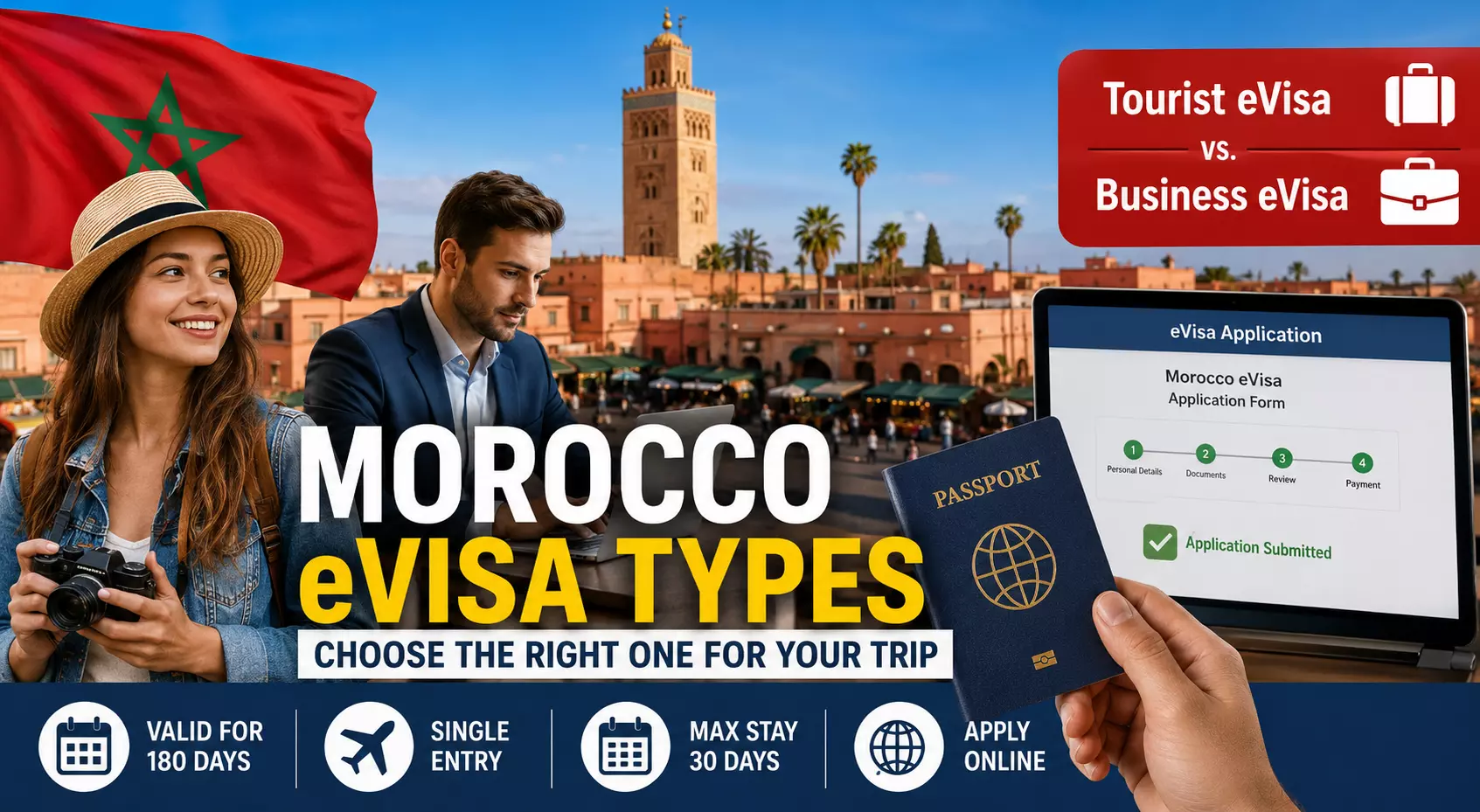
Morocco eVisa Types
Planning a trip to Morocco usually starts with flights and hotels, and the visa question gets pushed to the last week before departure. That's a mistake worth avoiding, because picking the wrong category can slow everything down right when you need it least.
Morocco's eVisa types fall into two clear categories, and knowing which one matches your reason for travel makes the rest of the application almost boring in the best way fill in the details, upload what's asked, and move on with your packing list.
Why the Visa Type Actually Matters
It's tempting to think a visa is a visa. It isn't. Morocco's electronic system separates travelers by purpose, and each category asks for a different piece of proof to back that purpose up.
Apply under the wrong one and you're either missing a document you didn't know you needed, or you've told the system something that isn't quite true about why you're visiting. Neither ends well.
The Tourist eVisa
This is the one most travelers reach for. It covers leisure trips, family visits, and general recreation basically anything that isn't work-related.
If you're heading to Marrakech for the souks, Chefchaouen for the blue streets, or simply to see relatives who've settled there, this is your lane.
There's no separate paperwork proving "tourism" the way there is for business travel. You're not required to submit hotel bookings or a day-by-day itinerary as part of the standard application, though it's smart to have your travel plans sorted in case border officers ask questions on arrival.
The Business eVisa
Anyone traveling for meetings, conferences, or to scope out a potential partnership needs this category instead. The distinction isn't just bureaucratic it comes with an extra document requirement.
You'll need something that confirms why you're actually going: an invitation letter from a Moroccan company, a meeting confirmation, or a paper trail showing a business relationship already in motion.
Self-employed travelers can apply too, though it's worth having proof of your business activity on hand in case it's requested.
How Long Either One Lasts
Both categories share the same basic shape once approved. The eVisa stays valid for 180 days from the date it's issued, it's single-entry only, and it allows a maximum stay of 30 days per visit.
So even though you have half a year to actually use the visa, once you land in Morocco, the clock on your stay starts running immediately and caps out at a month.
That single-entry detail catches people off guard. If your trip involves popping into Spain for a few days and coming back, you'll need to plan around that limitation rather than assuming you can simply walk back through immigration on the same visa.
Read: How to Handle and Resolve Residence Visa Delays in Abu
Who Can Apply, and What They Need
Eligibility depends on nationality not every passport qualifies for the electronic system, so it's worth confirming yours is on the approved list before doing anything else. Beyond that baseline check, a few things apply across both visa types:
- A valid passport. It needs to remain valid for at least three months past your planned entry date into Morocco.
- A recent photo. Digital, passport-style, taken within the past three to six months.
- A supporting document, for select nationalities only. This means either a multiple-entry visa or a residence permit issued by an approved country, and it's only asked of specific nationalities rather than everyone.
- Proof of business purpose, for Business eVisa applicants. An invitation letter or meeting confirmation covers this.
Traveling with a child under 18? They can't ride on your application. Every minor needs their own separate eVisa, though the portal does let parents group applications together during submission so it's not a completely separate process from start to finish.
What the Application Itself Looks Like
Once you know which category fits, the process itself doesn't ask for much drama. It runs entirely online no embassy visit, no waiting room.
You fill in personal and passport details, upload your documents in a readable format, and pay the fee before the application moves into review.
Processing typically takes a handful of working days, though timelines shift depending on how complete the submission is and how busy the reviewing authority happens to be at that moment.
Faster paid options exist for travelers working against a tighter deadline, but they still depend on your documents being correct the first time. A blurry passport scan or a photo with shadows across the face is enough to trigger a delay regardless of which processing speed you paid for.
Once approved, the eVisa arrives by email. Print a copy, or at minimum keep a saved digital version accessible on your phone, since immigration officers will want to see it alongside your passport on arrival.
Picking the Right One Before You Apply
If there's one takeaway here, it's this: match the visa to the actual reason you're traveling, not the one that seems easier to document.
A tourist eVisa filled out for what's really a business trip creates problems that are far more annoying to untangle than gathering one extra letter upfront would have been.
Given that both categories share identical validity windows and stay limits, the real decision point isn't about convenience it's about accuracy.
Sort out which type fits your trip, gather the handful of documents each one asks for, and the rest of the application process moves about as smoothly as online forms ever do.
Common Questions
Can a tourist eVisa be extended once you're already in Morocco?
Technically yes, in certain circumstances, but it's not the smooth process people hope for. Extensions can eat up time and often come with extra fees, so applying for the right stay length before you travel saves the hassle.
What about digital nomads?
This is genuinely unsettled territory. Some rely on a long-term tourist visa, others look into a work visa if they've got local employment lined up, but the rules haven't fully caught up with remote work as a category. Checking directly with Moroccan authorities before committing to a plan is the safer move here.
What happens if an application gets denied?
You'll get a notification explaining the reason. From there, you can either reapply with stronger documentation or pursue a traditional visa route through an embassy or consulate instead.
Is volunteering allowed on an eVisa?
Volunteering through approved organizations is possible, but it comes with its own visa requirements separate from tourism or business categories. Worth confirming with the embassy before assuming your standard eVisa covers it.
What should travelers expect at immigration on arrival?
Passport and visa checks, baggage inspection, and standard security screening. Nothing unusual by international standards, though it's worth remembering that prohibited items drugs, excessive alcohol will complicate things fast.