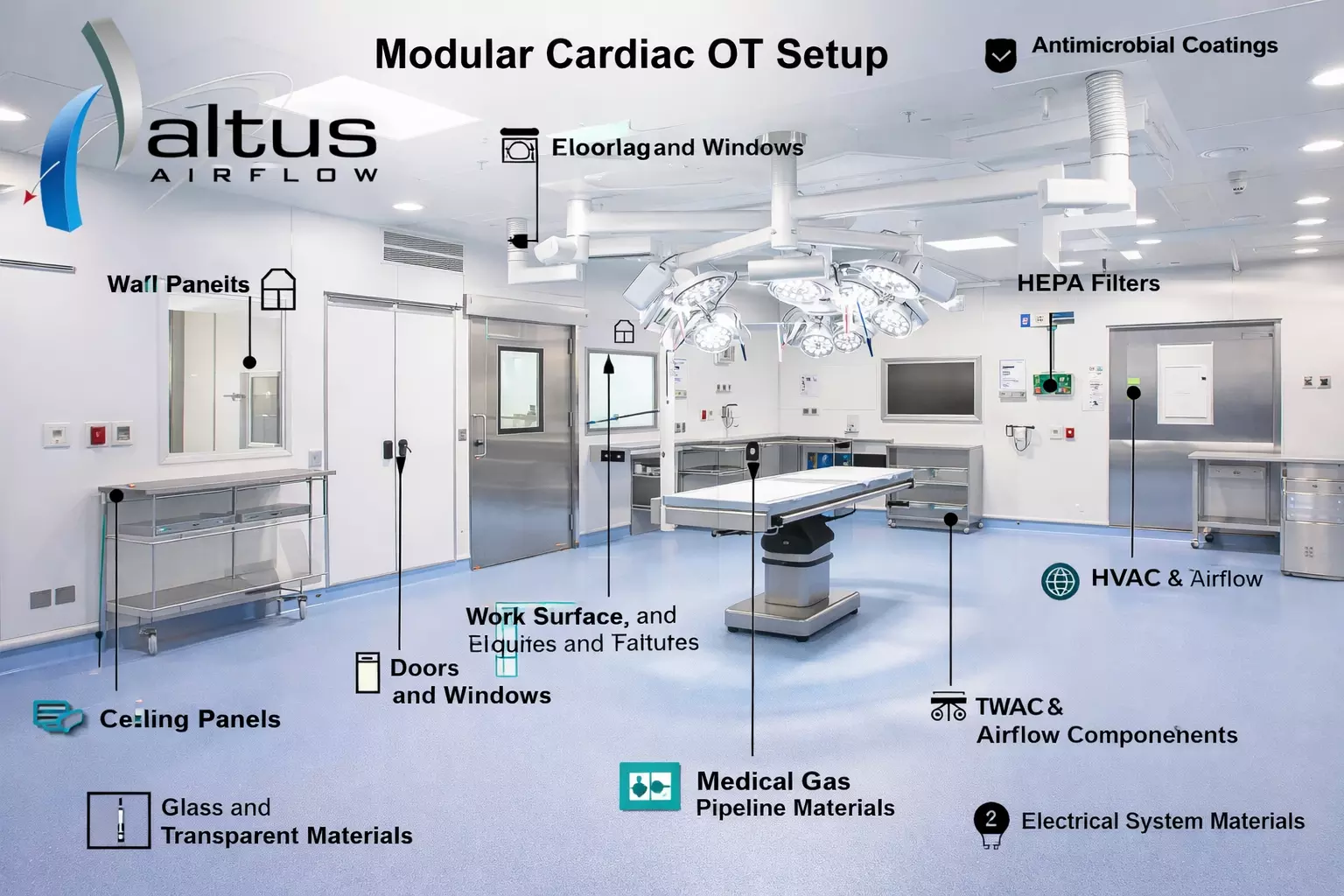
What Materials Are Used in Modular Cardiac OT Setup?
Modern cardiac operation theatres require a perfect balance of hygiene, durability, and advanced engineering to support life-saving procedures.
The materials used in construction play a crucial role in maintaining sterility, ensuring safety, and enhancing operational efficiency.
This is why professional Modular Cardiac OT Setup Services focus heavily on selecting high-quality, medical-grade materials for every component of the OT.
At Altus Airflow, we specialize in designing and delivering modular cardiac OTs using advanced materials that meet strict healthcare standards.
In this blog, we will explore the different materials used in modular cardiac OT setups, their properties, and why they are essential for creating a high-performance surgical environment.
Importance of Material Selection in Cardiac OT Setup
Cardiac OTs are highly sensitive environments where even minor contamination can have serious consequences. The materials used must support:
- Infection control and sterility
- Durability under constant use
- Resistance to chemicals and disinfectants
- Easy maintenance and cleaning
- Compliance with healthcare standards
Proper material selection ensures long-term reliability and safety.
Key Materials Used in Modular Cardiac OT Setup
1. Wall Panels
Walls in modular cardiac OTs are constructed using seamless, non-porous panels.
Common materials:
- PUF (Polyurethane Foam) panels
- Stainless steel panels
- HPL (High-Pressure Laminate) panels
- Powder-coated steel panels
Benefits:
- Smooth surfaces prevent microbial growth
- Easy to clean and disinfect
- Resistant to chemicals and corrosion
2. Flooring Materials
Flooring must be durable, slip-resistant, and hygienic.
Common materials:
- Conductive vinyl flooring
- Homogeneous PVC flooring
- Epoxy resin flooring
Benefits:
- Seamless finish prevents bacterial accumulation
- Anti-static properties protect equipment
- Resistant to chemicals and wear
3. Ceiling Panels
Ceilings are designed to integrate airflow systems and lighting.
Common materials:
- Powder-coated aluminum panels
- Galvanized steel panels
- Modular ceiling grids
Benefits:
- Supports laminar airflow units
- Non-porous and easy to clean
- Lightweight and durable
4. Doors and Windows
Doors and windows must maintain airtight conditions and support sterility.
Common materials:
- Hermetically sealed sliding doors
- Stainless steel or powder-coated doors
- Toughened glass viewing panels
Benefits:
- Prevents air leakage
- Enhances visibility without compromising sterility
- Easy to clean and maintain
5. Work Surfaces and Fixtures
Work surfaces and fixtures must be durable and resistant to contamination.
Common materials:
- Stainless steel (304/316 grade)
- Epoxy resin surfaces
- Medical-grade polymer coatings
Benefits:
- Non-porous and hygienic
- Resistant to chemicals and stains
- Long-lasting and easy to maintain
6. HVAC and Airflow Components
Airflow systems rely on specialized materials for performance and durability.
Common materials:
- Galvanized steel ducts
- Stainless steel air diffusers
- Aluminum frames for HEPA filters
Benefits:
- Corrosion-resistant
- Ensures efficient airflow
- Maintains clean air standards
Altus Airflow integrates high-quality materials in HVAC systems to ensure optimal performance.
7. HEPA Filters
HEPA filters are essential for maintaining air purity.
Material composition:
- Synthetic fiber filter media
- Aluminum or steel frames
Benefits:
- Removes 99.97% of airborne particles
- Ensures sterile air supply
- Supports infection control
8. Lighting Fixtures
Lighting fixtures must provide clear illumination without generating excess heat.
Common materials:
- Aluminum or stainless steel housings
- Shatterproof polycarbonate covers
- LED panels
Benefits:
- Energy-efficient and durable
- Easy to clean
- Safe for sterile environments
9. Medical Gas Pipeline Materials
Medical gas systems require safe and durable materials.
Common materials:
- Copper pipes for gas supply
- Stainless steel connectors
- Anti-corrosive fittings
Benefits:
- Leak-proof and reliable
- Resistant to corrosion
- Ensures safe gas delivery
10. Electrical System Materials
Electrical systems must be safe and reliable.
Common materials:
- Flame-retardant cables
- Insulated wiring
- Medical-grade switches and panels
Benefits:
- Prevents electrical hazards
- Ensures uninterrupted power supply
- Complies with safety standards
11. Antimicrobial Coatings
Special coatings are applied to surfaces to enhance hygiene.
Features:
- Inhibits microbial growth
- Easy to clean
- Long-lasting protection
These coatings add an extra layer of safety in cardiac OTs.
12. Glass and Transparent Materials
Transparent materials are used for observation and monitoring.
Common materials:
- Toughened safety glass
- Double-glazed panels
Benefits:
- Provides visibility
- Maintains insulation and sterility
- Durable and safe
Role of Altus Airflow in Material Selection
Altus Airflow ensures that every material used in Modular Cardiac OT Setup Services meets the highest standards of quality and performance.
Our approach includes:
- Careful selection of certified materials
- Integration with airflow and cleanroom systems
- Compliance with ISO and NABH standards
- Focus on durability and hygiene
- Continuous quality checks
We deliver modular cardiac OTs that are reliable, safe, and efficient.
Read: What are Modular OT Setup Services? A Complete Guide for
Benefits of Using High-Quality Materials
1. Enhanced Infection Control
Non-porous surfaces reduce contamination risks.
2. Durability and Longevity
High-quality materials withstand constant use and cleaning.
3. Easy Maintenance
Smooth surfaces simplify cleaning and reduce downtime.
4. Compliance with Standards
Meets healthcare regulations and accreditation requirements.
5. Improved Operational Efficiency
Reliable materials support smooth surgical workflows.
Common Mistakes to Avoid
- Using low-quality or porous materials
- Ignoring chemical resistance
- Poor integration with airflow systems
- Neglecting maintenance requirements
Avoiding these mistakes ensures a high-performance OT.
Future Trends in OT Materials
The healthcare industry is evolving with innovative materials.
Emerging trends include:
- Antimicrobial nanocoatings
- Eco-friendly and sustainable materials
- Lightweight modular panels
- Smart surfaces with self-cleaning properties
Altus Airflow incorporates these advancements to deliver future-ready solutions.
Conclusion
The materials used in modular cardiac OT setups are critical for maintaining sterility, safety, and efficiency.
From wall panels and flooring to airflow systems and medical gas pipelines, every component must be carefully selected to meet healthcare standards.
With professional Modular Cardiac OT Setup Services from Altus Airflow, healthcare facilities can ensure the use of high-quality, durable, and compliant materials.
Investing in the right materials is essential for creating a safe, efficient, and future-ready cardiac operation theatre.
FAQs
1. What are Modular Cardiac OT Setup Services?
Modular Cardiac OT Setup Services involve designing and constructing cardiac operation theatres using high-quality materials and integrated systems for safety and efficiency.
2. What materials are used for OT walls?
PUF panels, stainless steel, and HPL panels are commonly used.
3. What flooring is used in cardiac OTs?
Conductive vinyl, PVC, or epoxy flooring is preferred.
4. Why is stainless steel used in OTs?
It is non-porous, durable, and easy to disinfect.
5. What materials are used in airflow systems?
Galvanized steel ducts, HEPA filters, and aluminum frames.