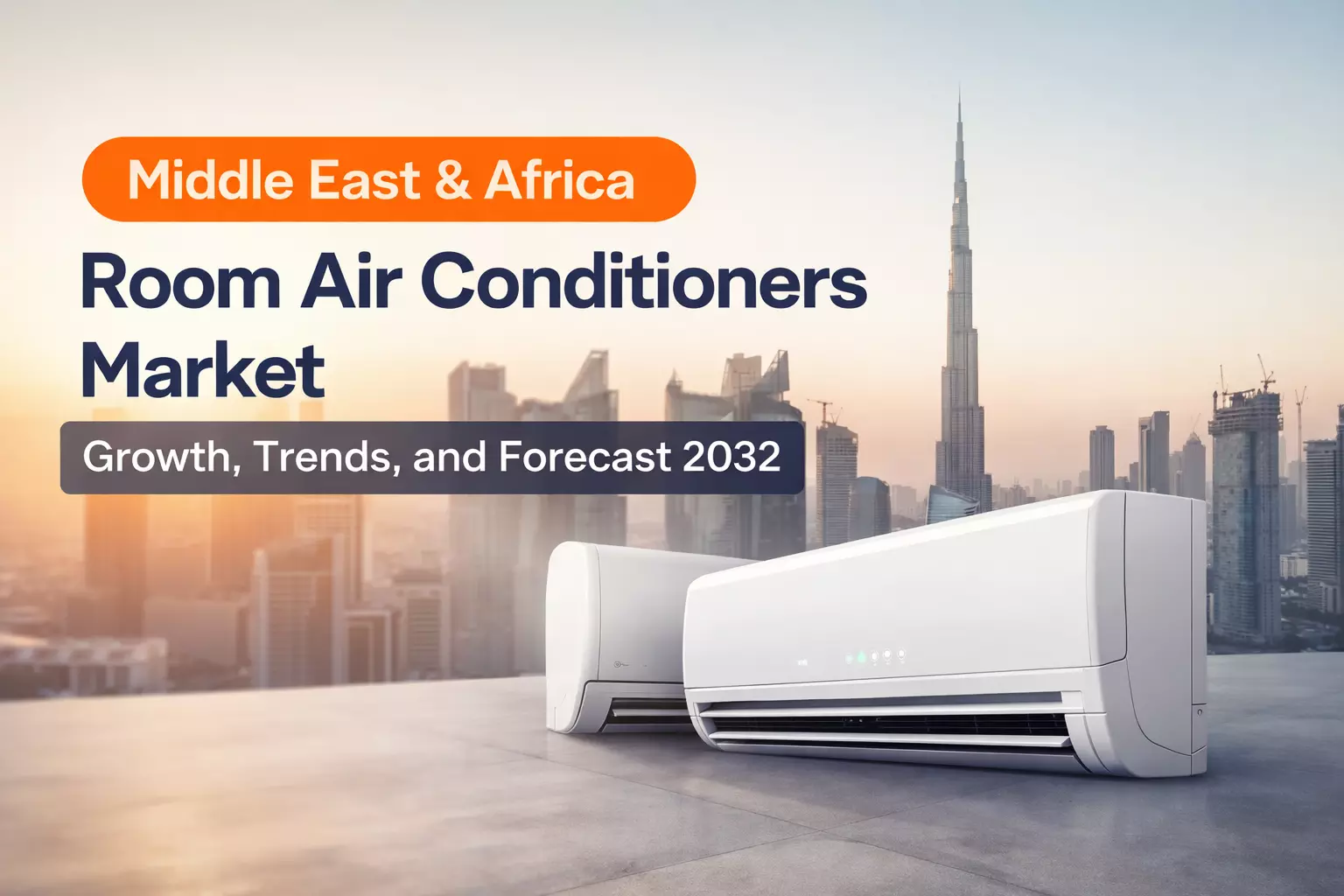
Cooling Demand in Harsh Climates: Room Air Conditioners in Middle East and Africa Market
In regions where temperatures regularly reach extremes, cooling is not a luxury. It is a necessity tied to daily living, productivity, and infrastructure.
Across the Middle East and Africa, room air conditioners have become an essential part of residential and commercial spaces, driven by climate conditions and rising urbanization.
The Middle East & Africa room air conditioners market size reflects this steady demand. As per a study published by Vyansa Intelligence, the market is valued at USD 3.42 billion in 2025 and is projected to reach USD 4.61 billion by 2032, growing at a CAGR of 4.36% between 2026 and 2032. Growth is shaped by a combination of climate necessity and evolving consumer expectations.
Climate Conditions Continue to Drive Core Demand
High temperatures across countries such as Saudi Arabia, the UAE, and parts of Africa create a constant need for indoor cooling. Unlike seasonal markets, demand remains consistent throughout the year.
This is a defining factor in market trends. Cooling systems are not occasional purchases. They are part of essential infrastructure in homes, offices, and commercial spaces.
As urban populations expand, this demand continues to grow.
Urbanization and Housing Growth Support Market Expansion
Rapid urban development across the region is contributing to the expansion of the room air conditioners market. New residential projects, commercial buildings, and hospitality infrastructure are increasing the installation base.
This is influencing market growth, where demand is closely tied to construction activity and real estate expansion.
Cities continue to grow, along with the need for reliable cooling solutions.
Energy Efficiency Is Becoming a Key Consideration
Electricity consumption is a major concern in regions with heavy reliance on air conditioning. Governments and consumers are increasingly focusing on energy-efficient systems to reduce power usage.
This shift is shaping market trends. Manufacturers are introducing inverter technologies and energy-efficient models to meet regulatory and consumer expectations.
According to the International Energy Agency, improving energy efficiency in cooling systems is essential for managing rising electricity demand globally.
Efficiency is no longer just a feature. It is becoming a requirement.
Commercial Sector Adds Stability to Demand
While residential demand remains strong, commercial applications are equally important. Offices, retail spaces, hotels, and healthcare facilities rely on room air conditioners for consistent indoor environments.
This supports market growth by diversifying demand across multiple sectors.
The hospitality industry, in particular, plays a significant role in driving installations.
Technological Advancements Are Enhancing User Experience
Room air conditioners are evolving beyond basic cooling. Features such as smart controls, air purification, and improved temperature management are becoming standard.
This is influencing market trends, where consumer expectations are shifting toward convenience and performance.
Technology continues to enhance usability without changing the core function.
Infrastructure and Power Challenges Influence Market Dynamics
In certain parts of Africa, inconsistent power supply can affect air conditioner usage. This creates a different demand pattern compared to more stable markets in the Middle East.
This factor shapes market growth, where product design and energy efficiency become critical in regions with power constraints.
Manufacturers are adapting to these conditions by offering more efficient and durable systems.
According to the World Bank, access to reliable electricity remains a key challenge in several African economies, influencing the adoption of energy-intensive appliances.
Read: Interior Design Dubai: Blending Culture, Innovation, and Luxury
Market Growth Reflects Essential Demand
The market size and forecast highlight a sector driven by necessity rather than rapid transformation.
Key drivers supporting growth include:
- Extreme climate conditions
- Expanding urban infrastructure
- Rising demand for energy-efficient systems
- Growth in commercial and hospitality sectors
These factors ensure consistent demand across the region.
Future Outlook: Cooling Will Remain a Core Requirement
The future of this market will continue to be shaped by climate realities and infrastructure development. Growth is expected to remain steady, supported by both residential and commercial demand.
The forecast indicates a gradual shift toward more efficient, durable, and technologically advanced systems.
Understanding this market requires focusing on its essential role in everyday life.
Insights aligned with research from Vyansa Intelligence suggest that the market will continue to evolve around efficiency, accessibility, and performance while maintaining its position as a critical component of modern living in high-temperature regions.