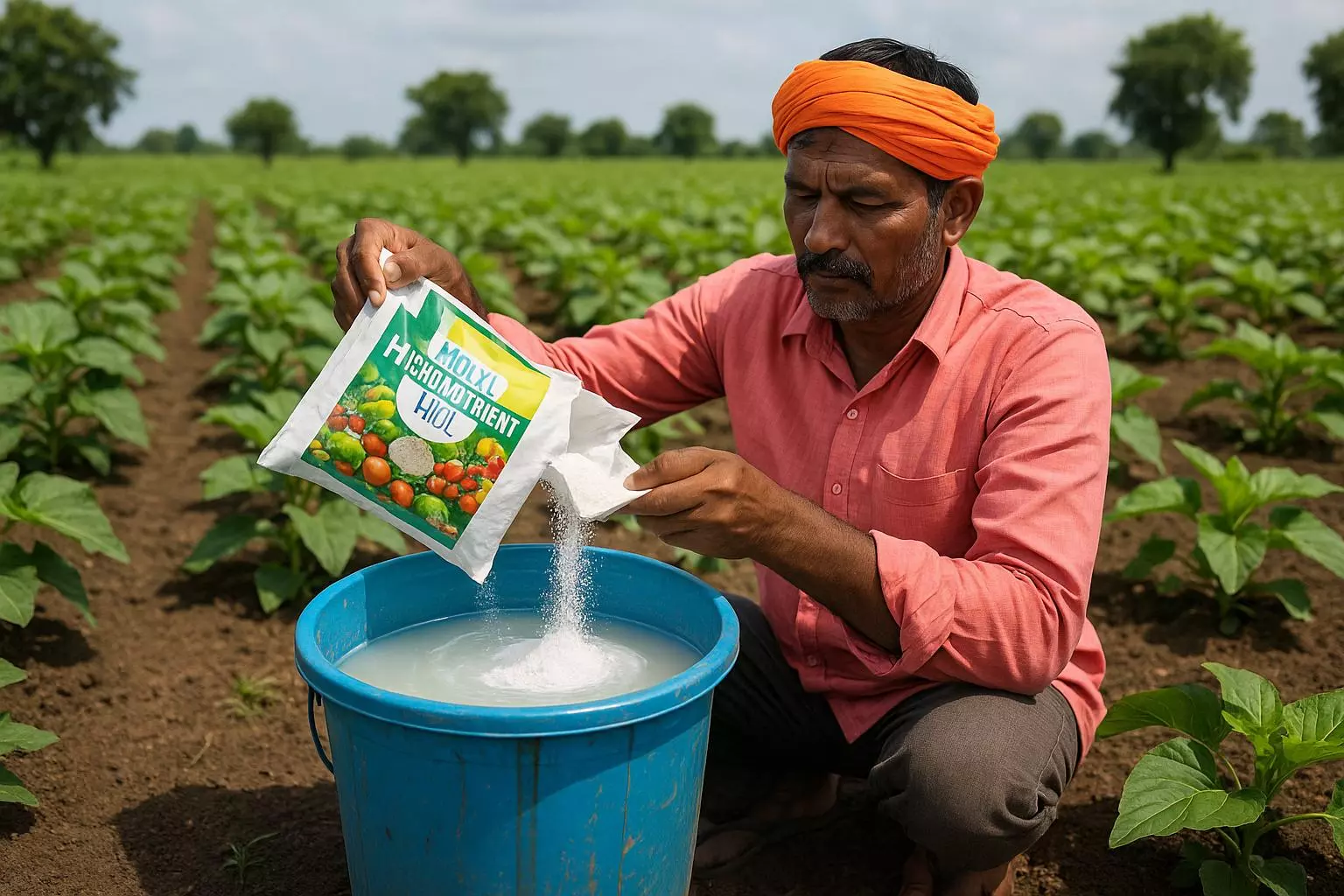
Micronutrient Fertilizers and Sustainable Agriculture Practice
Micronutrients may be required in small amounts, but their role in plant health, food security, and environmental sustainability is enormous. As agriculture shifts towards regenerative and sustainable systems, micronutrient fertilizers are becoming indispensable in balancing productivity and ecological responsibility.
Sustainable agriculture increasingly depends on carefully regulating what crops need, down to the trace elements, in addition to lowering harmful inputs in a world where damaged soils, climate stress, and nutritional inadequacies are all problems.
Why Micronutrient Management Matters in Sustainable Farming
Nutrient balance, not only a decrease in organic or chemical inputs, is essential to sustainable agriculture. While secondary and trace elements are frequently disregarded, macronutrients such as potassium, phosphorus, and nitrogen are widely recognised and utilised. This results in latent deficits, lower yields, and subpar food quality.
Micronutrients such as zinc, iron, boron, manganese, molybdenum, and copper contribute to:
- Enzyme activation that supports growth and reproduction.
- Photosynthetic efficiency and chlorophyll synthesis.
- Nutrient transport and metabolism within the plant.
A study by the International Fertilizer Association (IFA) noted that 50% of global soils are deficient in one or more micronutrients. Zinc and boron shortages in South Asia impact rice, wheat, and vegetable productivity.
How Soil Health and Micronutrients Are Interconnected
Sustainable agriculture relies heavily on healthy soils; micronutrients are essential for sustaining nutrient cycling and biological activity. Soils with minimal organic matter or an unbalanced pH frequently bound or leach micronutrients, making them inaccessible to plants.
Biological exhaustion results from prolonged use of synthetic fertilisers without trace element replenishment. Typical plant symptoms include interveinal chlorosis, bending leaves, stunted roots, and poor fruit production.
Compost, crop wastes, green manures, and targeted vitamin supplementation are all used in integrated soil fertility management to counteract this. Farmers that use these methods frequently notice:
- Better microbial diversity and resilience in soil structure.
- Reduced chemical dependency and input costs over time.
This approach aligns with the broader goal of sustainable agriculture: increase productivity without degrading ecosystems.
What Types of Micronutrient Fertilizers Support Regenerative Systems?
Micronutrient fertilisers come in several varieties. Sustainable models aim for minimal toxicity, increased bioavailability, and long-term compatibility with agroecological processes.
Preferred types include:
- Chelated micronutrients: Stable under variable soil pH and resistant to precipitation.
- Slow-release granules: Minimize leaching and improve root contact time.
- Foliar sprays: Immediate correction of visible deficiencies during crop growth stages.
Due to easier access to chelated and bio-enhanced formulations that produce quick results in small, targeted doses without harming microbial soil life, many farmers now prefer to purchase micronutrient fertilisers online.
Role of Crop Diversification in Micronutrient Efficiency
Monocropping depletes specific nutrients, leading to a nutrient imbalance that builds over time. Farmers can naturally regulate nutrient demand by diversifying crops and stimulating microbial symbiosis that helps unlock bound micronutrients.
For example:
- Legumes increase molybdenum use efficiency by enhancing nitrogen fixation.
- Deep-rooted crops access micronutrients from subsoil layers, bringing them to the surface.
Micronutrient availability is better balanced and the prevalence of deficiency symptoms decreases in mixed systems. Additionally, this enhances disease resistance, pollinator presence, and overall agroecological balance.
“We won’t fix agriculture by adding more chemicals. We’ll fix it by restoring the biological intelligence in soil.”
How Climate-Smart Agriculture Links to Micronutrient Fertilizers
Climate-smart agriculture (CSA) promotes resilience, emissions reduction, and productivity. Micronutrient fertilization is a key element within this framework, especially in stress-prone regions.
For example:
- Zinc and boron improve drought tolerance by strengthening cell membranes.
- Manganese and copper reduce oxidative stress in high-temperature zones.
According to data from the CGIAR Research Programme on Climate Change, targeted micronutrient administration during dry spells enhanced grain yields by 22% compared to unfertilized controls. This strategy helps smallholders stabilise their income in the face of shifting climates and lowers the danger of crop failure.
Can Micronutrient Fertilizers Improve Food Nutrition?
Indeed, micronutrient fertilisers increase food's nutritional density and agricultural productivity. Crops enhanced with zinc, iron, and selenium help combat "hidden hunger," or human malnutrition.
Biofortified crops, such as zinc-rich wheat and iron-fortified pearl millet, are already successful in India and Sub-Saharan Africa. According to the HarvestPlus program, children consuming biofortified foods show improved growth and immune function.
By managing micronutrients at the soil level, farmers indirectly contribute to public health, linking sustainable agriculture with nutritional security.
How to Avoid Overuse and Toxicity
Excess micronutrients can be just as harmful as deficiencies. Overapplication can lead to:
- Toxic buildup in soil or crops.
- Reduced microbial diversity.
- Nutrient antagonism—where one element blocks the uptake of another.
Sustainable approaches prioritise experimentation over conjecture. Farmers can apply only what is necessary with the use of soil and tissue examination. Additional waste reduction and cost-effectiveness are enhanced by tools such as precision applicators and GIS mapping.
FAQs
- Are micronutrient fertilizers allowed in organic farming?
- Yes, natural or non-synthetic forms like rock dusts, seaweed extracts, or bio-mineral solutions are permitted under most organic certification standards.
- What’s the best time to apply micronutrients?
- During early vegetative growth or reproductive stages. Timing ensures efficient uptake and visible improvements.
- Can I mix micronutrients with NPK fertilizers?
- Yes, but compatibility depends on the formulation. Chelated micronutrients are more stable in combination blends.
- How can I know if my soil lacks micronutrients?
- Conduct a laboratory soil test or use rapid diagnostic kits. Tissue testing can also reveal hidden deficiencies.
- Is foliar spray or soil application more effective?
- Both have their roles. Foliar is faster for correction; soil application is better for long-term availability.
How Technology Is Transforming Micronutrient Application
Farmers are now able to administer micronutrients more precisely thanks to digital agriculture equipment. Multispectral sensor-equipped drones are able to identify early patterns of deficiencies. Using information from weather forecasts, crop stage, and soil type, data-driven apps suggest exact dosages.
Drip lines can be used to apply micronutrients at predetermined intervals using IoT-enabled fertigation systems. This guarantees consistent delivery and low runoff.
Future systems that integrate real-time crop data with satellite photos will use AI and machine learning to automate shortfall identification. This strategy increases return on investment while simultaneously enhancing sustainability.
What Challenges Still Exist?
Despite clear benefits, challenges remain:
- Lack of farmer awareness about micronutrient roles.
- Inconsistent product quality in local markets.
- Limited access to lab testing or agronomic advisory in rural areas.
To make micronutrient fertilisation a cornerstone of sustainable agriculture worldwide, policy changes, collaborative knowledge exchange, and improved supply chain monitoring are required.
State-level initiatives are now including micronutrient management into flagship programmes like PM-KISAN and the Soil Health Card initiative, thanks to increased scientific support. These initiatives are in line with the emerging understanding that the first step to feeding the population sustainably is to properly nourish the soil.
How Will Sustainable Micronutrient Use Develop in the Future?
Farming's future truly rests on the little things. The quality, vigor, and health of entire crops are determined by trace elements, which may only weigh milligrammes per kilogramme of soil. These components help to close the gap between economic viability and ecological responsibility in sustainable agriculture.
Success will be determined by the intelligent and conscientious application of micronutrient fertilisers as farming systems change to feed more people with less resources. In addition to repairing the soil, each properly applied gramme of zinc or boron benefits our food systems, economies, and future generations.