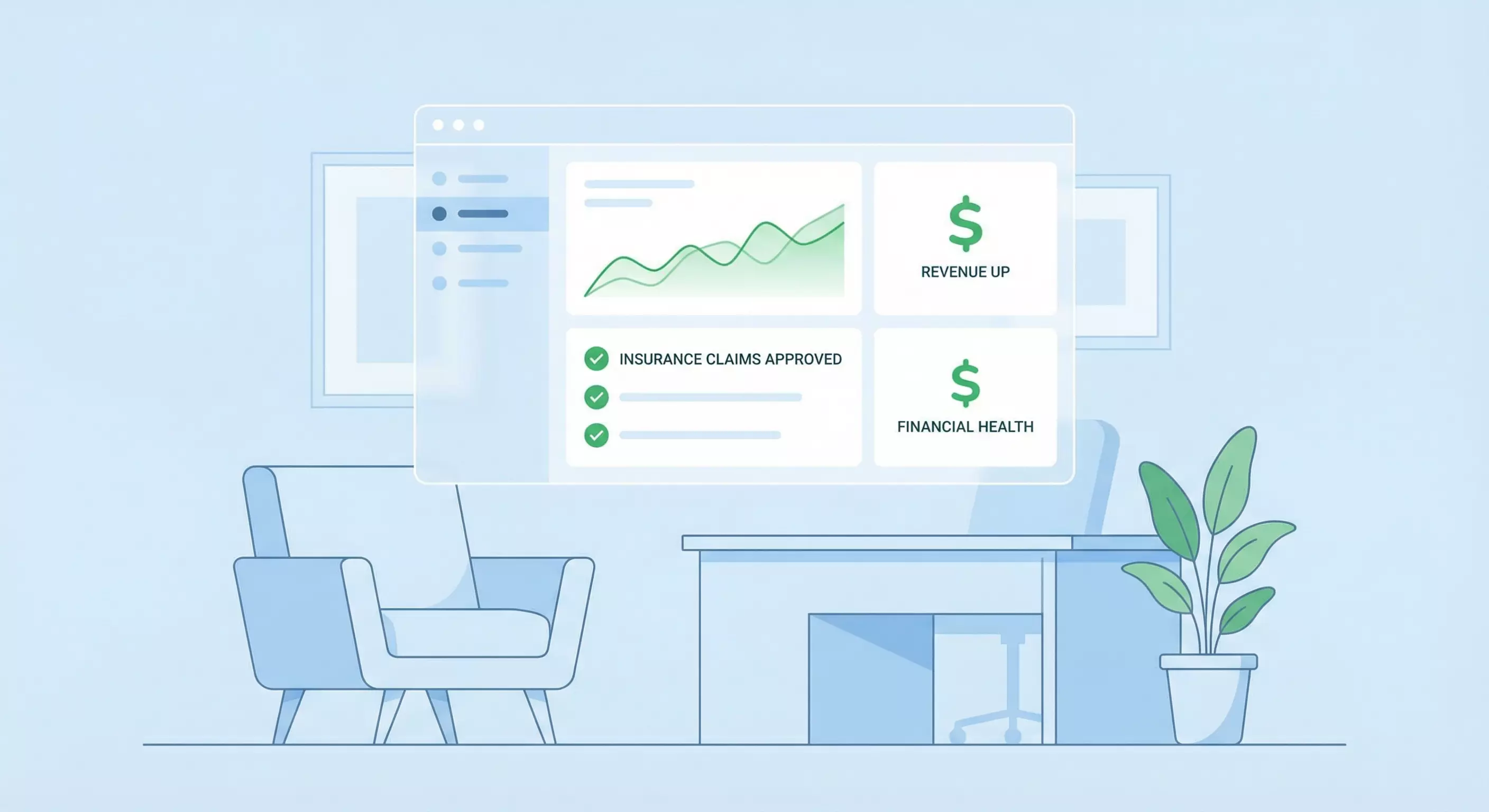
Mental Health Billing Services That Maximize Your Revenue
You became a mental health provider to help people not to spend hours fighting insurance companies over denied claims.
Yet for many practices, that's exactly what happens. Coding errors, payer rejections, late reimbursements, and administrative backlogs drain time and revenue that should go toward patient care. Outsourced mental health billing services solve this problem at the source.
In this guide, you'll learn what these services include, how they differ from general medical billing, what to look for in a mental health billing company, and how the right partner directly grows your practice's bottom line.
What Are Mental Health Billing Services?
Mental health billing services are specialized revenue cycle management (RCM) solutions designed for behavioral health providers. They handle the full billing lifecycle from insurance verification and claim submission to denial management and payment posting using expertise specific to mental and behavioral health payer rules.
Unlike general medical billing, behavioral health billing involves unique CPT codes, session-based claim structures, and strict documentation requirements tied to diagnoses like depression, anxiety disorders, PTSD, and substance use disorders. A generalist billing company rarely has this depth.
Core Services Typically Included
- Insurance eligibility verification and benefits checks
- Prior authorization tracking and management
- Medical coding (CPT, ICD-10) specific to behavioral health
- Electronic claim submission and tracking
- Denial management and appeals
- Patient billing and statement generation
- Payment posting and reconciliation
- Reporting and revenue analytics
Why Mental Health Billing Is Different and More Complex
Behavioral health payers apply rules that don't exist in most other medical specialties. Understanding these differences is the first step to protecting your revenue.
Session Limits and Medical Necessity Reviews
Many commercial insurers and Medicaid programs cap the number of billable sessions per year. When a patient nears their limit, claims require additional documentation proving medical necessity. Without proper tracking, practices frequently bill for sessions that get retroactively denied leaving providers to absorb the loss.
Parity Law Compliance
The Mental Health Parity and Addiction Equity Act (MHPAEA) requires insurers to cover mental health and substance use disorders at levels comparable to physical health benefits. Despite this, payers routinely underpay or deny behavioral health claims in ways that would violate parity rules. A specialized mental health billing company knows how to identify and challenge these patterns.
Telehealth Billing Nuances
Since 2020, telehealth has become central to mental health delivery. But billing for virtual sessions requires specific place-of-service codes, modifier combinations, and state-level payer rules that change frequently. Errors here are common and expensive.
Definition: What is a mental health billing company?A mental health billing company is an outsourced revenue cycle partner that manages insurance claims, coding, denials, and payments on behalf of behavioral health practices. It specializes in the CPT codes, payer rules, and documentation standards unique to psychiatry, therapy, and counseling.
The Real Cost of Billing Errors in Behavioral Health
Billing mistakes don't just delay payments, they permanently destroy revenue. When a claim is denied and not appealed within the payer's filing window, that money is gone. The American Medical Association (AMA) estimates that U.S. providers lose billions each year to uncollected or undercollected claims.
Common Billing Errors That Cost Practices Money
- Incorrect CPT codes for session type or modality
- Mismatched ICD-10 diagnosis codes
- Missing or expired prior authorizations
- Duplicate claims or incorrect billing frequency
- Failure to verify active insurance before each session
- Claim submissions past payer filing deadlines
A single denial that isn't appealed correctly can cost a solo practitioner $150–$300 per session. Multiply that by 10–20 monthly denials, and the annual revenue loss becomes staggering.
Key Benefits of Outsourcing to a Mental Health Billing Company
1. Higher Clean Claim Rates
Specialized billing teams maintain up-to-date knowledge of payer rules and code sets. This translates directly to fewer rejected claims on first submission, most high-performing mental health billing services maintain clean claim rates above 95%.
2. Faster Reimbursement Cycles
Electronic submission, real-time eligibility checks, and proactive follow-up on pending claims compress the reimbursement timeline. Many practices move from 45–60 day average collection cycles to under 30 days after outsourcing.
Read: How to Get Health Insurance for Unemployed People
3. Reduced Administrative Overhead
In-house billing staff require salaries, benefits, training, and management. Outsourcing converts this fixed cost to a variable expense typically a percentage of collections aligning billing costs directly with practice revenue.
4. Compliance and Audit Protection
Mental health billing is heavily regulated. HIPAA violations, upcoding, and improper documentation can trigger audits or even criminal investigations. A dedicated billing company implements compliance protocols that protect your practice from regulatory risk.
5. Scalable as Your Practice Grows
Whether you add new clinicians, expand telehealth services, or open additional locations, a scalable billing partner handles the volume increase without the lag time of hiring and training in-house staff.
Definition: What does a mental health billing service cost?Most mental health billing services charge 4%–8% of monthly collections, depending on practice size and claim volume. This fee structure means you only pay when claims are collected directly aligning the billing company's incentives with your revenue.
How to Choose the Right Mental Health Billing Company
Not all billing companies are equipped for behavioral health. Here's what to evaluate before signing a contract.
Behavioral Health Specialization
Ask specifically about their experience with psychiatric services, therapy billing, and substance use disorder treatment. A company that primarily serves orthopedics or primary care won't have the payer-specific knowledge behavioral health billing demands.
Technology and EHR Integration
Your billing partner should integrate seamlessly with your EHR or practice management platform. Manual data entry between systems introduces errors and delays. Ask whether they support your specific software whether it's SimplePractice, TherapyNotes, Kareo, or others.
Transparent Reporting
You should have real-time access to dashboards showing claim status, denial rates, collection percentages, and aging reports. Avoid any company that limits your visibility into your own revenue data.
Denial Management Process
Ask how denials are handled specifically who reviews them, what the appeal SLA is, and what percentage of denials they successfully overturn. This metric separates high-performing billing companies from average ones.
HIPAA Compliance and Data Security
Any billing partner handling PHI must operate under a signed Business Associate Agreement (BAA) and demonstrate robust data security practices. Verify they conduct regular security audits and staff HIPAA training.
What to Expect in the Onboarding Process
Transitioning your billing to an outside company feels daunting but with the right partner, the process is structured and minimally disruptive. Here's how smooth onboarding typically unfolds.
- Discovery and credentialing review the billing team audits your current payer contracts, NPI information, and credentialing status.
- EHR integration setup systems are connected and data migration is completed.
- Staff training and workflow alignment your team learns how to submit clinical notes and documentation in a format the billing team requires.
- Parallel billing period (optional) some companies run your existing billing alongside the new process briefly to validate accuracy.
- Full transition and performance baseline billing operations shift fully to the partner, and KPI benchmarks are established.
Most practices are fully transitioned within 30–60 days. Revenue improvements typically become measurable within 90 days.
Definition: What is revenue cycle management in mental health?Revenue cycle management (RCM) in mental health refers to the end-to-end process of managing patient financial interactions from verifying insurance coverage before an appointment to collecting final payment after a session. Effective RCM reduces denials, accelerates cash flow, and keeps the practice financially healthy.
Frequently Asked Questions
Q: What's the difference between a mental health billing service and a general medical billing company?
A general medical billing company handles claims across many specialties but lacks deep knowledge of behavioral health CPT codes, parity compliance, and the specific denial patterns from mental health payers. A specialized mental health billing service is built specifically for therapists, psychiatrists, and counselors and that specialization translates to higher collection rates and fewer compliance risks.
Q: Can I keep my current EHR if I outsource billing?
Yes. Most mental health billing companies integrate with leading EHR and practice management platforms. Before signing, confirm that your billing partner supports your specific system to avoid manual data entry workarounds.
Q: How quickly will I see revenue improvements after switching?
Most practices see measurable improvement in denial rates and payment speed within 60–90 days. Full optimization including resolved prior auth gaps and cleaned-up aging claims typically takes three to six months.
Q: Is outsourcing billing HIPAA compliant?
Yes, provided you sign a Business Associate Agreement (BAA) with your billing company. This agreement legally requires them to protect your patients' protected health information (PHI) under HIPAA standards. Always request a BAA before sharing any patient data.
Q: What does a mental health billing company charge?
Most mental health billing companies charge between 4% and 8% of collected revenue. Some charge flat monthly fees for high-volume practices. The percentage model is most common because it aligns the billing company's incentives with your collections. They earn more when you earn more.
Stop Losing Revenue. Start Billing Smarter.
Billing errors don't just cost money they cost time, energy, and focus that should go toward your patients. The right mental health billing services partner eliminates that drain by bringing specialized expertise, advanced technology, and dedicated denial management to your revenue cycle.
Whether you're a solo therapist or a multi-provider group practice, outsourcing to a proven mental health billing company is one of the highest-leverage decisions you can make for your practice's financial health.
Nexus IO specializes exclusively in behavioral health revenue cycle management helping practices collect more, faster, with full compliance. If you're ready to take billing off your plate and put more revenue in your pocket, the next step is a conversation.
Ready to streamline your billing? Partner with Nexus IO the mental health billing company built for your practice. Visit Nexus io to get started today.