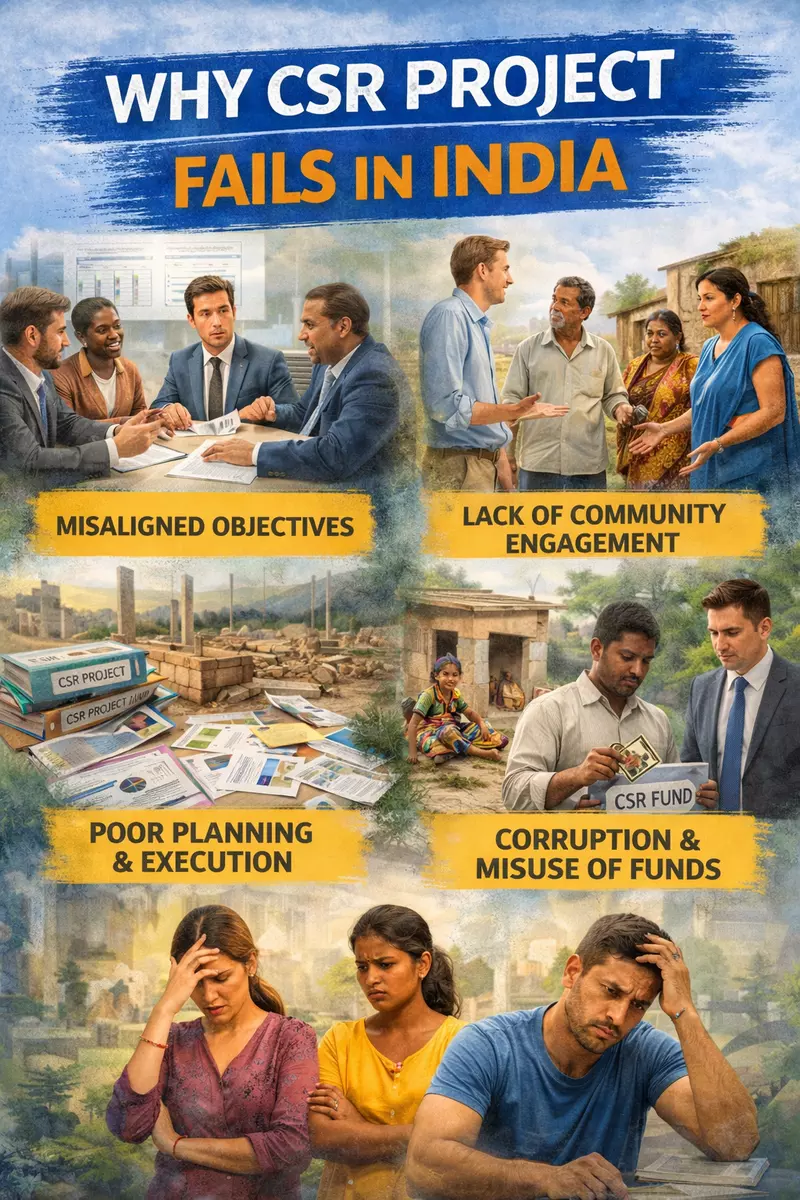
Measuring CSR Impact : Why Results Matter More than Budget | Fiinovation
Corporate Social Responsibility (CSR) in India has evolved significantly over the past decade. While earlier CSR success was often measured by the amount of money spent, today the focus has clearly shifted toward outcomes and long-term social value.
Simply allocating a large budget no longer guarantees meaningful change. Measuring CSR impact has become essential to ensure that initiatives deliver real, measurable benefits to communities. This shift from “how much is spent” to “what results are achieved” is redefining responsible business practices across India.
The Changing Perspective of CSR
CSR was initially viewed as a compliance-driven activity, where meeting statutory spending requirements was considered sufficient. However, stakeholders—including regulators, investors, employees, and communities—now expect accountability and transparency.
They want evidence that CSR initiatives are solving real problems, improving lives, and contributing to sustainable development goals. As a result, impact measurement has become a core component of effective CSR strategy.
A high budget without clear outcomes can lead to scattered efforts, duplication of work, and limited social change. On the other hand, even modest investments can create strong impact when guided by data, planning, and continuous evaluation.
Why Budget Alone is Not Enough
Focusing only on CSR spend can be misleading. Large budgets may fund projects that lack relevance, local alignment, or sustainability. Without proper monitoring and evaluation, it becomes difficult to assess whether funds are reaching the intended beneficiaries or delivering long-term benefits.
Impact-driven CSR emphasizes efficiency and effectiveness. It answers critical questions such as:
Are the targeted communities benefiting from the intervention?
Is the project addressing the root cause of the problem?
Can the initiative be scaled or sustained over time?
By answering these questions, companies can refine their CSR approach and ensure better utilization of resources.
What Does CSR Impact Measurement Involve ?
CSR impact measurement is a structured process that evaluates both qualitative and quantitative outcomes of social initiatives. It goes beyond activity reporting and focuses on change created at the ground level. Key elements include baseline studies, defined performance indicators, regular monitoring, third-party evaluations, and outcome-based reporting.
For example, instead of reporting the number of schools built, impact measurement assesses improvements in enrollment rates, learning outcomes, and long-term educational access. This approach provides a clearer picture of social value creation.
Strategic Role of CSR Consultants
As impact measurement becomes more complex, professional support plays a vital role. Expert CSR consultants help organizations design frameworks that align budgets with outcomes. Firms like Fiinovation assist corporates in planning, implementing, and evaluating CSR projects with a strong focus on measurable results.
Through structured due diligence, data-driven project selection, and robust monitoring systems, professional consultants ensure that CSR investments are both compliant and impactful. Their expertise helps companies move from intention to execution with clarity and accountability.
Read: Understanding CSR Funds in India : Evolution, Impact
Benefits of Measuring CSR Impact
Organizations that prioritize impact measurement gain several advantages. Transparent reporting builds trust among stakeholders and enhances corporate credibility. Data-backed insights help leadership make informed decisions, refine strategies, and allocate resources more effectively.
Impact measurement also supports long-term sustainability. Projects designed around outcomes are more likely to continue delivering benefits even after funding cycles end. Additionally, measurable success stories strengthen corporate reputation and demonstrate genuine commitment to social responsibility.
Common Challenges in Impact Measurement
Despite its importance, impact measurement comes with challenges. Limited data availability, lack of standardized metrics, and short project timelines can restrict effective evaluation. Some organizations also underestimate the importance of baseline studies, making it difficult to track progress accurately.
Overcoming these challenges requires early planning, realistic goal setting, and continuous engagement with implementing partners. Investing in professional evaluation mechanisms ensures that challenges are addressed proactively rather than retrospectively.
The Future of CSR : From Spend to Outcomes
The future of CSR lies in outcome-driven strategies. With increasing emphasis on ESG reporting, sustainability goals, and regulatory oversight, companies can no longer afford to treat CSR as a checkbox exercise. Impact measurement will continue to define CSR success, guiding organizations toward responsible growth and meaningful social contribution.
Corporates that embrace this shift will not only meet compliance requirements but also create shared value—where business success and social progress go hand in hand.
Conclusion
Measuring CSR impact is no longer optional; it is essential. Budgets may enable action, but results define success. By focusing on outcomes rather than expenditure, organizations can ensure their CSR initiatives deliver real change. With expert guidance, structured evaluation, and a commitment to transparency, CSR can move beyond spending to become a powerful driver of sustainable development across India.