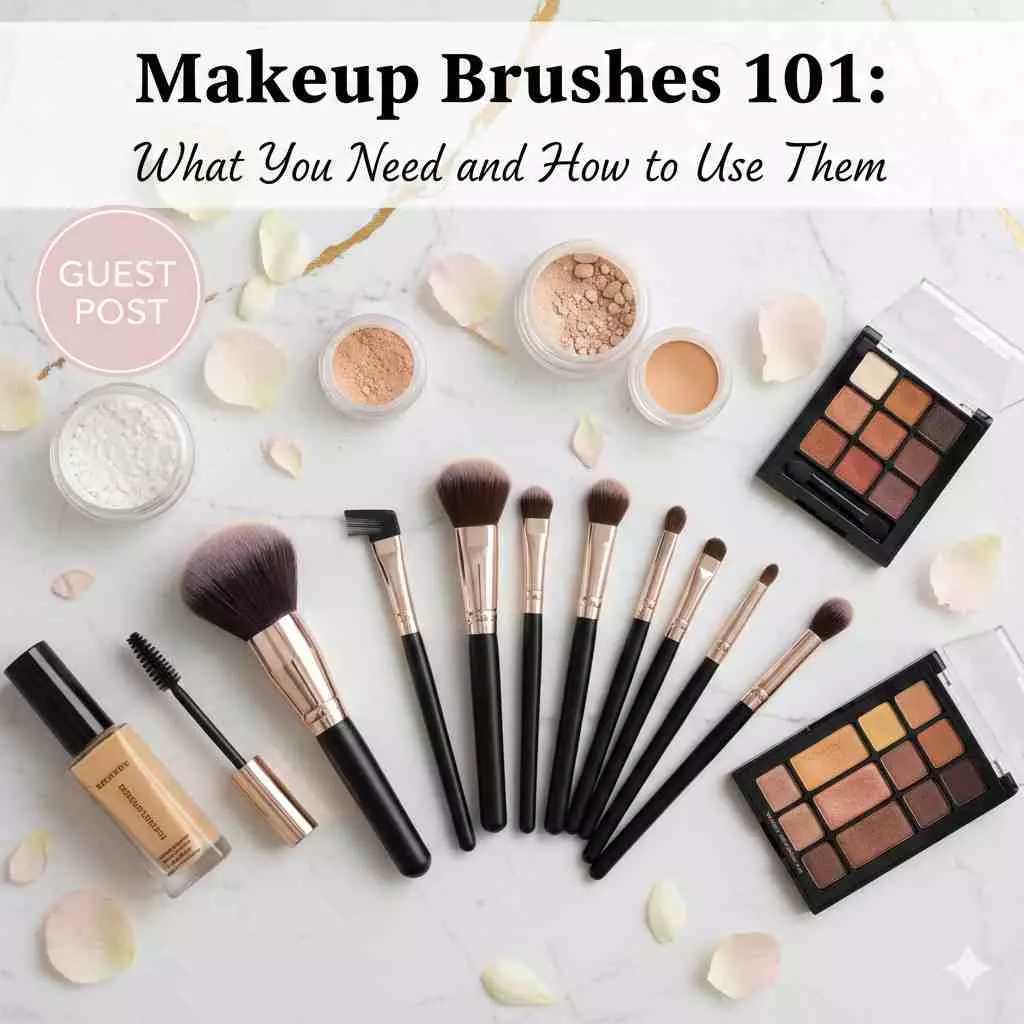
Makeup Brushes 101: What You Need and How to Use Them
If your foundation looks streaky, your blush turns patchy, or your eyeshadow goes from "soft glam" to "muddy mess" in under five minutes, it's usually not because you're bad at makeup. It's because the tool and the technique are mismatched.
The right brush makes your products look smoother, blend faster, and last better. The wrong brush makes even the best makeup feel difficult to apply.
Brushes can also feel overwhelming because most guides treat them like a museum collection. You do not need 20 brushes to look put together. You need a small, smart set that matches how you actually do your makeup, plus a clear way to use each brush so you achieve the finish you're aiming for.
This guide is built for 2026 realities: more people are using cream and hybrid formulas, more brands push "multi-use" tools, and more shoppers care about hygiene, sensitive skin, and performance per rupee or dollar. You'll learn the essential brush kit, how to pick brushes that work with modern formulas, and simple motions that instantly improve how your makeup looks.
Quick Answers (Save This)
- How many brushes do beginners need? A solid everyday routine can be done with 5 brushes: a foundation or buffing brush, a concealer brush, a powder brush, a blush or bronzer brush, and an eye blending brush.
- What's the biggest beginner mistake? Using the wrong motion. Most streaks come from "painting" liquid products like you're using a wall brush. Modern base makeup looks best when you stamp and buff in short movements.
- How often should you wash brushes? A practical baseline is weekly for most face brushes, and more often for brushes used with creams or liquids, especially if you're acne-prone or sensitive.
- Brush vs sponge vs fingers? Brushes give precision and speed, sponges provide a softer, diffused finish, and fingers warm up creams quickly. The best choice depends on the product texture and the finish you want.
Start Here: The Only Brush Kits You Actually Need
Before you learn the technique, decide on your kit. Your kit should match your routine, not someone else's vanity drawer.
The Minimal 5-Brush Kit (Everyday Face + Simple Eyes)
1. Buffing foundation brush (or a medium dense foundation brush)
2. Small concealer brush
3. Medium powder brush
4. Blush/bronzer brush (one brush that can do both)
5. Fluffy eye blending brush
This kit covers base, cheeks, and soft eyes. If you only want "clean and polished," stop here.
The Everyday 8-Brush Kit (Most People's Sweet Spot)
Add these to the 5-brush kit:
6. Flat eyeshadow shader brush (for packing color or shimmer)
7. Small detail brush (for inner corner, lower lash line, spot blending)
8. Brow spoolie or an angled brow brush (depending on how you do brows)
This kit gives you control and a better eye look without turning your routine into a project.
The Full 12-Brush Kit (Events, Glam, Content, Bridal)
Add these to the 8-brush kit:
9. Contour brush (smaller and more precise than bronzer)
10. Highlighter brush (tapered or fan, depending on your style)
11. Pencil brush (for smoky liner and tight placement)
12. Angled liner brush (gel liner or shadow liner)
This kit is for people who love detail or need camera-ready blending.
A Simple Rule that Saves Money
If you don't use a product at least 3 times a week, you don't need a dedicated brush for it. Multi-use is your friend until you're doing complex looks often.
Brush Basics That Matter (And the Stuff You Can Ignore)
You don't need to memorize fancy brush names. You need to understand three things: shape, density, and bristle type. These three decide how makeup sits on your skin.
Shape: What the Brush Is Designed to Do
Flat brushes place the product. Fluffy brushes soften edges. Angled brushes follow natural contours like cheekbones and brows. Tapered brushes focus product into a smaller area, helping you avoid the "too much, too soon" problem.
Density: Why Some Brushes Cause Streaks
Dense brushes push product into the skin and give more coverage. That's great for foundation, cream blush, and cream bronzer. But density can also cause streaks if you use a dragging motion.
Looser brushes scatter product and create a soft-focus finish. That's perfect for powder, blush, bronzer, and blending eyeshadow. But a brush that's too loose for cream products can skip across the skin, lifting makeup underneath.
Bristle Type (2026 reality check)
Synthetic bristles are the default winner for most people today because modern synthetic fibers can mimic softness while working better with creams and liquids. They're also often easier to clean.
Natural hair bristles can still be great for powders because they pick up pigment easily, but they're not "automatically better," and they can be harder to keep spotless if you use oily formulas.
If you have sensitive, acne-prone, or reactive skin, prioritize soft synthetic brushes with smooth tips. In 2026, many brands are also releasing ultra-fine synthetic fibers designed to reduce the "micro-scratch" feeling on the skin. If your brush feels scratchy, it's not a "you problem," it's a brush problem.
The 60-Second Brush Pairing Guide (Use This Every Time)
If you remember nothing else, remember this.
- Liquids and creams: choose synthetic, medium-to-dense brushes. Use stamping and short buffing motions.
- Powders: choose fluffy brushes. Use light sweeping, pressing, or rolling motions depending on the finish.
- High pigment placement: press first, then blend.
- Soft diffused blending: Use a clean, fluffy brush with minimal pressure.
- Texture showing up: switch to a softer brush and reduce pressure, then add a tiny bit of mist or setting spray to re-meld layers (lightly, don't soak).
Face Brushes: What They Do and Exactly How to Use Them
Let's make this practical. For every brush, you'll learn the best use, the proper motion, and the most common mistake.
Foundation Brushes (Buffing, Flat, Stippling)
Best for: liquid foundation, skin tints, cream base products
What to choose: a medium-dense buffing brush for most people. A flat foundation brush is good for quick placement but usually needs a second step to avoid lines. A stippling brush gives a lighter, airier finish and is excellent for sheer coverage.
How to use it (the motion that changes everything)
- Step 1: Dot foundation onto the face (starting in the center: cheeks, nose, chin, and forehead).
- Step 2: Stamp the brush onto the skin, especially where you want coverage. Stamping means pressing straight down gently.
- Step 3: Buff in short, tiny circles or short back-and-forth motions to smooth edges. Keep the brush close to the skin, not floating above it.
- Step 4: Use the leftover product on the brush to blend outward toward the hairline and jaw. That's how you avoid a "mask line."
Common mistake: painting the foundation in long strokes. This creates streaks and can lift skincare underneath.
Pro fix: stamp first, then buff. If you still see streaks, your brush is either too stiff or too flat for your product. Switch to a softer buffing brush.
Many foundations now include skincare-like ingredients and film-formers that set faster. That means working in smaller sections is more important than it was a few years ago.
If your base dries down mid-blend, don't keep rubbing it in. Mist your brush lightly, or use a tiny bit of moisturizer on the back of your hand, then tap the brush into it before blending the edges.
Concealer Brush (Small and Precise)
Best for: spot concealing, detailed under-eye concealing, sculpting with concealer
What to choose: a small, soft, slightly dense concealer brush, ideally tapered.
How to use it for the under-eye area
- Step 1: Place concealer only where needed. Start near the inner corner and on the darkest area, not all the way to the lash line.
- Step 2: Tap and press with the brush, then lightly blend outward.
- Step 3: Use a clean edge of the brush to blur the border into your foundation.
How to use it for spots
- Step 1: Dab concealer on the spot.
- Step 2: Press the brush straight down to keep coverage.
- Step 3: Blend only the edges, not the center.
Common mistake: sweeping concealer around like moisturizer, which removes coverage.
Pro fix: press to keep pigment in place. Blend the border only.
Powder Brush (Soft Setting Without Caking)
Best for: setting powder, finishing powder, bronzer for a very soft look
What to choose: medium fluffy brush, not too huge. Big powder brushes are comfortable but often deposit powder everywhere.
How to use it
- Step 1: Tap the brush into the powder, then tap off the excess.
- Step 2: Press powder onto areas that crease or get oily (under-eyes, around nose, T-zone).
- Step 3: Lightly sweep what's left across the rest of the face.
Common mistake: swirling a loaded brush all over the face. That's how you get cakey and dull.
Pro fix: press first where you need control, sweep lightly where you just want a soft finish.
Many "blurring powders" are ultra-fine and can look amazing in photos, but dry on the skin if overused. The better move is targeted setting, then a clean,n fluffy brush to remove excess. You want a set face, not a powdered face.
Blush Brush (The Difference Between Fresh and Patchy)
Best for: powder blush, cream blush (depending on density)
What to choose: fluffy but slightly tapered for powder. For cream blush, choose a softer, medium-dense brush.
How to use powder blush
- Step 1: Pick up a small amount, tap off excess.
- Step 2: Place blush higher on the cheek for a lifted look, or on the apples of the cheeks for a youthful, classic look.
- Step 3: Blend upward and outward.
How to use cream blush
- Step 1: Tap the brush into the product, or pick up from the back of your hand.
- Step 2: Press onto cheeks first, then gently buff edges.
Common mistake: applying too much blush at once.
Pro fix: build in layers. Cream blush is easier when you start with less and add gradually.
Bronzer vs Contour Brushes (Stop Mixing Them Up)
Bronzer adds warmth. Contour adds shadow. They are not the same, and the brush shape should match the job.
Bronzer brush
- Best for: diffused warmth around the perimeter of the face
- Choose: fluffy, medium-large, slightly angled
- How to use: sweep lightly around the forehead, cheeks, and jawline. Blend toward the hairline.
Contour brush
- Best for: targeted cheekbone and nose definition
- Choose: a smaller, angled, or tapered brush
- How to use: place the product slightly under the cheekbone, then blend upward softly. Keep it controlled.
Common mistake: using a big bronzer brush for contour and ending up with a muddy stripe.
Pro fix: contour needs a smaller brush and lighter hand.
Cream bronzers and cream contours are more popular than ever because they look skin-like on camera and in real life. For creams, brush choice matters more. Too fluff,y and the product skips. Too stiff and it lifts your base. Aim for soft density and the press-first technique.
Highlighter Brush (Glow, Not Glitter Stripe)
Best for: powder highlight, subtle finishing glow
Choose: a small tapered brush for precise glow, or a fan brush for a very light touch.
How to use
- Step 1: Pick up a small amount and tap off extra.
- Step 2: Apply to the high points: top of cheekbones, brow bone, nose bridge (lightly), cupid's bow if you like.
- Step 3: Blend edges with a clean brush so the highlight melts into skin.
Common mistake: applying highlight too low on the cheek, which emphasizes texture.
Pro fix: keep it high and blend into the blush area.
Eye Brushes: Build, Blend, Define Without Mud
Eye brushes feel complicated until you realize you're doing two things: placing color and blending edges. You need one brush for each job.
Flat Shader Brush (Packing Color)
Best for: shimmer, metallics, intense pigment on lid
How to use
- Step 1: Press shadow onto the lid. Pressing gives payoff and reduces fallout.
- Step 2: Use a clean blending brush to soften edges after.
Common mistake: trying to blend with a flat shader.
Pro fix: shader places, blender blends.
Crease Brush (Soft Transition)
Best for: transition shade in crease, soft depth
Choose: fluffy, medium-small, rounded tip
How to use
- Step 1: Start with a small amount.
- Step 2: Sweep back and forth in the crease lightly.
- Step 3: Blend upward slightly to diffuse.
Common mistake: using too much pressure and pushing pigment too high.
Pro fix: less pressure, more patience. Let the brush float and build gradually.
Blending Brush (The "Save My Look" Brush)
Best for: softening harsh lines, merging shades
How to use
- Step 1: Use a clean blending brush with no new product.
- Step 2: Blend only where two shades meet.
- Step 3: Use tiny circular motions and light sweeping motions.
Common mistake: continuing to add product while blending, which creates muddiness.
Pro fix: blend with a clean brush first. Add product only when you need more color.
Many newer eyeshadows are "high-adhesion" formulas designed to last longer and resist fallout. Great, but they can set faster. The trick is to place your pigment, then blend edges sooner rather than later. If it feels stuck, don't scrub. Use a clean brush and micro-motions.
Pencil Brush (Smoky Liner and Tight Definition)
Best for: lower lash line, outer corner depth, smudged liner
How to use
- Step 1: Pick up a small amount.
- Step 2: Press close to the lash line.
- Step 3: Smudge gently with short strokes.
Common mistake: dragging the shadow too low and making the eye look droopy.
Pro fix: keep it tight and connect it softly to the outer corner.
Angled Liner Brush (Sharp or Soft Wings)
Best for: gel liner, shadow liner, crisp outer corner
How to use
- Step 1: For gel liner, wipe excess off the brush to keep it controlled.
- Step 2: Press along the lash line in tiny stamps.
- Step 3: Build the wing slowly rather than drawing one long line.
Common mistake: loading too much product, resulting in a thick, uneven line.
Pro fix: less product, more stamps.
Brows and Lips: Small Brushes That Make a Big Difference
You can do brows and lips without special brushes, but the right small tool makes everything cleaner and faster.
Spoolie (Non-Negotiable)
Use it to fluff brows upward, blend pencil or pomade, and soften harsh lines.
Pro tip: brush brows up, then lightly brush sideways to lay them naturally.
Angled Brow Brush (For Pomade, Powder, and Crisp Shape)
How to use
- Step 1: Pick up a tiny amount of product.
- Step 2: Start at the tail, then move to the arch, then lightly fill the front.
- Step 3: Comb through with a spoolie to soften.
Common mistake: starting at the front and creating a blocky brow.
Pro fix: tail first, front last, blend always.
Lip Brush (For Clean Edges and Longer Wear)
How to use
- Step 1: Outline lips with a thin layer of lipstick using the brush.
- Step 2: Fill in.
- Step 3: If you want a gradient lip, use the brush to blur the edges for a soft finish.
Common mistake: skipping blending and leaving harsh lines.
Pro fix: blur edges slightly for a modern look.
Brush vs Sponge vs Fingers (The Honest Guide)
This is one of the most significant "what should I do?" questions, and the answer is simple once you match the tool to the texture.
- Use a brush when you want: speed, even coverage, precision, and less product waste.
- Use a sponge when you want: ultra-diffused finish, softer edges, quick blending over texture.
- Use fingers when you want: warmth and melt (cream blush, cream bronzer, quick tint), and when you're keeping it minimal.
A 2026 best practice: start with a brush for placement and coverage, then tap the edges with a sponge for a more airbrushed finish. It's not either-or. It's tool layering.
Common Brush Mistakes (And the Quick Fix for Each)
- Mistake: Too much product on the brush
- Fix: tap off excess. Build in thin layers.
- Mistake: Wrong motion for liquids
- Fix: stamp first, then buff in short movements.
- Mistake: Blending too hard on the eyes
- Fix: Use light pressure and a clean brush to blend borders only.
- Mistake: Using the same brush for everything
- Fix: keep at least one clean, fluffy brush as your "blender" for face or eyes.
- Mistake: Not cleaning brushes regularly
- Fix: set a simple schedule and stick to it. Clean brushes make makeup look better, period.
- Mistake: Storing brushes in dusty, humid spaces
- Fix: store upright in a clean container, away from bathroom steam if possible.
Cleaning and Brush Hygiene (The Part That Actually Improves Your Makeup)
Brush cleaning is not just a "good habit." Dirty brushes cause patchy application, muddier colors, and can contribute to irritation or breakouts. Clean tools also make your products perform the way they're supposed to.
A Simple Wash Schedule that Works in Real Life
- Face brushes used with liquids or creams: wash 2 times per week if possible, especially if you are acne-prone.
- Face brushes used with powders: wash weekly.
- Eye brushes: wash weekly if you wear eye makeup often; otherwise, every 1–2 weeks.
- Sponges: ideally after each use or as often as realistically possible.
If you wear makeup daily and live in a hot, dusty, or humid climate, be more strict about cleaning. Heat and humidity can make residue build up faster.
How to Clean Without Ruining Your Brushes
- Step 1: Wet only the bristles, not the whole handle.
- Step 2: Use a gentle cleanser and work it through the bristles with your fingers or a brush cleaning pad.
- Step 3: Rinse until the water runs clear.
- Step 4: Squeeze out excess water with a towel.
- Step 5: Lay brushes flat to dry, with bristles hanging slightly off the edge if you can.
Why this matters: Soaking the metal part and handle repeatedly can loosen the glue over time, shortening your brush's life.
When to Replace Brushes
Replace or retire brushes when you notice shedding that doesn't stop, a scratchy feeling, a smell that remains after washing, or bristles that won't return to shape. Good brushes can last years if cleaned gently and stored well, but you don't need to "force" a brush that has clearly changed.
Buying Brushes Smarter in 2026 (Performance Per Money)
Brush shopping is easier when you know what to check. Don't get distracted by hype words. Focus on building quality and how it performs with your products.
The Quick Quality Checklist
- Softness: run bristles across the back of your hand. It should feel smooth, not prickly.
- Density: Squeeze gently. Dense for creams, fluffy for powders.
- Shedding: lightly tug a few hairs. A tiny amount of initial shedding can occur, but it shouldn't persist.
- Ferrule tightness: the metal part should feel solid with no wobble.
- Handle comfort: if it feels awkward, you'll avoid using it.
Starter Set Vs Build-Your-Own
The starter set is best when you're new, you want a balanced kit fast, or you're on a budget.
Singles are best when: you already know what you use most, you want one perfect base brush, or you're replacing one tool at a time.
The Underrated 2026 Move: Invest In Your Base Brush First
If you only spend on one brush, make it your foundation or buffing brush. Your base is the largest visible area of makeup. A good base brush makes everything else look better because the canvas is smoother.
Synthetic Is Not "Cheap" Anymore
Many modern synthetic brushes outperform older natural hair brushes because they're designed for creams, tints, and long-wear formulas. Don't judge a brush by what it meant in 2016. Judge it by how it applies to your makeup today.
A 2026 Technique Upgrade: "Press, Then Perfect"
This is a simple method that works with modern high-performance formulas.
- Press: place the product where you want it with controlled tapping or stamping.
- Perfect: blend edges with a clean brush using minimal pressure.
This works for foundation, concealer, cream blush, cream bronzer, and even powder blush if you're heavy-handed. It gives you control first and softness second.
Brush Glossary (So You Don't Feel Lost)
- Buffing brush: dense brush that smooths foundation into the skin
- Kabuki brush: usually short and dense, used for buffing powders or foundation
- Stippling brush: duo-fiber brush that gives light, airbrushed application
- Crease brush: a fluffy brush that blends color into the eye crease
- Shader brush: a flat brush that packs shadow onto the lid
- Pencil brush: small tapered brush for detail and lower lash line
- Angled brush: slanted edge brush for brows, liner, or cheek definition
- Fan brush: thin fanned brush for light highlight or soft dusting
Read: The Best Makeup Brush Cleaner Machines of 2025
FAQs
Q. Do I need different brushes for cream and powder?
A. It helps. Creams like denser brushes so they don't skip. Powders like fluffier brushes so they diffuse. If you must use one brush for both, clean it between uses to avoid muddy buildup.
Q. Can I use one brush for foundation and concealer?
A. You can, but it usually looks better if you don't. Concealer needs precision and control. A foundation brushis often too big and can move coverage away from where you want it.
Q. Why does my foundation look streaky with a brush?
A. Usually because of motion (painting) or because the brush is too stiff for your foundation. Stamp first, then buff in short movements. Also, make sure your skincare has absorbed before applying base.
Q. How do I stop blush from looking patchy?
A. Use less product, build slowly, and apply cream blush by pressing first. Patchiness often happens when you rub over foundation that hasn't set or when the brush is too dry for a stiff cream.
Q. Are expensive brushes worth it?
A. Some are. But the real value is in softness, build quality, and how well they suit your products. A mid-range brush that matches your routine is better than a pricey brush that fights your formula.
Q. How often should I clean brushes if I have acne-prone skin?
A. More often, especially brushes used with liquids and creams. Keeping tools clean can reduce the buildup of oils and residue that can irritate the skin.
Q. Do brushes make makeup last longer?
A. They can. Brushes can press product more evenly and help prevent over-application, which helps makeup wear better. Longevity also depends on prep, setting, and the formulas you use.
Your Simple Action Plan (So You Actually Use This)
- Step 1: Start with the Minimal 5-Brush Kit. Master those first.
- Step 2: Use the 60-second pairing guide: dense for creams, fluffy for powders, press then blend.
- Step 3: Clean weekly as a baseline, more often for cream brushes if needed.
- Step 4: Expand only when your routine demands it. Add one brush at a time so you actually learn what it does.
When you choose the right brush and use the proper motion, makeup stops feeling like work. It becomes quicker, cleaner, and more predictable. And that's the real goal: results you can repeat, not just a lucky "good makeup day."