How to Maintain Kefir Grain Health During Travel?
To maintain kefir grain health during travel, you can refrigerate grains in milk for up to 2 weeks, freeze them for long trips, or dehydrate them for storage up to several months. Each method slows down fermentation while preserving the living cultures. When you return, simply reactivate your grains by feeding them fresh milk until they bounce back.
Travel doesn’t mean you have to say goodbye to your kefir routine. Your kefir grains are living cultures, and just like pets or plants, they need a little care while you’re away. The good news? With the right prep, you can keep them healthy and ready to brew again when you return.
What is Kefir?
Kefir is a fermented milk drink made with kefir grains, tiny clusters of bacteria and yeast living in harmony. These grains transform plain milk into a probiotic-rich drink that’s tangy, slightly fizzy, and loaded with health benefits.
Why Kefir Grains Are Special
- They’re reusable and grow over time.
- They contain diverse probiotics, unlike single-strain supplements.
- They need regular “feeding” with fresh milk to stay active.
For more details on kefir’s health benefits, check out this NIH research on probiotics
Preparing Your Kefir Grains for Travel
In order to prepare kefir grains for travel, these factors are considered:
1. Short Trips (1–2 Weeks)
If you’re away for less than two weeks:
- Place your kefir grains in a jar.
- Cover with fresh milk (about 2 cups per tablespoon of grains).
- Seal and refrigerate.
- Cold slows fermentation, keeping grains healthy but less active.
2. Long Trips (2–6 Weeks)
If you’ll be gone longer:
- Strain your grains.
- Rinse gently with filtered water.
- Pat dry with a clean cloth.
- Store in a freezer-safe bag or container, lightly dusted with powdered milk.
- Freezing puts grains into “hibernation mode.”
3. Extended Travel (Months)
For very long breaks:
- Dehydrate grains on parchment paper in a warm, dry place.
- Once fully dry, store in an airtight container.
- Grains can last up to a year this way.
- When you return, revive them slowly with small batches of milk.
Bringing Kefir Grains With You
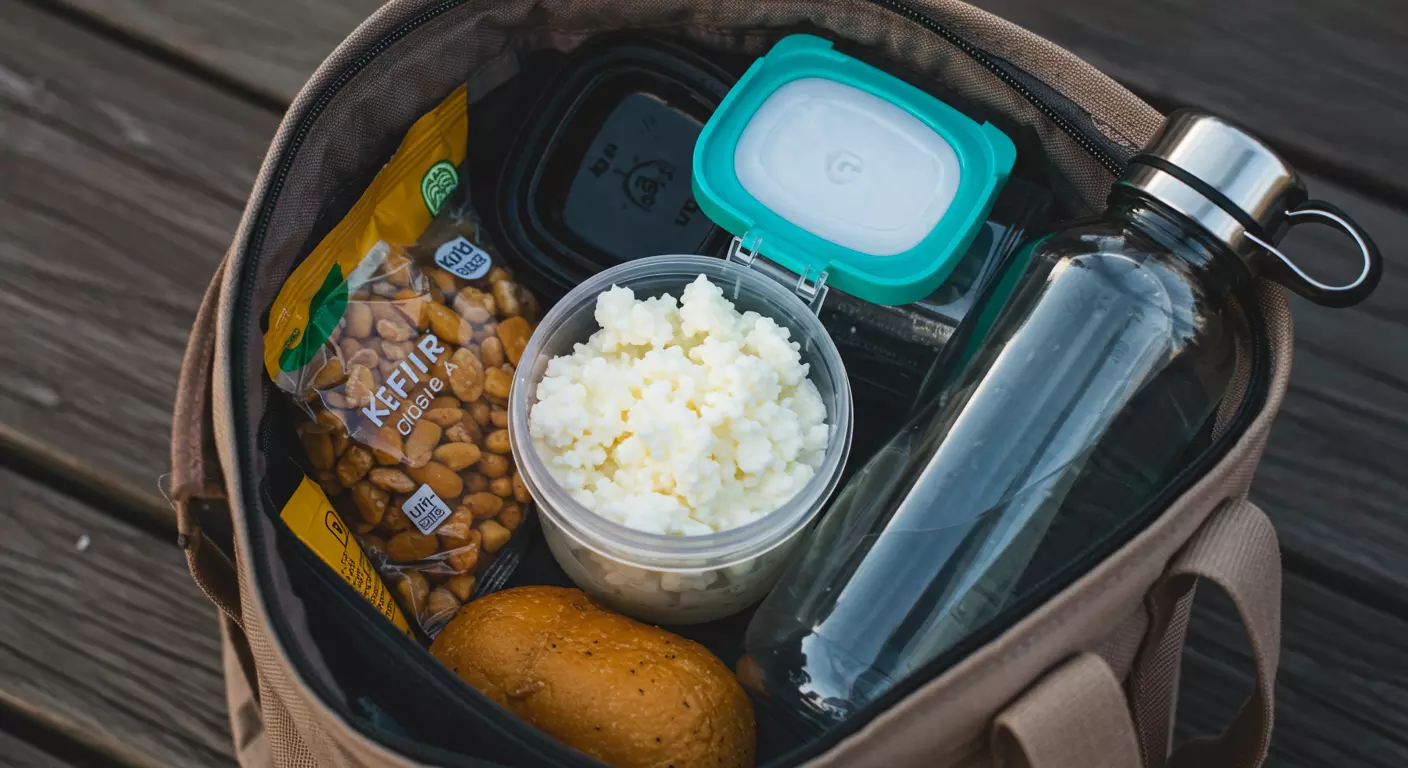
If you can’t imagine life without fresh kefir while traveling, you can take your grains along.
- Pack them in a travel-safe container with a bit of milk.
- Ferment small batches daily.
- Great option for road trips or long stays with access to a fridge.
How to Reactivate Kefir Grains After Storage
When you return:
- Place grains in fresh milk.
- Ferment for 24 hours, strain, and discard the first batch (it may taste sour or off).
- Repeat 2–3 times until kefir tastes normal again.
- Patience is key, grains always bounce back.
Why Grain Health Matters
Healthy grains mean:
- Consistent flavor (tangy, not bitter).
- Balanced probiotics for gut health.
- Faster fermentation and creamy texture.
Neglecting them can lead to weak, sluggish grains, or worse, losing your culture entirely.
Kefir Guide Tip
At Kefir Guide, we always remind readers: think of your grains as living companions. A little planning before travel ensures they stay strong, so you can come home to that familiar tangy taste you love.
FAQs
1. Can I store kefir grains in water while traveling?
No, storing in water starves the grains. Always use milk or dehydrate/freeze them.
2. Do kefir grains survive airport travel?
Yes, if packed carefully in milk or dried. Carry them in your hand luggage to avoid extreme temperatures in checked baggage.
3. How long can kefir grains survive without milk?
In the fridge, up to 2 weeks. Frozen, several months. Dehydrated, up to a year.
4. Do kefir grains change taste after storage?
Sometimes the first few batches may taste more sour or yeasty, but grains normalize after a few feedings.
5. What’s the safest method for beginners?
For short travel, refrigeration is the simplest and safest option.