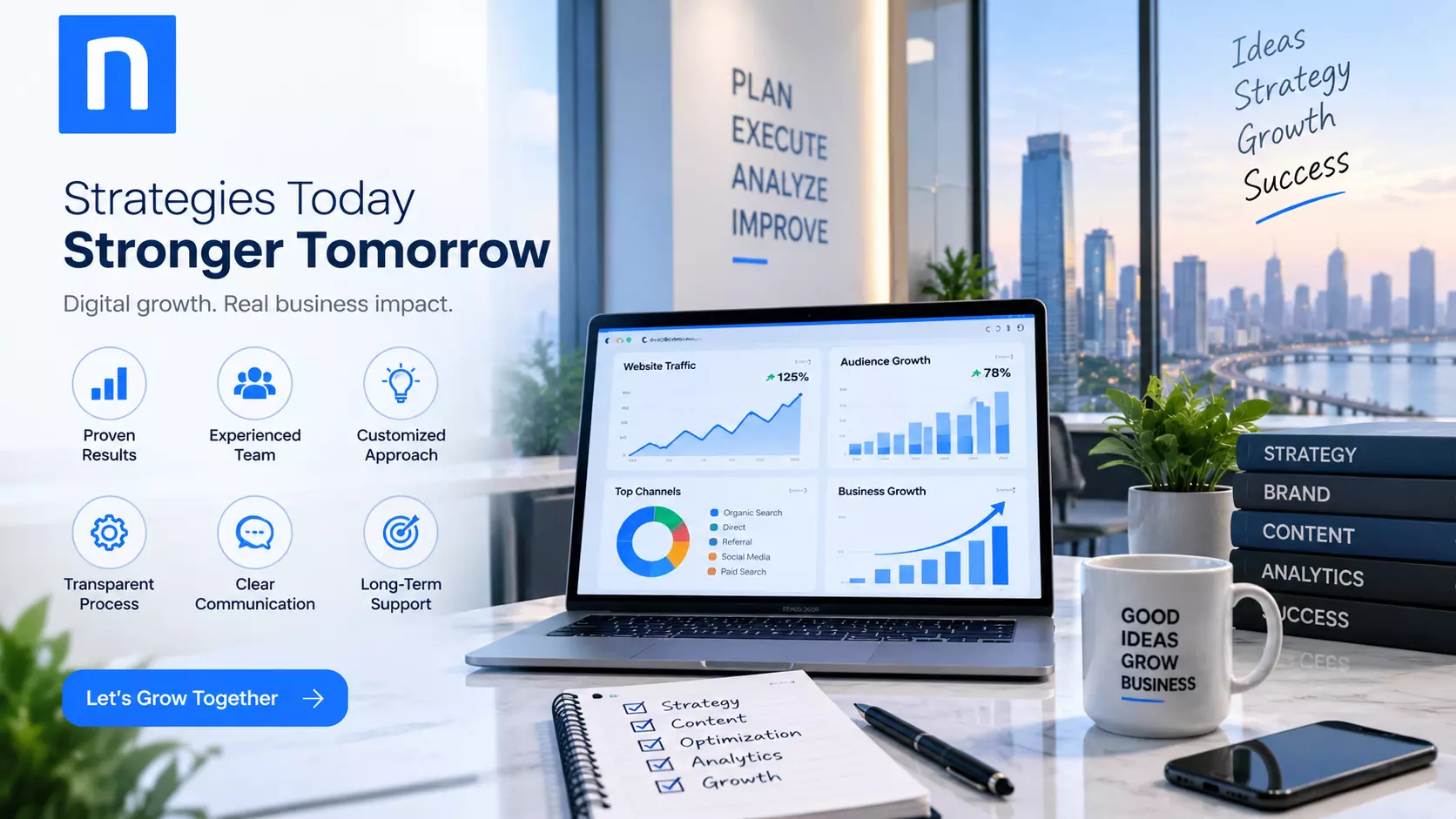
How Local SEO Turns Search Impressions Into Qualified Leads
Appearing in local search results can help a business reach people who are actively looking for nearby products or services. However, visibility alone does not guarantee business growth.
A company may receive search impressions, appear on Google Maps, or attract website visits without generating enough calls, appointment requests, quotation requests, or sales enquiries.
The real value of local search optimization lies in connecting the right audience with the right business information and making it easy for potential customers to take the next step.
This requires a combination of accurate business listings, relevant service pages, trustworthy customer reviews, clear calls to action, and a straightforward enquiry process.
Businesses evaluating a Best Local SEO Company Mumbai should consider how an SEO strategy connects local visibility with measurable business outcomes.
Instead of focusing exclusively on rankings or impressions, the approach should help attract relevant visitors, build trust, and convert genuine customer interest into qualified enquiries.
This article explains how businesses can improve the journey from local search impressions to sales opportunities, measure lead quality, and identify practical improvements that support sustainable growth.
Understand the Difference Between Local Visibility and Qualified Leads
Local search visibility refers to how frequently a business appears for relevant searches involving its services, products, or location. Qualified leads are potential customers whose requirements align with the business's actual offerings and service capabilities.
These outcomes are related, but they are not the same.
For example, a plumbing company in Thane may receive impressions for searches related to plumbing services across Mumbai. However, if the company serves only selected areas, many of those impressions may not translate into useful enquiries.
Similarly, a web development agency may attract visitors looking for free templates when its primary objective is to generate enquiries from businesses seeking professional website development.
The goal is not simply to attract more visitors. It is to attract people whose needs, location, budget expectations, and intended actions are reasonably aligned with the business.
Businesses should distinguish between the following stages:
- Impressions: How often a business listing or web page appears in relevant search results.
- Clicks and visits: How many people select the result or visit the website.
- Engagement: Whether visitors explore service information, contact details, or other relevant pages.
- Enquiries: Whether visitors call, submit a form, request a quotation, or book an appointment.
- Qualified leads: Whether those enquiries meet the business's criteria for a potential customer.
- Conversions: Whether qualified leads progress to a booking, purchase, or other defined business outcome.
Understanding these stages helps businesses identify where potential customers are dropping out of the journey.
Optimize Google Business Profile for Relevant Local Searches
Google Business Profile is an important component of local search visibility because it helps eligible businesses manage information displayed through Google Search and Maps.
An incomplete profile can create uncertainty for customers. Missing opening hours, outdated telephone numbers, or unclear service descriptions may discourage someone from contacting the business.
Businesses should review their profile regularly to ensure that the information is accurate and useful.
Maintain accurate business information
Check that the business name, address or service area, telephone number, opening hours, website link, and business categories correctly represent the actual operation.
For example, a dental clinic in Kandivali should provide accurate location details, contact information, opening hours, and relevant service information.
Businesses that serve customers at their premises should represent their physical location accurately.
Service-area businesses should configure their profiles according to Google's applicable guidelines rather than using virtual addresses or misleading locations.
Choose relevant business categories and describe services clearly
Categories help communicate the type of business being represented. Select the most appropriate primary category and add secondary categories only when they genuinely apply.
Service descriptions should explain what customers can expect without excessive promotional language or unsupported claims.
A home repair company, for example, can describe the types of repairs it handles, the areas it serves, and the appropriate way to request assistance.
Add useful, genuine photographs
Relevant photographs can help customers recognise a business, understand its premises, or review examples of its work.
Images should accurately represent the business. They should not mislead customers about its facilities, staff, products, or services.
These improvements can make a profile more informative, although completing a profile does not guarantee higher rankings or a specific number of enquiries.
Build Service Pages That Match Local Customer Intent
When customers click a local search result, they should reach a page that directly addresses their needs.
Sending every visitor to a generic homepage can create unnecessary friction, especially when the search relates to a specific service or location.
For example, someone searching for website redesign services may expect to find information about redesign processes, deliverables, relevant experience, and how to request a consultation.
A dedicated service page can provide this information more effectively than a broad company introduction.
Explain the service and its benefits clearly
A useful service page should answer several basic questions:
- What service does the business provide?
- Who is the service intended for?
- What customer problem does it address?
- Which locations does the business genuinely serve?
- What does the process involve?
- How can a potential customer make an enquiry?
The content should be specific enough to help visitors decide whether the business is relevant to their requirements.
Use location information naturally
Local references can help communicate where a business operates. However, repeatedly inserting neighbourhood names into every paragraph can make content difficult to read.
A business serving Andheri, Powai, and Ghatkopar should explain its genuine coverage clearly and create separate location pages only when each page can provide useful, distinct information.
Avoid publishing large numbers of near-identical pages that change only the location name. Such pages can offer little value to users and may weaken the overall content strategy.
Make the next step obvious
Each important service page should include an appropriate action, such as requesting a quotation, scheduling a consultation, calling the business, or submitting an enquiry.
The wording should explain what happens next. A button labelled "Request a Service Quote" communicates more clearly than a generic "Click Here" link.
The action should also be easy to complete on mobile devices.
Turn Website Visitors Into Enquiries With Clear Calls to Action
A visitor may be interested in a service but still leave without contacting the business if the next step is unclear.
Calls to action help bridge the gap between information and action. Their effectiveness depends on relevance, placement, clarity, and the effort required to respond.
Match the action to the customer's readiness
Not every visitor is ready to purchase immediately.
Someone comparing agencies may prefer to request a consultation, while a customer who already knows the required service may want a direct quotation.
Businesses should provide an appropriate next step based on the purpose of the page and the likely needs of its audience.
Reduce unnecessary form fields
Enquiry forms should collect enough information to support a useful response without asking for unnecessary details.
A basic form may need a name, an email address or telephone number, and a brief description of the requirement. More complex projects may require additional information when it helps assess the enquiry.
Forms should include clear field labels, useful error messages, and a confirmation after successful submission.
Offer accessible contact options
Some customers prefer calling, while others prefer submitting a form or sending a message.
Where appropriate, provide clearly visible contact details and ensure that telephone links work on mobile devices.
The website should also explain when customers can reasonably expect a response, provided the business can meet that expectation.
These improvements help reduce friction between a visitor's interest and the act of making contact.
Read: Seo Agency Near Me — Proven Local SEO Services for
Use Customer Reviews to Build Trust and Support Decisions
Customers often compare multiple businesses before selecting a provider. Genuine reviews can help them understand other customers' experiences and assess whether a business may suit their needs.
Businesses should encourage honest feedback from actual customers and respond professionally to both positive and negative reviews.
Request authentic feedback
A business can invite customers to leave a review after a genuine transaction or completed service. It should not pressure customers to provide positive feedback or offer prohibited incentives in exchange for favourable ratings.
Reviews should reflect real experiences rather than fabricated testimonials or purchased ratings.
Respond constructively to customer concerns
A professional response can acknowledge an issue, explain the appropriate next step, and invite the customer to continue the discussion through a suitable private channel when necessary.
Responses should avoid exposing personal information or arguing with reviewers.
Use trust signals throughout the website
Businesses can also support customer confidence through genuine testimonials, relevant project examples, accurate business details, transparent policies, and clear service descriptions.
Any testimonials or case studies should be authentic and presented with appropriate permission.
Trust-building information is particularly important when customers are comparing providers for expensive, complex, or ongoing services.
Improve Local Search Visibility Through Relevant Content
Useful content helps businesses answer customer questions before a sales conversation begins.
For example, a local electrician might publish guidance on recognising common electrical problems, understanding when professional inspection is necessary, or preparing for a service visit.
A digital agency might explain the differences between website redesign and website maintenance, outline common project requirements, or describe how businesses can prepare for a consultation.
This content can attract people researching a problem and guide them toward a relevant service page when appropriate.
Focus on real customer questions
Businesses can identify useful topics through customer calls, enquiry forms, sales conversations, Search Console data, and relevant keyword research tools.
The content should answer the question directly and provide practical information without turning every paragraph into a sales pitch.
Link supporting content to relevant services
A helpful article can link to a service page when the connection genuinely supports the reader.
For example, an article explaining website performance problems might link to a relevant website maintenance service. The link should be natural and should not interrupt the reader's understanding.
Keep content accurate and updated
Outdated service details, broken links, and inaccurate advice can undermine trust.
Review important pages periodically and update them when business offerings, procedures, or relevant information change.
Local content should demonstrate genuine relevance to the audience rather than simply repeating city and neighbourhood names.
Strengthen Local Business Listings and Contact Consistency
Potential customers may discover a business through Google, online directories, industry platforms, social media pages, or referral websites.
Conflicting contact information can create uncertainty and make it harder for customers to reach the right business.
Businesses should maintain a reliable record of their official name, address where applicable, telephone number, website URL, and operating hours.
Important listings should be reviewed for:
- Incorrect or outdated telephone numbers.
- Old business addresses.
- Duplicate business profiles.
- Broken website links.
- Incorrect opening hours.
- Inaccurate service descriptions.
Prioritise relevant, trustworthy platforms instead of submitting information indiscriminately to every available directory.
Consistency supports customer confidence and helps prevent avoidable contact problems. However, listing consistency alone does not guarantee rankings or sales.
Measure the Journey From Impressions to Qualified Enquiries
A local SEO strategy should be evaluated using data that connects search visibility with business outcomes.
Tracking only impressions can make a campaign appear successful even when it produces few relevant enquiries.
Businesses should establish a measurement process that covers the customer journey.
Monitor local search performance
Google Business Profile provides performance information for eligible profiles, which may include interactions such as calls, website clicks, and direction requests.
Google Search Console can show search impressions, clicks, click-through rates, and average positions for website pages and queries.
These metrics help identify whether visibility is increasing and which pages attract relevant search interest. They do not independently prove that a lead is qualified or that a sale will occur.
Track website conversions
Website analytics can help businesses measure important actions such as completed enquiry forms, appointment bookings, and clicks on telephone links.
Tracking should be configured carefully to avoid counting duplicate submissions or treating every button click as a completed lead.
Where appropriate, businesses can use campaign tracking parameters to understand which marketing activities contributed to a visit.
Evaluate lead quality
The sales or customer service team should record whether enquiries match the business's target services, locations, and customer requirements.
Useful indicators include:
- Number of qualified enquiries.
- Percentage of enquiries that meet qualification criteria.
- Appointment or quotation requests.
- Lead-to-customer conversion rate.
- Revenue associated with relevant leads, where measurable.
- Cost per qualified lead when campaign costs are available.
For example, a business may receive fewer enquiries after refining its service-area targeting but find that a higher proportion of those enquiries come from customers it can actually serve.
That may represent a useful improvement even if total enquiry volume remains unchanged.
Improve Lead Quality With a Simple Qualification Process
Generating an enquiry is only one stage of the customer journey. Businesses also need a practical process for determining whether the enquiry represents a genuine opportunity.
Qualification criteria should reflect the business model rather than relying on a universal checklist.
A service provider might evaluate whether the customer needs a service it offers, operates within a supported location, and has a realistic project requirement.
Ask relevant questions at the right time
Forms can include a short question about the required service or project type when this information helps route the enquiry.
However, asking too many questions at the beginning can discourage submissions. Businesses should balance lead qualification with ease of use.
Respond promptly and consistently
Enquiries should reach the appropriate team and receive a response within a reasonable timeframe.
Businesses can establish a process for assigning leads, recording follow-up activity, and tracking outcomes. Automated confirmations may reassure customers that their enquiry was received, but they should not replace the actual response.
Review unsuccessful enquiries
When enquiries fail to convert, examine the reasons where reliable information is available.
Potential causes include mismatched expectations, unclear pricing information, unavailable services, delayed responses, or a poor fit between the business and the customer.
These insights can inform improvements to local targeting, website messaging, and the qualification process.
Evaluate an SEO Agency Based on Business Outcomes
Businesses considering external SEO support should look beyond rankings and traffic reports.
An agency should be able to explain how its work supports the full customer journey, from local discovery to an enquiry that the business can realistically serve.
Best Local SEO Company Mumbai is a search phrase businesses may use when exploring local SEO providers, but choosing a partner requires practical evaluation of its proposed methods and reporting approach.
Consider whether the agency:
- Audits the website and business profile before recommending changes.
- Understands the services, target customers, and genuine service areas.
- Identifies relevant local search opportunities.
- Improves service pages and enquiry pathways.
- Explains its approach to reviews and business listings.
- Measures conversions and qualified enquiries where data permits.
- Provides transparent reporting and realistic expectations.
- Avoids guaranteed rankings and unsupported performance claims.
A suitable partner should explain which changes are recommended, why they matter, how they will be implemented, and how their effects will be assessed.
No agency can guarantee a particular ranking, number of leads, or sales result. Local search performance depends on several factors, including
competition, relevance, website quality, customer demand, and the business's ability to serve its audience.
Common Mistakes That Prevent Local Search Visibility From Generating Leads
Several avoidable issues can weaken the relationship between local search visibility and business enquiries.
- Focusing only on rankings: High positions do not guarantee that visitors will contact the business or become customers.
- Using a generic homepage for every query: Visitors may struggle to find information relevant to the service they searched for.
- Publishing inaccurate business details: Incorrect contact information and operating hours can prevent customers from reaching the business.
- Creating misleading location pages: Pages for areas the business does not serve can attract irrelevant traffic and damage trust.
- Using complicated enquiry forms: Unnecessary fields and confusing instructions can discourage submissions.
- Ignoring mobile usability: Difficult navigation and inaccessible contact options create barriers for mobile visitors.
- Failing to measure lead quality: Total enquiries alone do not reveal whether the campaign is attracting suitable customers.
- Making unsupported claims: Misleading promises about rankings, results, or service capabilities can harm credibility.
Addressing these issues requires ongoing monitoring, accurate information, and a clear understanding of what constitutes a valuable enquiry for the business.
Conclusion
Turning local search impressions into qualified sales enquiries requires a strategy that connects visibility with relevance, trust, and ease of action.
Accurate business listings help customers find essential information, useful service pages address their needs, and clear calls to action make it easier to initiate contact.
Businesses should also encourage genuine reviews, maintain consistent contact details, measure conversions, and establish a practical process for qualifying and following up on enquiries.
The most useful measure of success is not simply how often a business appears in search results. It is whether the strategy helps the business attract relevant customers and create genuine sales opportunities.
By combining local optimization with effective website design, reliable measurement, and consistent customer follow-up, businesses can make better use of their online visibility and improve the quality of their enquiries over time.
FAQs
1. What is a qualified sales enquiry in local SEO?
A qualified sales enquiry comes from a potential customer whose needs align with the business's actual services, service area, and other relevant qualification criteria. It represents a more meaningful opportunity than an enquiry that cannot realistically become a customer.
2. Does Google Business Profile help generate local enquiries?
A complete and accurate Google Business Profile can make essential business information easier to find and provide customers with ways to call, visit a website, or request directions. The number and quality of enquiries depend on relevance, customer demand, competition, and the overall customer experience.
3. How can a business convert more local search visitors into leads?
Businesses can improve service-page relevance, display accurate contact details, use clear calls to action, simplify enquiry forms, provide genuine trust signals, and ensure the website works well on mobile devices. Performance should be assessed using completed enquiries and lead quality.
4. Which metrics should businesses monitor for local SEO lead generation?
Useful metrics include search impressions, clicks, website visits, business profile interactions, completed forms, calls, qualified enquiries, and lead-to-customer conversion rates. Businesses should interpret these metrics together to understand both visibility and commercial value.
5. How long does it take for local SEO to generate qualified enquiries?
The timeline varies according to competition, the business's existing online presence, service relevance, website condition, and the changes implemented. Some improvements may produce earlier results than others, but no fixed timeline or volume of qualified enquiries can be guaranteed.