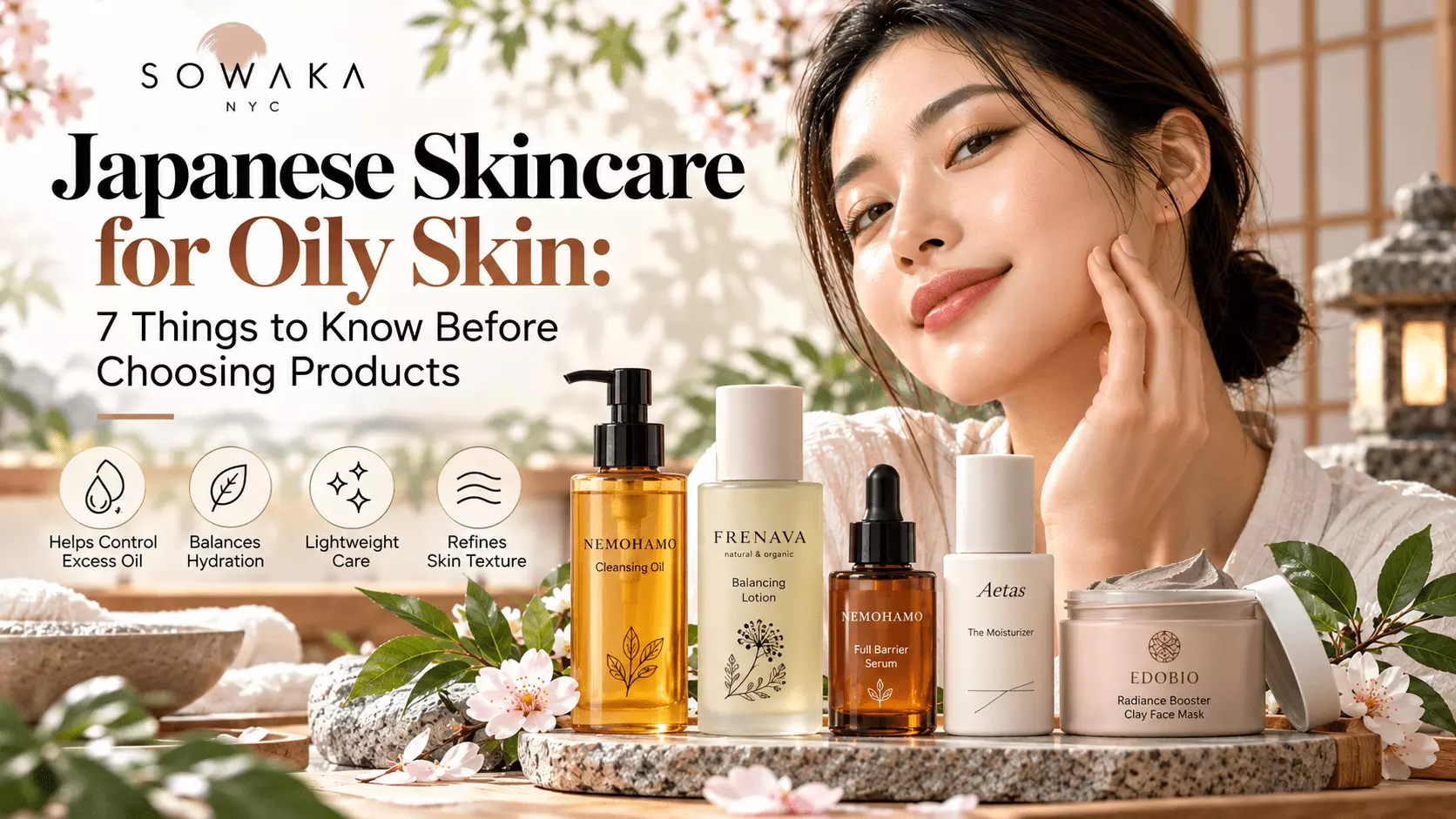
Japanese Skincare for Oily Skin: 7 Things to Know Before Choosing Products
Oily skin calls for balance, not subtraction. A good routine removes excess sebum, sunscreen, and sweat without leaving skin tight, then replaces water so the skin stays comfortable.
Japanese skincare is often associated with gentle cleansing, layered hydration, and consistency, habits that suit oily skin well. They are habits, though, not rules, and no Japanese product will permanently reduce oil production.
Sensible japanese skincare for oily skin follows the principles dermatologists commonly recommend: gentle cleansing, no hard scrubbing, non-comedogenic products where appropriate, and moisturizer. Here are seven things to know before you buy.
1. Oily skin still needs hydration
Sebum is the oil your glands produce. Hydration is the water content of the skin. They are separate, so skin can look shiny and still feel tight or dehydrated underneath.
Removing as much oil as possible does not make skin healthier, and it can leave the barrier irritated. Aim for comfortable skin, not matte, squeaky skin.
2. Start with a gentle cleanser
Harsh cleansers and aggressive scrubbing can irritate oily skin without solving the underlying shine. Choose a gentle gel or soft foaming cleanser and wash twice a day at most, plus after heavy sweating.
If you wear water-resistant sunscreen or makeup, an oil-based cleanser in the evening can help, provided you rinse thoroughly and your skin tolerates it.
3. Look for lightweight hydration
Gels, lotions, emulsions, and fluid moisturizers often feel more comfortable than heavy creams. Humectants such as hyaluronic acid and glycerin attract water, while ceramides support the skin barrier. Individual response varies, so judge a product by how your skin feels hours later, not just in the first minute.
4. What should a Japanese face cream for oily skin actually look like?
A cream is not automatically wrong for oily skin. Texture, formulation, and the amount you apply matter more than the word on the jar. A thin layer of a lightweight gel-cream may feel better than a rich, occlusive cream.
Non-comedogenic labeling can be a helpful signal where it appears, but it is not a promise for every person, so patch test and watch how your skin responds.
5. Don't overload your routine with actives
Salicylic acid, AHAs, retinoids, and vitamin C each have a place, but stacking them can cause stinging, flaking, and a compromised barrier.
Introduce one at a time, increase frequency gradually, and pay attention to tolerance. If you use prescribed acne treatments, ask your dermatologist before adding anything new.
Read: Top 10 Must-Have Skincare Products for Glowing Skin in
6. Sunscreen still matters
Oily skin still needs sun protection. Look for lightweight textures, and oil-free or non-comedogenic labeling if you prefer it.
Sunscreen reduces UV exposure but does not prevent every sign of aging or pigmentation on its own, so pair it with shade and sensible habits. The best sunscreen is one comfortable enough that you will actually wear it.
7. Choose products based on your skin, not the label
"For oily skin" says little by itself. Before buying japanese skincare for oily skin, ask yourself: Is the shine everywhere, or mostly in the T-zone? Is my skin also sensitive?
Does it feel tight after cleansing? Do I wear makeup or use acne treatments? How do humidity and climate change things? Does fragrance or an active ingredient bother me?
Your answers narrow the field better than any label. Retailers such as Sowaka NYC organize Japanese beauty by category, which makes comparing textures and ingredient lists easier. Painful or persistent breakouts deserve a dermatologist's advice, not another product.