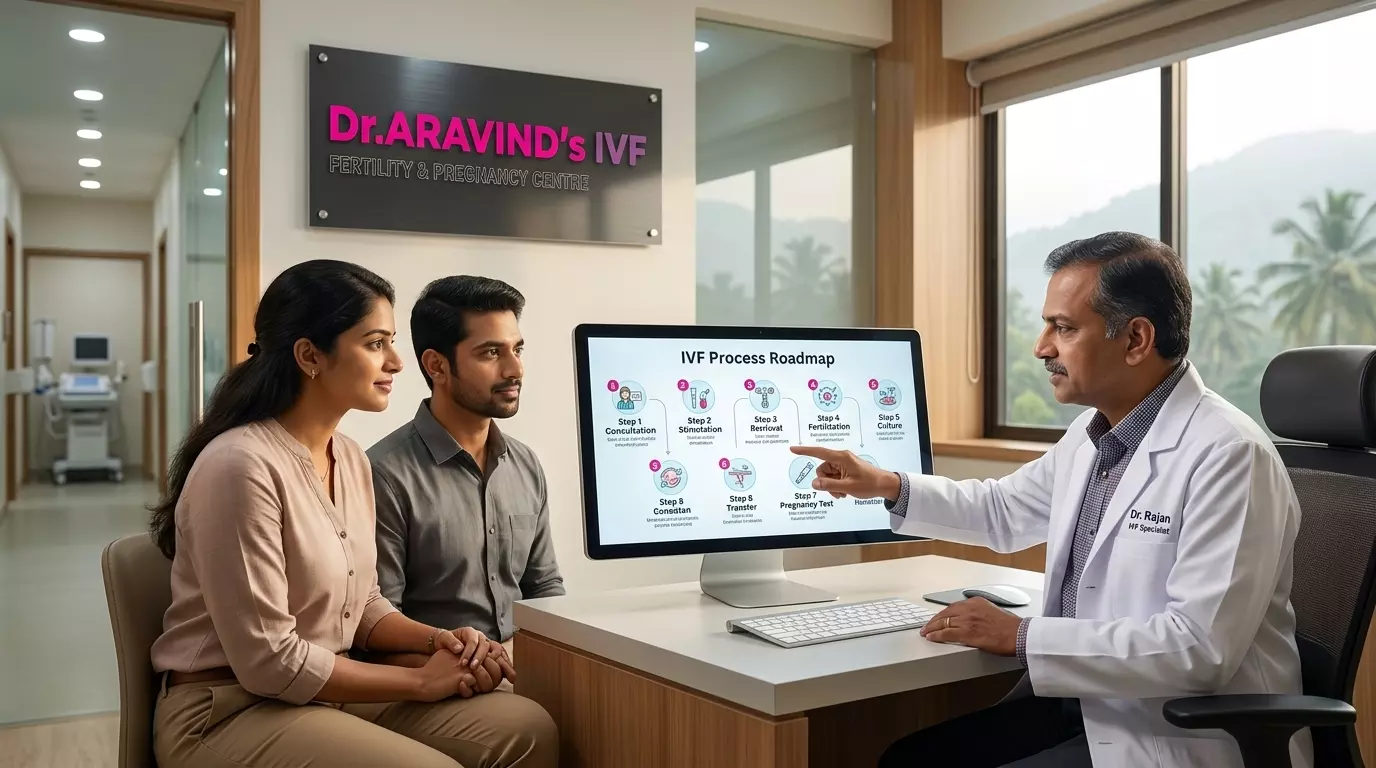
Fertility Clinic in Palakkad on What to Expect During IVF Process
Starting IVF treatment can feel both exciting and overwhelming. Many couples have questions about what happens during each stage, how long the treatment takes, and what they should expect along the way. Understanding the process before beginning treatment helps reduce uncertainty and allows couples to approach each step with greater confidence.
If you are searching for a Fertility Clinic in Palakkad, choosing an experienced fertility team ensures that you receive clear guidance, personalized care, and continuous support throughout your treatment journey. Every IVF cycle is planned according to the couple's unique fertility condition, making individual assessment an essential first step.
When Is IVF Recommended?
In Vitro Fertilization (IVF) is an advanced fertility treatment that may be recommended for couples experiencing specific reproductive challenges.
Common reasons include:
- Blocked fallopian tubes
- Severe male infertility
- Ovulation disorders
- Endometriosis
- Reduced ovarian reserve
- Unexplained infertility
- Repeated unsuccessful fertility treatments
A fertility specialist evaluates the couple's overall reproductive health and medical records before deciding if IVF is suitable.
Step 1: Initial Fertility Consultation
The IVF journey begins with a detailed consultation.
During this visit, the fertility specialist discusses:
- Medical history
- Previous pregnancies or fertility treatments
- Menstrual history
- Lifestyle factors
- Family medical history
Both partners usually undergo fertility evaluation before treatment planning begins.
Step 2: Fertility Testing
Accurate diagnosis helps create an individualized treatment plan.
Investigations may include:
Female Evaluation
- Hormone testing
- AMH assessment
- Ultrasound scan
- Ovulation assessment
- Uterine evaluation
Male Evaluation
- Semen analysis
- Hormone testing if required
- Additional investigations based on medical history
These reports help determine the most suitable treatment strategy.
Step 3: Ovarian Stimulation
The next stage in the IVF process step by step involves controlled ovarian stimulation.
Special fertility medications encourage the ovaries to produce multiple mature eggs during a treatment cycle.
Throughout this phase, the fertility specialist monitors progress using:
- Ultrasound scans
- Blood tests
- Follicle measurements
Regular monitoring allows medication to be adjusted according to the individual's response.
Step 4: Egg Retrieval
Once the eggs are mature, they are collected through a planned medical procedure.
Egg retrieval is usually:
- Performed under sedation or anesthesia
- Minimally invasive
- Completed within a short duration
A brief recovery is typically followed by same-day discharge for most patients.
Step 5: Fertilization in the Laboratory
After egg retrieval, the collected eggs are combined with prepared sperm inside a specialized embryology laboratory.
Depending on the fertility diagnosis, fertilization may occur through:
- Conventional IVF
- Intracytoplasmic Sperm Injection (ICSI)
The embryos are carefully monitored over the next few days by experienced embryologists.
Step 6: Embryo Transfer
- The embryo transfer process is one of the most important stages of IVF.
- A carefully selected embryo is gently placed into the uterus using a thin catheter. It is a minimally invasive procedure that is usually completed in a short time.
- After embryo transfer, patients receive instructions regarding medications, daily activities, and follow-up appointments.
Step 7: Pregnancy Test
- Approximately two weeks after embryo transfer, a blood test is performed to determine whether implantation has occurred.
- Waiting for the results can be emotionally challenging, and fertility specialists continue to provide guidance and support during this period.
Read: IVF Treatment in India: A Journey of Hope and Possibility
How to Prepare for IVF
While every treatment plan is unique, maintaining good overall health may support the IVF journey.
Helpful recommendations include:
- Eat a balanced diet
- Maintain a healthy body weight
- Exercise moderately
- Get adequate sleep
- Avoid smoking and excessive alcohol
- Take prescribed medications as directed
- Attend all scheduled monitoring appointments
Following medical advice carefully helps ensure the treatment progresses as planned.
Choosing the Right Fertility Clinic
Selecting the right Fertility Clinic in Palakkad is an important decision for couples planning IVF treatment.
Look for a clinic that offers:
Experienced Fertility Specialists
A knowledgeable medical team can explain each stage clearly and provide individualized treatment.
Advanced Embryology Laboratory
Modern laboratory facilities support embryo development and quality assessment.
Personalized Treatment Planning
Every IVF cycle should be designed according to the patient's fertility condition and reproductive goals.
Continuous Patient Support
Open communication and emotional guidance help couples feel informed throughout the treatment process.
Conclusion
Understanding the IVF process helps couples approach treatment with realistic expectations and greater confidence. Every stage, from fertility assessment to embryo transfer, is carefully planned to address the unique needs of each couple.
If you are looking for a Fertility Clinic in Palakkad, choose a fertility centre that offers experienced specialists, advanced reproductive technology, and personalized care.
With the right medical guidance and continuous support, couples can move forward with clarity and hope. Book an Appointment with an experienced fertility specialist to discuss your fertility concerns and understand the IVF process in detail.
Frequently Asked Questions
1. How long does an IVF cycle usually take?
The length of an IVF cycle typically extends over several weeks and is influenced by the patient's customized treatment plan.
2. Is egg retrieval a painful procedure?
Egg retrieval is usually performed under sedation or anesthesia, making the procedure comfortable for most patients.
3. Can normal activities be resumed after embryo transfer?
Most women can return to their normal routine with guidance from their fertility specialist, while avoiding strenuous activities if advised.
4.Is IVF suitable for every couple facing fertility challenges?
No. IVF is suggested only after a detailed fertility evaluation and when it is considered the most appropriate treatment option.
5. Why are regular scans required during IVF?
Ultrasound scans help monitor follicle growth, adjust medications when necessary, and determine the best time for egg retrieval.