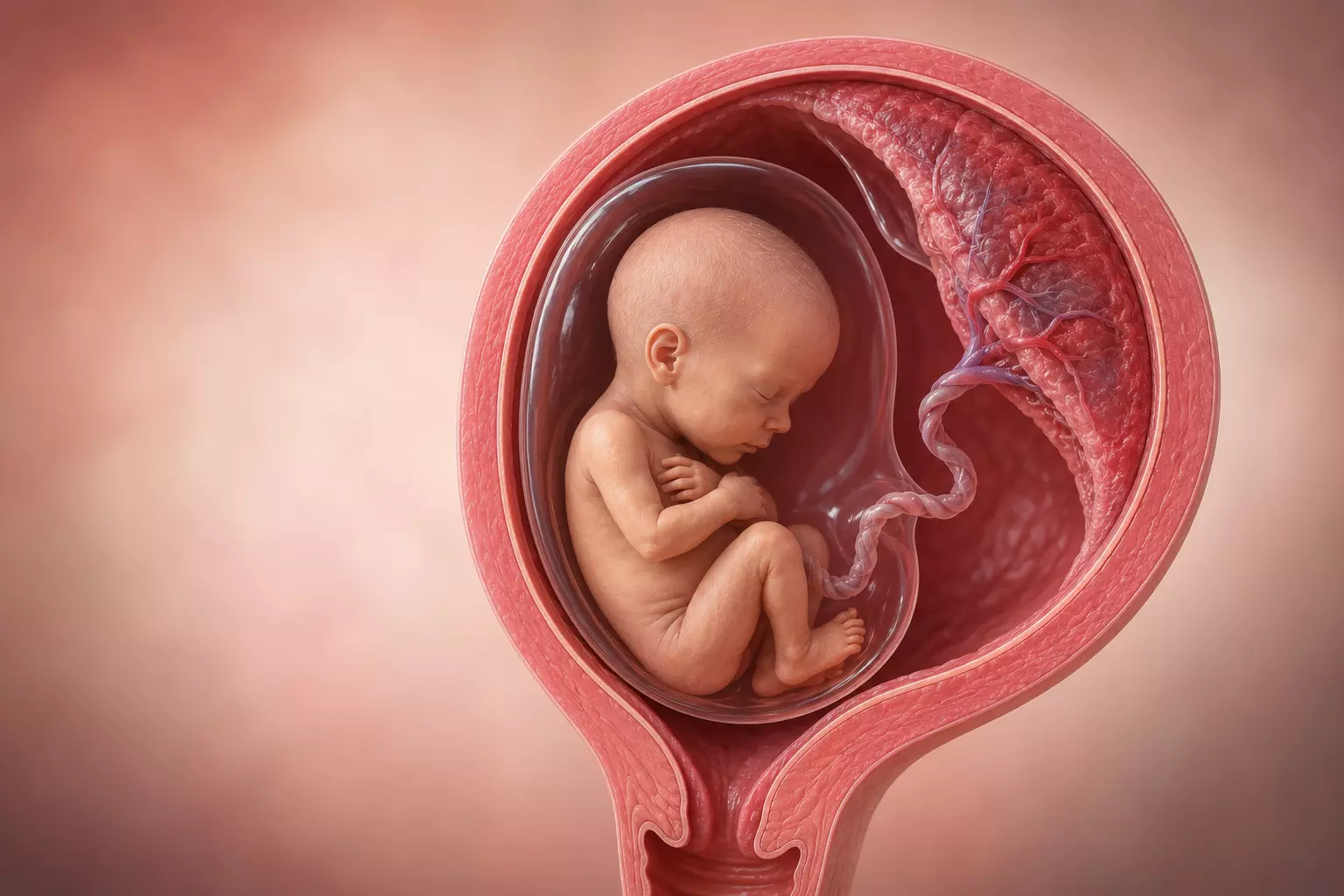
IUGR Causes: What Leads to Restricted Foetal Growth?
By Dr. Sowjanya Aggarwal | MBBS, MS (Obs & Gynae), Fellowship in Reproductive Medicine | Founder, Femmenest IVF Clinic, Delhi
Intrauterine Growth Restriction, IUGR, is the situation where a baby that has not yet been born does not manage to reach the growth its own genetics had set out for it inside the womb.
Somewhere around 10–15% of all pregnancies run into it, and it feeds a real share of the serious problems around birth - the stillbirths, the birth asphyxia, and the developmental and metabolic trouble that can trail a child for years afterwards.
So getting a proper handle on what causes IUGR is where it all starts, because that is what lets you catch it early, manage it the right way, and turn the outcome around for the mother and the baby both.
What Is IUGR and How Is It Different from a Constitutionally Small Baby?
IUGR - the other name you will hear for it is Foetal Growth Restriction, FGR - describes a foetus whose estimated weight has dropped below the 10th percentile for its gestational age, and where on top of that there is actual evidence of growth being held back by something pathological, which is usually what the Doppler assessment goes on to show.
Now the distinction that really matters here is between IUGR and a constitutionally small-for-gestational-age (SGA) baby. The SGA baby is simply small - growing along perfectly well for its own genetic build, the Doppler values normal, the amniotic fluid where it should be.
True IUGR is a different animal, because the foetal wellbeing is genuinely compromised, and the risks it carries run a good deal higher.
What Are the Two Types of IUGR?
- Symmetric IUGR: here every foetal measurement - the head, the abdomen, the limbs - has come down in proportion together, it tends to set in early in the pregnancy, and more often than not it points back to a foetal cause such as a chromosomal abnormality or an early congenital infection
- Asymmetric IUGR: this one is the commoner of the two, and here the abdomen ends up out of proportion, smaller than the head and the limbs - the "brain-sparing" pattern, where the foetal blood flow gets steered preferentially towards the brain - and it usually reflects placental insufficiency that has come on later
What Are the Maternal Causes of IUGR?
The mother's own health and the way she lives feed straight through into how the foetus grows, and they do it along three lines: the blood supply, the delivery of oxygen, and the transfer of nutrition.
Hypertensive and Vascular Disorders
- Pre-eclampsia and chronic hypertension: these sit among the commonest causes of placental insufficiency and IUGR there are - the raised maternal blood pressure cuts down the uteroplacental perfusion
- Antiphospholipid syndrome (APS): an autoimmune condition that sets off clotting in the small vessels, and that clotting badly impairs the placental circulation
Nutritional and Metabolic Factors
- Severe maternal anaemia: it brings down the oxygen-carrying capacity of the blood and so the foetus does not get oxygenated properly
- Malnutrition: not enough calories, and not enough of the micronutrients either - folate, iron, zinc, protein in particular
- Poorly controlled diabetes: this one can, oddly enough, impair placental function in some cases, though far more often what it does is produce a large baby rather than a small one
Lifestyle Factors
- Smoking: it constricts the placental vessels and it drives up the foetal carbon monoxide levels - one of the most modifiable and one of the most damaging IUGR risk factors going
- Alcohol use: it impairs foetal cellular growth directly, and there is no level of it in pregnancy that has been established as safe
- Substance use: cocaine, heroin, methamphetamine - every one of them cuts placental blood flow and foetal growth
Infections and Medical Conditions
- TORCH infections: Toxoplasma, Rubella, Cytomegalovirus (CMV), and Herpes simplex, if they are picked up during the pregnancy, can restrict foetal growth directly, through the placental damage and the foetal infection they cause
- Chronic kidney disease: it lowers the maternal blood volume and the uterine perfusion with it
- Severe cardiac or pulmonary disease: this impairs the oxygenation of the whole system and the uterine blood flow along with it
- Multiple pregnancy: twins and the higher-order multiples are all sharing out the one set of placental resources, and that puts at least one of the foetuses at risk of IUGR
Read: IVF Treatment in India: A Journey of Hope and Possibility
What Are the Placental Causes of IUGR?
The placenta is the foetus's lifeline - its whole supply of oxygen and nutrition runs through it. So when placental function is impaired, that is the single commonest road into IUGR.
- Placental insufficiency: reduced uteroplacental blood flow, which shows up as raised resistance on the umbilical artery Doppler - the hallmark finding in the majority of IUGR cases
- Placental abruption: the placenta separates partway off the uterine wall, and that cuts down the surface actually available for exchange
- Placenta praevia: an abnormally low-lying placentation that throws off the vascular architecture and the nutrient transfer
- Velamentous or marginal cord insertion: the cord vessels are left unprotected and so they are open to compression, which drags down how efficiently the blood flows
- Placental infarcts: patches of dead tissue inside the placenta, and they take away from the total surface there is to exchange across
What Are the Foetal Causes of IUGR?
- Chromosomal abnormalities: Trisomy 18 (Edwards syndrome), Trisomy 13, and Turner syndrome turn up again and again with severe symmetric IUGR, and where the clinical picture points that way chromosomal testing may be put on the table
- Structural congenital abnormalities: a significant cardiac defect can impair the foetal circulation and with it the growth of the whole system
- Twin-to-twin transfusion syndrome (TTTS): in monochorionic - identical - twins sharing the one placenta, the vascular connections between them throw the blood flow out of balance, and that leaves one twin growth-restricted
- Congenital infections: CMV and rubella damage the developing foetal organs directly and hold the growth back
How Is IUGR Detected During Pregnancy?
IUGR gets picked up through serial growth ultrasound scans - and a single scan showing a small baby means a great deal less than a pattern seen over time, the growth arresting, the centile lines falling away. At Femmenest, our obstetric ultrasound monitoring for the at-risk pregnancies takes in:
- Foetal biometry: the head circumference, the abdominal circumference, the femur length, and the estimated foetal weight (EFW), all of it plotted out on centile charts
- Umbilical artery Doppler: raised placental resistance, which shows as reduced, or absent, or reversed end-diastolic flow - a critical signal that things are deteriorating
- Middle cerebral artery (MCA) Doppler: this one picks out the brain-sparing pattern that is so characteristic of asymmetric IUGR
- Ductus venosus Doppler: it reads the foetal cardiovascular reserve in the severe cases, the ones coming up on delivery decisions
- Amniotic fluid assessment: oligohydramnios - reduced fluid volume - very often rides along with significant growth restriction
How Is IUGR Managed?
What the management looks like comes down to the gestational age, the severity, the Doppler findings, and the cause underneath it all:
- Increased surveillance: the scan frequency stepped up to every 1–2 weeks, with Doppler studies done at each visit
- Treating maternal causes: getting the blood pressure right, correcting the anaemia, treating the infection, adjusting the medications
- Hospital admission: for the deteriorating Doppler indices, or the very preterm IUGR, the cases where the monitoring has to be continuous
- Antenatal corticosteroids: to speed the foetal lung maturation along if a preterm delivery is on the cards
- Timing of delivery: this is the central call the whole thing turns on - weighing the risk of the baby carrying on deteriorating inside against the risks that come with prematurity - and it is guided by the RCOG and ACOG protocols
There is, as things stand, no medication that reverses placental insufficiency itself. Which is exactly why prevention still counts for so much - careful antenatal care, the risk factors flagged early in the pregnancy, and a proper look at the precautions from the earliest stages of pregnancy.