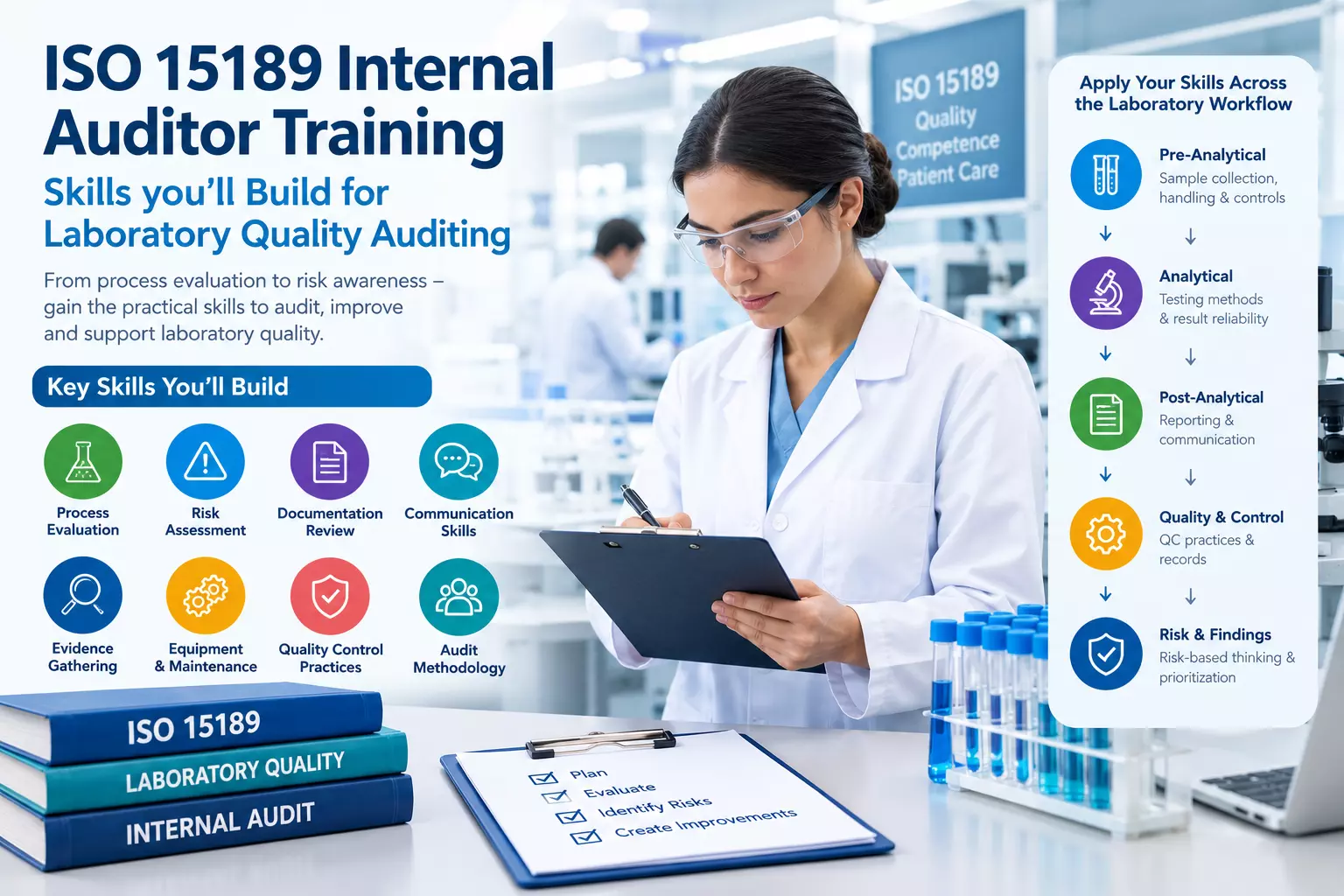
ISO 15189 Internal Auditor Training: Skills you’ll Build for Laboratory Quality Auditing
Understanding the skills gained through ISO 15189 internal auditor training can help professionals see its practical value. This training goes beyond basic audit concepts.
Participants learn how to evaluate processes within medical laboratory environments. They also develop skills in risk assessment, documentation, communication, and evidence gathering.
Therefore, understanding these skills can help professionals see how the training applies to real laboratory work.
Why Understanding These Skills Matters
Moving Beyond General Audit Knowledge
Laboratory auditing requires more than following a checklist. Instead, auditors must understand processes, risks, and quality controls.
Therefore, learning about specific audit skills provides a clearer view of the training. It also helps professionals understand what they can apply at work.
Connecting Training with Workplace Value
Audit skills can support many laboratory responsibilities. For example, professionals may use them during process reviews and quality improvement activities.
As a result, the training can provide value beyond formal internal audits.
Recognizing the Breadth of Skills
ISO 15189 auditing involves several areas of competence. These include technical evaluation, risk awareness, documentation, and communication.
In addition, auditors need to evaluate evidence objectively. Therefore, the training develops a broader skill set than simple inspection.
Laboratory Process Evaluation Skills
Assessing Pre-Analytical Process Controls
The pre-analytical stage can affect laboratory results significantly. For example, problems with sample collection or handling can affect testing accuracy.
Therefore, participants learn to evaluate controls before the testing stage begins. They can also identify weaknesses that may affect result reliability.
Evaluating Analytical Methods
Laboratories need reliable methods for producing accurate results. Therefore, auditors must understand how testing methods are evaluated and controlled.
During training, participants learn to review method-related evidence. They can also assess whether processes support reliable laboratory results.
Reviewing Post-Analytical Reporting
The process does not end when testing is complete. Results must also be reviewed, reported, and communicated correctly.
Therefore, participants learn to evaluate post-analytical processes. They can check whether results are reported accurately and handled appropriately.
Assessing Quality Control Practices
Quality control helps laboratories identify testing problems. Therefore, auditors need to understand how quality control activities are managed.
Participants learn to review quality control practices and related records. In addition, they can evaluate whether these controls are consistently applied.
Equipment and Documentation Skills
Assessing Equipment Maintenance
Laboratory equipment requires proper maintenance and calibration. Otherwise, equipment problems may affect testing reliability.
Therefore, training helps participants evaluate maintenance records and related controls. They also learn to identify gaps in equipment management.
Reviewing Laboratory Documentation
Documentation provides important evidence during an audit. However, auditors should not accept records without proper review.
Instead, participants learn to examine documents carefully. They can determine whether records support actual conformity with applicable requirements.
Risk-Aware Audit Skills
Applying Risk-Based Thinking
Laboratory results can influence important clinical decisions. Therefore, auditors need to consider risk when evaluating laboratory processes.
Training helps participants focus attention on areas with greater potential impact. As a result, audits can become more meaningful and effective.
Distinguishing Major and Minor Findings
Not every audit finding has the same level of importance. Therefore, auditors need good judgment when evaluating evidence.
Participants learn to consider the significance of different findings. They can then help organizations prioritize appropriate follow-up actions.
Completing ISO 15189 internal auditor training can help professionals develop laboratory-specific knowledge alongside structured auditing skills.
Core Audit Methodology Skills
Planning Audits around Laboratory Processes
Effective planning helps auditors focus on important areas. Therefore, participants learn how to structure audits around laboratory workflows.
They can consider process risks, previous findings, and applicable requirements. As a result, limited audit time can be used more effectively.
Conducting Purposeful Technical Interviews
Auditors often need to speak with laboratory technicians and scientists. Therefore, strong communication skills are essential.
Training helps participants ask clear and open-ended questions. In addition, they learn how to collect objective evidence through effective interviews.
Writing Clear Audit Findings
Audit findings should be clear and evidence-based. Therefore, participants learn how to document issues accurately.
Clear findings also help laboratory teams understand what needs improvement. As a result, audit reports can support meaningful corrective action.
Prioritizing Findings
Some findings require more urgent attention than others. Therefore, auditors need to consider their potential impact.
Participants learn to evaluate findings based on evidence and significance. This approach can help organizations prioritize follow-up activities.
Communication Skills for Laboratory Auditors
Communicating With Technical Precision
Laboratory environments involve technical information. Therefore, auditors must communicate findings accurately.
Training helps participants explain audit observations in a clear manner. Moreover, precise communication can reduce misunderstandings between auditors and laboratory teams.
Building Credibility with Laboratory Staff
Auditors work with professionals who have specialized technical knowledge. Therefore, credibility is important during audit interactions.
By developing technical and audit skills, participants can communicate more confidently. They can also build more productive relationships with laboratory staff.
Read: ISO 14001 Internal Audit Certification
How These Skills Apply Beyond Formal Audits
Supporting Quality Improvement
Audit skills can support wider laboratory improvement activities. For example, professionals can use evidence-based evaluation during process reviews.
Therefore, the knowledge gained from training can contribute to continuous improvement.
Building Valuable Laboratory Expertise
Specialized audit knowledge can make professionals useful resources within laboratory organizations. Furthermore, these skills can support quality responsibilities beyond formal auditing.
As experience grows, professionals can apply these capabilities to different laboratory processes.
Skills That Support Long-Term Career Growth
Building a Reputation for Technical Rigor
Consistent auditing can strengthen professional credibility. Therefore, professionals who apply audit methods carefully can build a reputation for accuracy.
Over time, practical experience can make these skills even more valuable.
Preparing for Advanced Quality Roles
Internal auditing can provide a foundation for broader quality responsibilities. For example, professionals may move toward laboratory quality management or compliance roles.
Therefore, developing strong audit skills can support continued career development.
Continuing to Build on This Foundation
Seek Regular Opportunities to Apply Your Skills
Training provides a strong starting point. However, continued application helps develop greater confidence.
For example, professionals can participate in internal reviews or process evaluations. As a result, audit skills can become more natural over time.
Stay Current with Laboratory Standards
Laboratory practices and requirements can change. Therefore, professionals should continue learning after completing their training.
Regular professional development can help maintain current knowledge. It can also improve the quality of future audits.
Build Toward Laboratory Leadership Roles
Audit experience can support broader quality responsibilities. Therefore, professionals can use their skills as a foundation for future leadership opportunities.
With continued experience, they may take on responsibilities related to quality management and improvement.
Learn From Other Professionals
Peer learning can provide useful practical insights. For example, discussions with other laboratory quality professionals can reveal different approaches to auditing.
In addition, sharing experiences can help professionals learn from real workplace situations.
Commit to Ongoing Professional Development
Completing training is only the beginning. Therefore, professionals should continue developing their knowledge and practical skills.
Ongoing learning can help maintain confidence and professional competence throughout a laboratory career.
Recognize the Purpose behind the Work
Laboratory quality has an important role in reliable testing. Therefore, careful auditing can contribute to better quality processes.
For many professionals, this purpose adds meaning to their work. Their efforts can support the accuracy and reliability that healthcare professionals depend on.
Bringing It All Together
Understanding the skills developed through ISO 15189 internal auditor training helps clarify the value of specialized laboratory audit education.
Participants can develop skills in process evaluation, documentation review, risk assessment, interviewing, and finding analysis. In addition, they can strengthen their communication and analytical abilities.
Therefore, the training can support both internal auditing and broader quality improvement. With continued practice, these skills can become valuable professional capabilities.
Ultimately, combining laboratory knowledge with structured auditing skills can help professionals build expertise in laboratory quality. It can also support long-term career development in this specialized field.