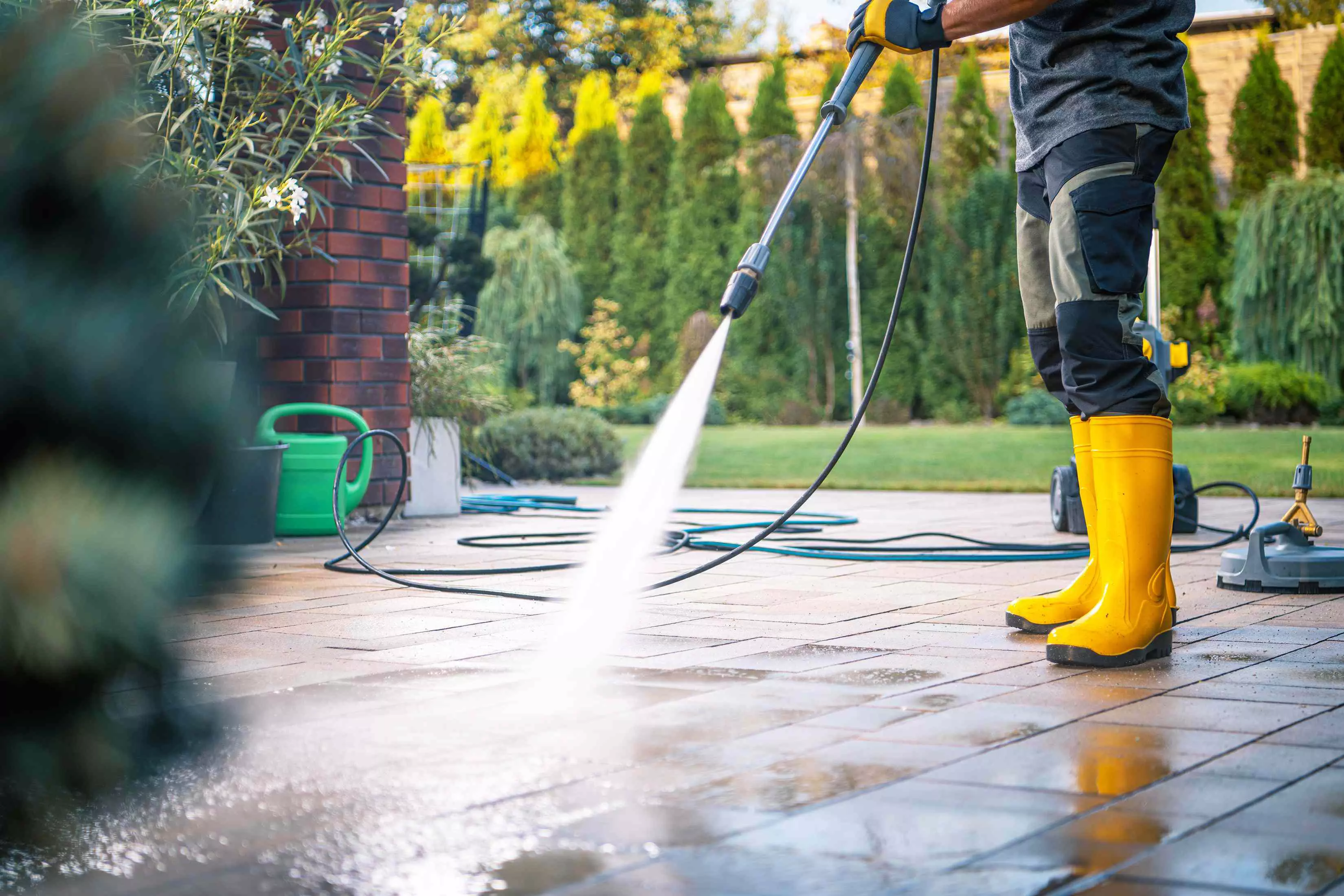
Is a 3 or 4 GPM Pressure Washer Better for Commercial Cleaning?
Pressure ratings receive much of the attention during equipment shopping, but water flow has a major effect on cleaning speed.
Gallons per minute, or GPM, describes how much water moves through a pressure washer. More flow can rinse loosened material faster and improve coverage over large surfaces.
A 3 GPM pressure washer may provide a useful balance for mobile contractors, property maintenance, vehicle cleaning, and moderate commercial tasks.
It can deliver more rinsing ability than many light-duty machines without necessarily requiring the size and water supply of a higher-flow system.
However, an operation cleaning large concrete areas, fleets, or heavy equipment may benefit from additional flow. The improvement depends on whether the site's water supply and drainage can support the machine.
What GPM Means During Real Cleaning
PSI helps separate contamination from a surface. GPM then helps move that material away. If loosened dirt remains on the surface, the operator may need additional passes even when the machine produces strong pressure.
A 4 GPM pressure washer supplies roughly one additional gallon of water each minute compared with a 3 GPM machine at their nominal ratings. Over a long job, that difference can improve rinsing and reduce the time spent clearing wide areas.
Actual performance still depends on the complete setup. Nozzle size, hose condition, water supply, pump health, and operating pressure all influence the result.
When 3 GPM May Be Enough
A 3 GPM machine can suit businesses that perform regular but moderate cleaning. Examples include washing small fleets, storefront walkways, residential properties, tools, and compact equipment.
Portability may be easier because some lower-flow machines use smaller frames, tanks, or engines. However, buyers should compare actual dimensions and weight rather than assuming every 3 GPM model is compact.
Water availability is another benefit. Sites with limited supply may support 3 GPM more reliably than higher-flow equipment. The source should still deliver more water than the machine requires so the pump does not run dry.
When 4 GPM Can Improve Productivity
A 4 GPM system may be better for contractors and facilities cleaning larger areas. The additional flow can help rinse parking surfaces, commercial concrete, building exteriors, trucks, and machinery.
Time savings become more noticeable when the operator works for several hours. Even a modest improvement on each section can add up across a full shift.
Nevertheless, increased flow means increased water use. Drainage, water recovery, environmental requirements, and runoff control should be considered before choosing the larger machine.
Do Not Separate GPM From PSI
Two machines with the same flow may perform differently because of their pressure. Likewise, two machines with the same PSI may clean at different speeds because of their GPM.
Buyers should identify the minimum effective pressure for the intended surface and then compare flow rates. Delicate surfaces may benefit more from controlled pressure and sufficient flow than from extreme force.
Cleaning units, calculated by multiplying PSI by GPM, can provide a basic comparison. However, this number does not account for heat, nozzle selection, machine quality, or suitability for a particular surface.
Confirm the Water Supply
A pressure washer cannot consistently deliver more water than it receives. The supply should be tested before the machine is selected, especially at sites that use wells, small storage tanks, long garden hoses, or shared plumbing.
An inadequate supply can cause cavitation, inconsistent pressure, and pump damage. A buffer tank may help in certain professional setups, but it must be designed and connected correctly.
The inlet hose should have sufficient diameter and should not be kinked. Filters and fittings also need to allow the required flow.
Read: Commercial Cleaning Services for Offices, Retail & Industrial
Consider Hose Length and Surface Cleaners
Long high-pressure hoses increase working range, but they must be correctly rated and maintained. Some pressure loss may occur in extended setups, so the machine and nozzle should be selected as a complete system.
Surface cleaners can make large flatwork more consistent. Their nozzle configuration must match the machine's flow and pressure.
A surface cleaner that is too large for a 3 GPM machine may rotate poorly, while an incorrectly sized setup on a 4 GPM unit may not deliver the expected result.
Users should confirm compatibility rather than choosing an accessory based only on its physical diameter.
Compare Portability and Operating Cost
Higher-flow equipment may require a larger pump, engine, frame, or water tank. These changes can affect transport and storage. Mobile crews should consider vehicle capacity, ramps, tie-down points, and safe loading.
Operating cost includes fuel or electricity, water, labor, detergent, maintenance, and downtime. A 4 GPM machine may use more water but reduce labor time. A 3 GPM machine may cost less to operate where additional flow would provide little benefit.
Pressure King helps users compare pressure washers by flow, pressure, power source, and application. Discussing the expected workload can help buyers avoid selecting a machine based on one specification alone.
Final Thoughts
A 3 GPM pressure washer can provide a practical balance for moderate commercial work and mobile cleaning. A 4 GPM machine can improve rinsing speed and productivity on larger or more frequent jobs.
The better choice depends on the surface, contamination, available water, drainage, PSI, accessories, operating time, and transport needs. Buyers who examine the entire cleaning process are more likely to choose a flow rate that provides useful real-world value.