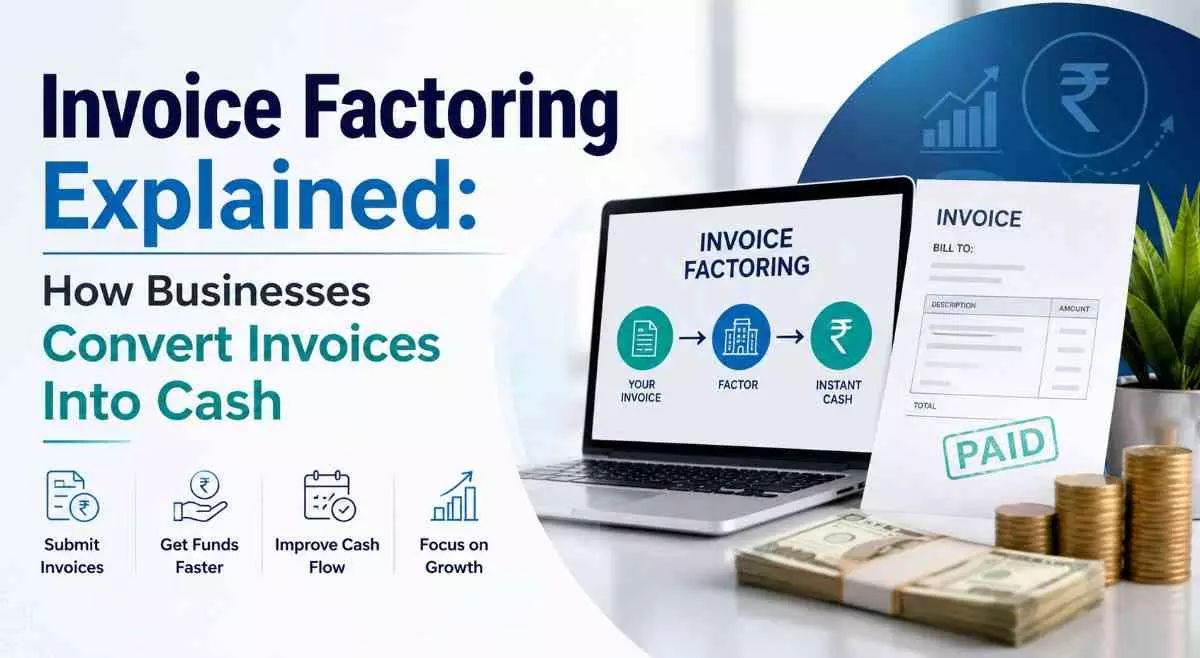
Invoice Factoring Explained: How Businesses Convert Invoices Into Cash
Cash flow management is one of the biggest challenges faced by small businesses and MSMEs. Even when businesses generate regular sales, delayed payments from customers can create difficulties in managing daily expenses, supplier payments, inventory, and business growth plans.
Invoice factoring for MSMEs provides a practical solution by helping businesses convert their unpaid invoices into immediate cash instead of waiting for customers to complete their payment cycles.
Through invoice factoring, businesses can access funds against outstanding invoices and maintain steady cash flow without depending only on traditional financing options. This makes it a useful working capital solution for growing businesses.
What Is Invoice Factoring?
Invoice factoring is a type of financing where a business sells its unpaid invoices to a factoring company or financial institution at a discounted value to receive immediate funds.
In simple words, if a business has raised an invoice for goods or services delivered but the customer will pay after 60 days, the business can use invoice factoring to get money immediately instead of waiting.
The factoring company provides advance payment against the invoice and collects the payment directly from the customer on the due date.
For example:
A manufacturing company supplies goods worth ₹10 lakh to a large corporate buyer. The buyer will pay after 60 days. The manufacturer needs money immediately to purchase raw materials and pay suppliers.
Through invoice factoring, the manufacturer can receive a major portion of the invoice value upfront and continue business operations without waiting for the payment cycle to complete.
How Does Invoice Factoring Work?
The invoice factoring process is simple and involves a few key steps:
1. Business Generates an Invoice
The process begins when a business sells products or services to a customer and raises an invoice. The customer agrees to pay the invoice amount within a specific credit period.
2. Business Shares Invoice With Factoring Provider
The business submits the unpaid invoice to a factoring company or financing platform. The provider evaluates the invoice details, buyer’s creditworthiness, and payment history.
3. Advance Payment Is Provided
After approval, the factoring provider pays a percentage of the invoice value upfront. This allows the business to access funds quickly.
4. Customer Pays the Invoice Amount
When the invoice reaches its due date, the customer makes the payment to the factoring company.
5. Remaining Amount Is Settled
After deducting applicable charges or fees, the remaining invoice amount is paid to the business.
This process helps businesses improve liquidity without waiting for customers to complete their payment cycle.
Why Do Businesses Use Invoice Factoring?
Businesses often face a gap between making sales and receiving payments. Invoice factoring helps bridge this gap by providing access to working capital.
Some common reasons businesses choose invoice factoring include:
Improve Cash Flow
Delayed customer payments can affect daily business operations. Invoice factoring provides faster access to funds, helping businesses manage expenses without interruptions.
Manage Working Capital Requirements
Businesses need regular funds for inventory, employee salaries, rent, transportation, and supplier payments. Invoice factoring helps maintain working capital during payment delays.
Reduce Dependence on Traditional Loans
Many MSMEs find it difficult to get traditional loans due to lengthy approval processes or collateral requirements. Invoice factoring provides financing based on outstanding invoices rather than only business assets.
Support Business Growth
With better cash availability, businesses can accept more orders, purchase more inventory, and expand operations without worrying about delayed payments.
Benefits of Invoice Factoring for MSMEs
1. Faster Access to Funds
One of the biggest advantages of invoice factoring is quicker access to money. Businesses do not have to wait for customers to pay invoices before using those funds.
2. No Need to Offer Traditional Collateral
Invoice factoring is generally based on the value and quality of invoices. Businesses can use their receivables to access funds instead of pledging physical assets.
3. Better Cash Flow Management
A predictable cash flow helps businesses plan expenses, negotiate better terms with suppliers, and manage business operations smoothly.
4. Helps Handle Long Payment Cycles
Many MSMEs supply goods to large companies that follow longer payment cycles. Invoice factoring helps businesses overcome the challenge of delayed payments.
5. Easy Access to Working Capital
Businesses can unlock the value of their unpaid invoices and use the funds for immediate financial needs.
Invoice Factoring vs Traditional Business Loans
Invoice factoring and business loans both provide access to funds, but they work differently.
A traditional business loan provides funds based on factors such as credit history, income, business performance, and collateral availability.
Invoice factoring focuses mainly on outstanding invoices and customer payment ability.
Some key differences include:
- Invoice factoring provides funds against unpaid invoices.
- Business loans require repayment through fixed instalments.
- Invoice factoring helps businesses access money tied up in receivables.
- Loan approval may involve more documentation and longer processing time.
For businesses with strong sales but delayed payments, invoice factoring can be a useful working capital solution.
Read: Smart Finance: Bookkeeping for Startup Success
Is Invoice Factoring Suitable for Small Businesses?
Invoice factoring can be beneficial for businesses that:
- Sell products or services to creditworthy customers
- Have regular invoice-based transactions
- Experience delayed customer payments
- Need working capital for daily operations
- Want to avoid depending only on loans
Manufacturers, suppliers, wholesalers, service providers, and growing MSMEs can use invoice factoring to improve their cash position.
Invoice Factoring and Digital Financing Platforms
Technology has made invoice-based financing easier and more accessible for businesses. Digital platforms help businesses submit invoices, connect with financiers, and receive funding through a transparent process.
In India, platforms such as TReDS (Trade Receivables Discounting System) provide a digital ecosystem where MSME suppliers can get their trade receivables financed through participating financiers.
Receivables Exchange of India Limited (RXIL) operates a TReDS platform that enables MSMEs to access invoice-based financing by connecting buyers, sellers, and financiers.
Such platforms help MSMEs unlock working capital from approved invoices and reduce challenges caused by delayed payments.
Conclusion
Invoice factoring is a practical financing solution that helps businesses convert unpaid invoices into immediate cash. Instead of waiting for customers to complete long payment cycles, businesses can access funds and continue their operations smoothly.
For MSMEs, maintaining cash flow is critical for growth. Invoice factoring provides a way to improve liquidity, manage working capital needs, and support business expansion without relying only on traditional borrowing options.
As businesses continue to look for faster and flexible financing solutions, invoice-based financing options are becoming an important part of the MSME ecosystem.
FAQs
1. What is invoice factoring in simple words?
Invoice factoring is a financing method where businesses sell their unpaid invoices to a factoring provider to receive immediate funds instead of waiting for customer payments.
2. Is invoice factoring a loan?
No, invoice factoring is not a traditional loan. It involves receiving funds against outstanding invoices, where the invoice value acts as the basis for financing.
3. Can MSMEs use invoice factoring?
Yes, MSMEs can use invoice factoring to improve cash flow, manage working capital, and access funds against unpaid customer invoices.
4. How quickly can businesses receive funds through invoice factoring?
The timeline depends on the factoring provider and invoice verification process. Many businesses can access funds faster compared to traditional financing methods.
5. What is the difference between invoice factoring and invoice discounting?
In invoice factoring, the factoring company generally manages invoice collection from customers. In invoice discounting, businesses usually maintain control over customer collections while using invoices to access funds.